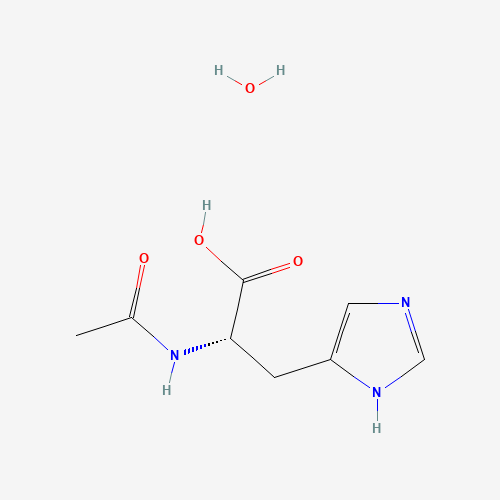
Acetyl Histidine
AKA “39145-52-3, N-Acetyl-L-histidine hydrate, L-Histidine, N-acetyl-, monohydrate, L-N-acetylhistidine monohydrate, PQ2TC3X11O, N-ACETYLHISTIDINE MONOHYDRATE, RefChem:199350, ac-his-oh.h2o, N-Acetyl-L-histidine Monohydrate”
Emollient
Ingredient Facts
Acetyl histidine
AKA: 39145-52-3, N-Acetyl-L-histidine hydrate, L-Histidine, N-acetyl-, Monohydrate, L-N-acetylhistidine monohydrate, PQ2TC3X11O, N-ACETYLHISTIDINE MONOHYDRATE, RefChem:199350, Ac-his-oh.h2o, N-Acetyl-L-histidine Monohydrate
Emollient · Emollient · EWG: 4
Synthetic
Humectant
Emollient
Skin Conditioner
Amino Acid
Not Clean
The panel concluded that the 115 amino acid alkyl amides listed below are safe in the present practices of use and concentration in cosmetics, when formulated to be non-irritating...Acetyl Histidine
Formula
C8H13N3O4
Mol. Weight
215.21
CAS #
2407-02-1, 39145-52-3
Form
Liquid
See origin →
Functions
Humectant
A moisture magnet. Pulls water from the air and deeper skin layers up to the surface to keep skin plump and hydrated.
Skin Conditioning
A catch-all term for ingredients that improve how skin looks and feels — softer, smoother, more supple. The workhorse behind most moisturizers.
Emollient
Fills in the tiny cracks between skin cells to make everything feel smooth and soft. The "silky finish" ingredient.
Locks In Moisture
Traditional Use
A synthetic acetylated amino acid derivative developed in the late 20th century for cosmetic use. It was created to enhance skin hydration and improve the cosmetic properties of amino acids in skincare formulations.
Skin Types
●all-skin-types
Best For
General
Pregnancy & Breastfeeding Safe
Yes
Acetyl Histidine
European Commission
EU Cosmetic Ingredient Database (CosIng)
Safety and efficacy of l-histidine monohydrochloride monohydrate produced using Corynebacterium glutamicum KCCM 80179 for all animal species.
EFSA Panel on Additives and Products or Substances used in Animal Feed (FEEDAP), Bampidis V, Azimonti G, de Lourdes Bastos M, Christensen H et al.
EFSA journal. European Food Safety Authority, 2019
Transdermal permeability of N-acetyl-D-glucosamine.
Garner ST Jr, Israel BJ, Achmed H, Capomacchia AC, Abney T et al.
Pharmaceutical development and technology, 2007
Verified Jun 2026
Data: PubChem · CosIng · EWG · CIR