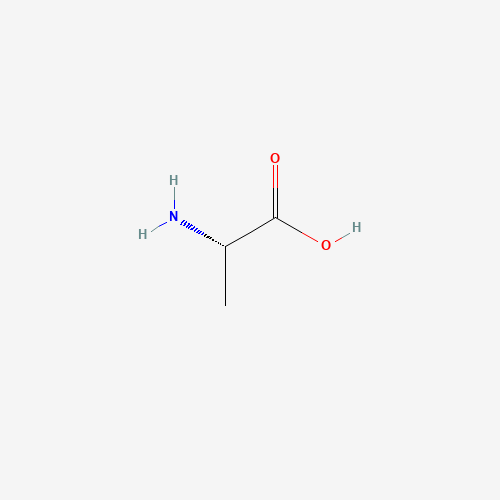
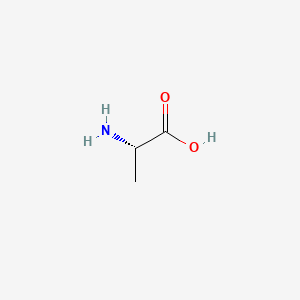
Alanine
AKA “L-alanine, 56-41-7, (S)-Alanine, (2S)-2-Aminopropanoic acid, L-alpha-alanine, (S)-2-Aminopropanoic acid, L-2-Aminopropionic acid, 2-Aminopropionic acid, L-(+)-Alanine”
Skin Conditioning
Ingredient Facts
Alanine
AKA: L-alanine, 56-41-7, (S)-Alanine, (2S)-2-Aminopropanoic acid, L-alpha-alanine, (S)-2-Aminopropanoic acid, L-2-Aminopropionic acid, 2-Aminopropionic acid, L-(+)-Alanine
Skin Conditioning · Antistatic · EWG: 1
Synthetic
Skin Conditioner
Hair Care
Amino Acid
Clean
Alanine is a nonessential amino acid made in the body from the conversion of the carbohydrate pyruvate or the breakdown of DNA and the dipeptides carnosine and anserine. It is highly concentrated in muscle and is one of the most important amino acids released by muscle, functioning as a major energy source. Plasma alanine is often decreased when the BCAA (Branched Chain Amino Acids) are deficient. This finding may relate to muscle metabolism. Alanine is highly concentrated in meat products and other high-protein foods like wheat germ and cottage cheese. Alanine is an important participant as well as regulator in glucose metabolism. Alanine levels parallel blood sugar levels in both diabetes and hypoglycemia, and alanine reduces both severe hypoglycemia and the ketosis of diabetes. It is an important amino acid for lymphocyte reproduction and immunity. Alanine therapy has helped dissolve kidney stones in experimental animals. Normal alanine metabolism, like that of other amino acids, is
Effective at 0.05%
Solubility 164000
Formula
C3H7NO2
Mol. Weight
89.09
CAS #
302-72-7, 56-41-7
Form
Powder
State
Other Solid
See origin →
Functions
Antistatic
Hair Conditioning
A catch-all term for ingredients that improve how skin looks and feels — softer, smoother, more supple. The workhorse behind most moisturizers.
Skin Conditioning
A catch-all term for ingredients that improve how skin looks and feels — softer, smoother, more supple. The workhorse behind most moisturizers.
Locks in moisture
Traditional Use
An amino acid identified in the 1880s-1890s. Used in skincare since the 1970s-1980s as a humectant and skin conditioning agent, based on research into amino acids' role in skin health.
Skin Types
●all-skin-types, gentle
Best For
Dehydration
Pregnancy & Breastfeeding Safe
Yes
EWG
1
CIR
Safe as used
Pregnancy
Yes
CIR Safety Findings
Not Phototoxic
ewg-1
medical-approval
pregnancy-nursing-safe
all-shades-safe
Concentration Guide
5e-05%
0.1%
0%100%
Effective Range
CIR reported use: 0.00005-0.1 | 0.0001-0.07 | 0.00009-0.03
Regulatory Agencies
Safety Assessment of Tetrasodium Glutamate Diacetate and Beta-Alanine Diacetic Acid as Used in Cosmetics.
Burnett CL, Bergfeld WF, Belsito DV, Cohen DE, Klaassen CD et al.
International journal of toxicology, 2025
Safety Assessment of Tetrasodium Glutamate Diacetate and Beta-Alanine Diacetic Acid as Used in Cosmetics.
Burnett CL, Bergfeld WF, Belsito DV, Cohen DE, Klaassen CD et al.
International journal of toxicology, 2025
Safety Assessment of Tetrasodium Glutamate Diacetate and Beta-Alanine Diacetic Acid as Used in Cosmetics
Cosmetic Ingredient Review (CIR) Expert Panel
International Journal of Toxicology
Alanine
European Commission
EU Cosmetic Ingredient Database (CosIng)
Beta-Alanine Diacetic Acid
European Commission
EU Cosmetic Ingredient Database (CosIng)
Palmitoyl Alanine
European Commission
EU Cosmetic Ingredient Database (CosIng)
Phenylalanine
European Commission
EU Cosmetic Ingredient Database (CosIng)
Undecylenoyl Phenylalanine
European Commission
EU Cosmetic Ingredient Database (CosIng)
Alanine
Environmental Working Group (EWG)
EWG Skin Deep Cosmetics Database
Phenylalanine
Environmental Working Group (EWG)
EWG Skin Deep Cosmetics Database
Undecylenoyl Phenylalanine
Environmental Working Group (EWG)
EWG Skin Deep Cosmetics Database
Antimicrobial Nanoparticles Composed of Zein and Arginine-Phenylalanine-Based Surfactants for Wound Related Infections: Antioxidant and Skin-Related A
Sousa FFO, Hafidi Z, García MT, Moran MDC, Vazquez S et al.
Antibiotics (Basel, Switzerland), 2024
Verified Jun 2026
Data: PubChem · CosIng · EWG · CIR