Arginine HCl
AKA “1119-34-2, Arginine Hydrochloride, L-ARGININE HCL, R-Gene, R-gene 10, L-Arginine, monohydrochloride, F7LTH1E20Y, NSC-7914, NSC-203450, Hydrochloride, arginine”
Skin Conditioning
Ingredient Facts
Arginine hcl
AKA: 1119-34-2, Arginine Hydrochloride, L-ARGININE HCL, R-Gene, R-gene 10, L-Arginine, Monohydrochloride, F7LTH1E20Y, NSC-7914, NSC-203450, Hydrochloride
Skin Conditioning · Skin Conditioning · EWG: 4
Synthetic
Skin Conditioner
Amino Acid
Not Clean
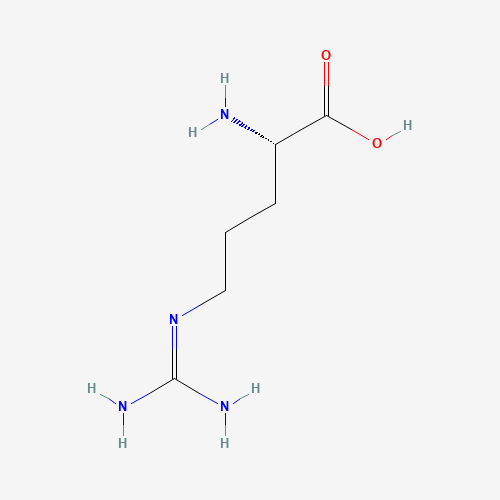
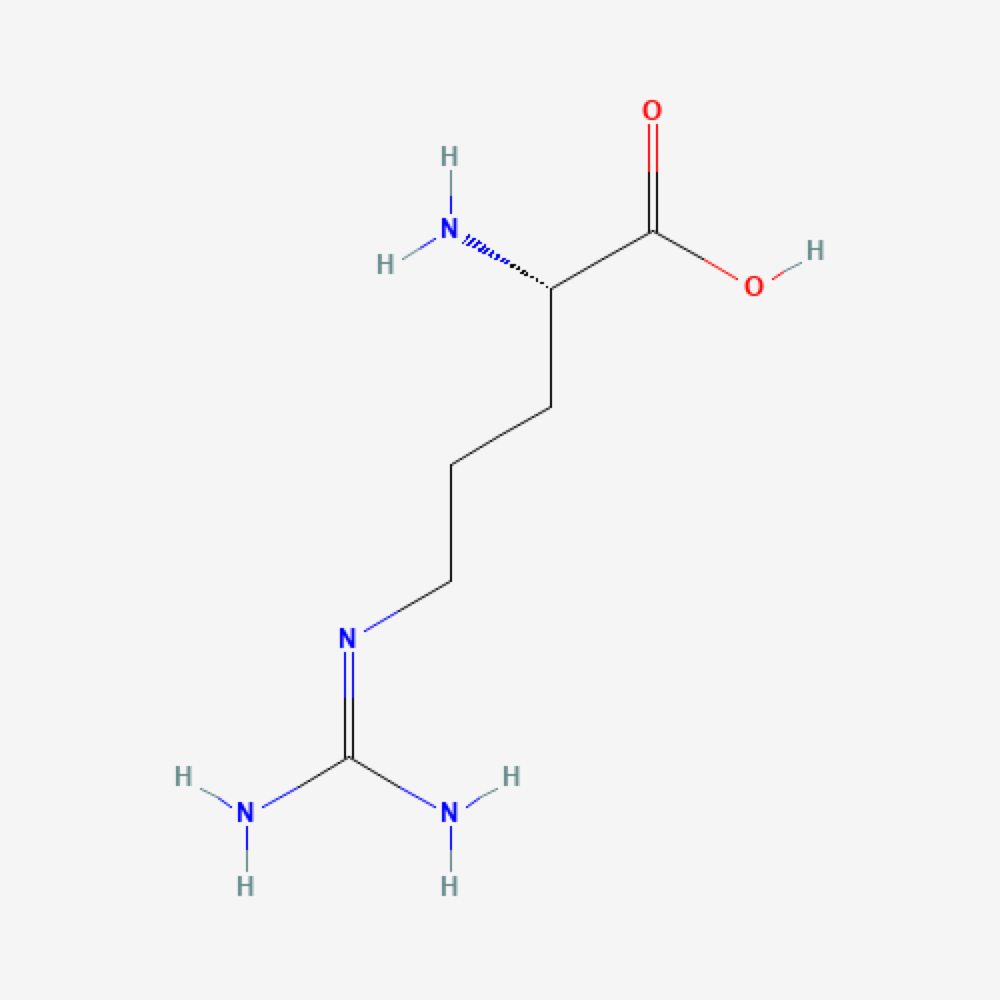
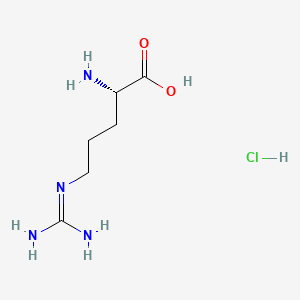
Arginine is an essential amino acid that is physiologically active in the L-form. In mammals, arginine is formally classified as a semiessential or conditionally essential amino acid, depending on the developmental stage and health status of the individual. Infants are unable to effectively synthesize arginine, making it nutritionally essential for infants. Adults, however, are able to synthesize arginine in the urea cycle. Arginine can be considered to be a basic amino acid as the part of the side chain nearest to the backbone is long, carbon-containing and hydrophobic, whereas the end of the side chain is a complex guanidinium group. With a pKa of 12.48, the guanidinium group is positively charged in neutral, acidic and even most basic environments. Because of the conjugation between the double bond and the nitrogen lone pairs, the positive charge is delocalized. This group is able to form multiple H-bonds. L-arginine is an amino acid that has numerous functions in the body. It helps
Effective at 9.0%
Formula
C6H15ClN4O2
Mol. Weight
210.66
CAS #
1119-34-2
Form
Powder
State
Dry Powder
See origin →
Functions
Skin Conditioning
A catch-all term for ingredients that improve how skin looks and feels — softer, smoother, more supple. The workhorse behind most moisturizers.
Locks in moisture
Traditional Use
L-arginine, a naturally occurring amino acid identified in the late 19th century, used in modern skincare for its role in collagen synthesis, skin hydration, and wound healing.
Skin Types
●all-skin-types
Best For
General
Pregnancy & Breastfeeding Safe
Yes
EWG
4
CIR
Safe as used
Pregnancy
Yes
CIR Safety Findings
Not Phototoxic
medical-approval
all-shades-safe
Concentration Guide
2e-05%
18.0%
0%100%
Effective Range
CIR reported use: 0.00002-18 | 0.004-0.1
Regulatory Agencies
Assessment of primary eye and skin irritants by in vitro cytotoxicity and phototoxicity models: an in vitro approach of new arginine-based surfactant-
Benavides T, Mitjans M, Martínez V, Clapés P, Infante MR et al.
Toxicology, 2004
Restructuring of Lipid Membranes by an Arginine-Capped Peptide Bolaamphiphile.
Castelletto V, Barnes RH, Karatzas KA, Edwards-Gayle CJC, Greco F et al.
Langmuir : the ACS journal of surfaces and colloids, 2019
Final Report on the Safety Assessment of 2-Amino-6-Chloro-4-Nitrophenol and 2-Amino-6-Chloro-4-Nitrophenol Hydrochloride
Cosmetic Ingredient Review (CIR) Expert Panel
International Journal of Toxicology
Final Report on the Safety Assessment of 2,4-Diaminophenol and 2,4-Diaminophenol Dihydrochloride
Cosmetic Ingredient Review (CIR) Expert Panel
International Journal of Toxicology
Final Report on the Safety Assessment of 2,4-Diaminophenoxyethanol Dihydrochloride
Cosmetic Ingredient Review (CIR) Expert Panel
International Journal of Toxicology
Final Report on the Safety Assessment of Chlorhexidine/Chlorhexidine Diacetate/Chlorhexidine Dihydrochloride/Chlorhexidine Digluconate
Cosmetic Ingredient Review (CIR) Expert Panel
International Journal of Toxicology
Final Report on the Safety Assessment of N-Phenyl-p-Phenylenediamine, N-Phenyl-p-Phenylenediamine Hydrochloride, and N-Phenyl-p-Phenylenediamine Sulfate
Cosmetic Ingredient Review (CIR) Expert Panel
International Journal of Toxicology
Note Regarding the Safety Assessment of Chlorhexidine, Chlorhexidine Diacetate, Chlorhexidine Digluconate, and Chlorhexidine Dihydrochloride
Cosmetic Ingredient Review (CIR) Expert Panel
International Journal of Toxicology
Safety Assessment of Polyaminopropyl Biguanide (polyhexamethylene biguanide hydrochloride) as Used in Cosmetics
Cosmetic Ingredient Review (CIR) Expert Panel
International Journal of Toxicology
Acetyl Arginine
European Commission
EU Cosmetic Ingredient Database (CosIng)
Arginine HCl
European Commission
EU Cosmetic Ingredient Database (CosIng)
Chlorhexidine Dihydrochloride
European Commission
EU Cosmetic Ingredient Database (CosIng)
Dimethiconol Arginine
European Commission
EU Cosmetic Ingredient Database (CosIng)
Lauroyl Arginine
European Commission
EU Cosmetic Ingredient Database (CosIng)
Palmitoyl Arginine
European Commission
EU Cosmetic Ingredient Database (CosIng)
TEA-Hydrochloride
European Commission
EU Cosmetic Ingredient Database (CosIng)
Safety and efficacy of l-histidine monohydrochloride monohydrate produced using Corynebacterium glutamicum KCCM 80179 for all animal species.
EFSA Panel on Additives and Products or Substances used in Animal Feed (FEEDAP), Bampidis V, Azimonti G, de Lourdes Bastos M, Christensen H et al.
EFSA journal. European Food Safety Authority, 2019
Safety and efficacy of l-lysine monohydrochloride and concentrated liquid l-lysine (base) produced by fermentation with Corynebacterium glutamicum KCC
EFSA Panel on Additives and Products or Substances used in Animal Feed (FEEDAP), Bampidis V, Azimonti G, Bastos ML, Christensen H et al.
EFSA journal. European Food Safety Authority, 2020
Chlorhexidine Dihydrochloride
Environmental Working Group (EWG)
EWG Skin Deep Cosmetics Database
Lauroyl Arginine
Environmental Working Group (EWG)
EWG Skin Deep Cosmetics Database
Transdermal delivery of ondansetron hydrochloride: effects of vehicles and penetration enhancers.
Gwak HS, Oh IS, Chun IK
Drug development and industrial pharmacy, 2004
Chrysoidine citrate hydrochloride
Health Canada
Health Canada Cosmetic Ingredient Hotlist
Diphenoxylate hydrochloride
Health Canada
Health Canada Cosmetic Ingredient Hotlist
Safety Assessment of Polyaminopropyl Biguanide (Polyhexamethylene Biguanide Hydrochloride) as Used in Cosmetics.
Johnson W Jr, Boyer I, Zhu J, Bergfeld WF, Belsito DV et al.
International journal of toxicology, 2020
Altered Arginine Metabolism Affects Proliferation and Radiosensitivity of Keloids.
Li W, Li X, Zhang Y, Zhu B, Xu X et al.
Experimental dermatology, 2025
Chlorhexidine Dihydrochloride Shows Anti-tumor Effects in Desmoid Tumors and Colorectal Cancer.
Shin H, Kim Y, Lee Y, Kim J, Ryu YC et al.
Anticancer research, 2024
Antimicrobial Nanoparticles Composed of Zein and Arginine-Phenylalanine-Based Surfactants for Wound Related Infections: Antioxidant and Skin-Related A
Sousa FFO, Hafidi Z, García MT, Moran MDC, Vazquez S et al.
Antibiotics (Basel, Switzerland), 2024
Effects of growth factors and L-arginine on ischemic skin flaps in rats.
Walls CM, Gregory CR, Beck LS, Cooke JP, Griffey SM et al.
Veterinary surgery : VS, 1995
Verified Jun 2026
Data: PubChem · CosIng · EWG · CIR