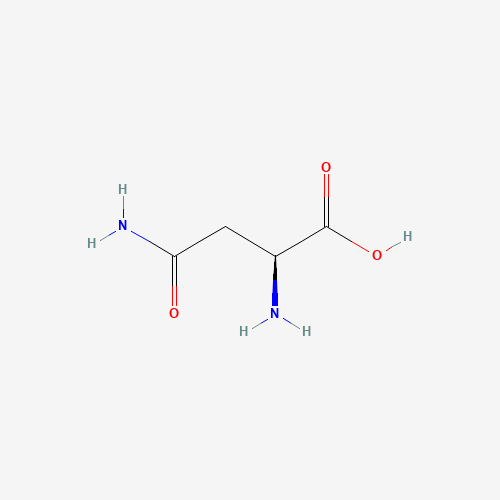
Asparagine
AKA “L-asparagine, 70-47-3, (S)-asparagine, Aspartamic acid, agedoite, altheine, Asparamide, Crystal VI, asparagine acid”
Skin Conditioning
Ingredient Facts
Asparagine
AKA: L-asparagine, 70-47-3, (S)-asparagine, Aspartamic acid, Agedoite, Altheine, Asparamide, Crystal VI, Asparagine acid
Skin Conditioning · Antistatic · EWG: 1
Synthetic
Skin Conditioner
Hair Care
Amino Acid
Clean
Asparagine (Asn) is one of the 20 most common natural amino acids on Earth. It has carboxamide as the side chain's functional group. It is considered a non-essential amino acid. Asparagine is not an essential amino acid, which means that it can be synthesized from central metabolic pathway intermediates in humans and is not required in the diet. The precursor to asparagine is oxaloacetate. Oxaloacetate is converted to aspartate using a transaminase enzyme. The enzyme transfers the amino group from glutamate to oxaloacetate producing alpha-ketoglutarate and aspartate. The enzyme asparagine synthetase produces asparagine, AMP, glutamate, and pyrophosphate from aspartate, glutamine, and ATP. In the asparagine synthetase reaction, ATP is used to activate aspartate, forming beta-aspartyl-AMP. glutamine donates an ammonium group which reacts with beta-aspartyl-AMP to form asparagine and free AMP. Since the asparagine side chain can make efficient hydrogen bond interactions with the peptide b
Solubility 29400
Formula
C4H8N2O3
Mol. Weight
132.12
CAS #
70-47-3, 3130-87-8
Form
Powder
State
Pellets or Large Crystals
See origin →
Functions
Antistatic
Hair Conditioning
A catch-all term for ingredients that improve how skin looks and feels — softer, smoother, more supple. The workhorse behind most moisturizers.
Skin Conditioning
A catch-all term for ingredients that improve how skin looks and feels — softer, smoother, more supple. The workhorse behind most moisturizers.
Locks in moisture
Traditional Use
An amino acid present in proteins; asparagine was first isolated in 1806 from asparagus plants. Historically used in traditional medicine as part of plant extracts for its nutritive properties.
Skin Types
●all-skin-types, gentle
Best For
Dryness
Pregnancy & Breastfeeding Safe
Yes
Verified Jun 2026
Data: PubChem · CosIng · EWG · CIR