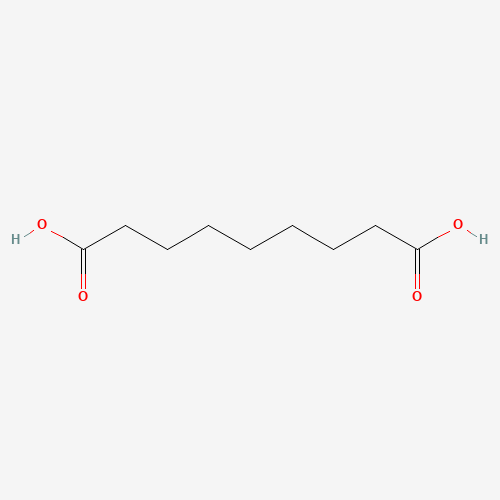
Azelaic Acid
AKA “NONANEDIOIC ACID, 123-99-9, Anchoic acid, Finacea, Lepargylic acid, 1, 7-Heptanedicarboxylic acid, Azelex, Skinoren, Heptanedicarboxylic acid”
Acid
Ingredient Facts
Azelaic acid
AKA: NONANEDIOIC ACID, 123-99-9, Anchoic acid, Finacea, Lepargylic acid, 1, 7-Heptanedicarboxylic acid, Azelex, Skinoren, Heptanedicarboxylic acid
Acid · Buffering · EWG: 2
Synthetic
Skin Conditioner
Acid
Clean
Azelaic Acid is a naturally occurring dicarboxylic acid produced by Malassezia furfur and found in whole grain cereals, rye, barley and animal products. Azelaic acid possesses antibacterial, keratolytic, comedolytic, and anti-oxidant activity. Azelaic acid is bactericidal against Proprionibacterium acnes and Staphylococcus epidermidis due to its inhibitory effect on the synthesis of microbial cellular proteins. Azelaic acid exerts its keratolytic and comedolytic effects by reducing the thickness of the stratum corneum and decreasing the number of keratohyalin granules by reducing the amount and distribution of filaggrin in epidermal layers. Azelaic acid also possesses a direct anti-inflammatory effect due to its scavenger activity of free oxygen radical. This drug is used topically to reduce inflammation associated with acne and rosacea.
Solubility 2400
Formula
C9H16O4
Mol. Weight
188.22
CAS #
123-99-9
Form
Liquid
State
Pellets or Large Crystals; Other Solid
See origin →
Functions
Skin Conditioning
A catch-all term for ingredients that improve how skin looks and feels — softer, smoother, more supple. The workhorse behind most moisturizers.
Buffering
Provides scent
Maintains optimal pH
Traditional Use
Developed in the 20th century as a synthetic dicarboxylic acid, used in modern skincare formulations as a pH buffer and preservative booster. No traditional use; created specifically for cosmetic chemistry applications.
Skin Types
●all-skin-types
Best For
Uneven Texture
Pregnancy & Breastfeeding Safe
Yes
Azelaic Acid
Environmental Working Group (EWG)
EWG Skin Deep Cosmetics Database
Azelaic acid and its salts
Health Canada
Health Canada Cosmetic Ingredient Hotlist
Topical azelaic acid, salicylic acid, nicotinamide, sulph...
Haibo Liu, Haiyan Yu, Jun Xia, Ling Liu, Guan J Liu, Hong Sang + 1 more
The Cochrane database of systematic reviews, 2020
Topical azelaic acid, salicylic acid, nicotinamide, sulph...
Haibo Liu, Haiyan Yu, Jun Xia, Ling Liu, Guan J Liu, Hong Sang + 1 more
The Cochrane database of systematic reviews, 2020
Topical azelaic acid, salicylic acid, nicotinamide, sulph...
Haibo Liu, Haiyan Yu, Jun Xia, Ling Liu, Guan J Liu, Hong Sang + 1 more
The Cochrane database of systematic reviews, 2020
Topical azelaic acid, salicylic acid, nicotinamide, sulph...
Haibo Liu, Haiyan Yu, Jun Xia, Ling Liu, Guan J Liu, Hong Sang + 1 more
The Cochrane database of systematic reviews, 2020
Topical azelaic acid, salicylic acid, nicotinamide, sulphur, zinc and fruit acid (alpha-hydroxy acid) for acne.
Liu H, Yu H, Xia J, Liu L, Liu GJ et al.
The Cochrane database of systematic reviews, 2020
The versatility of azelaic acid in dermatology.
Tamara Searle, Faisal R Ali, Firas Al-Niaimi
The Journal of dermatological treatment, 2022
The versatility of azelaic acid in dermatology.
Tamara Searle, Faisal R Ali, Firas Al-Niaimi
The Journal of dermatological treatment, 2022
Verified Jun 2026
Data: PubChem · CosIng · EWG · CIR