
Benzoic Acid
AKA “65-85-0, Dracylic acid, benzenecarboxylic acid, Benzeneformic acid, Carboxybenzene, phenylformic acid, Benzenemethanoic acid, Phenylcarboxylic acid, Retardex”
Acid
Ingredient Facts
Benzoic acid
AKA: 65-85-0, Dracylic acid, Benzenecarboxylic acid, Benzeneformic acid, Carboxybenzene, Phenylformic acid, Benzenemethanoic acid, Phenylcarboxylic acid, Retardex
Acid · Buffering · EWG: 2
Synthetic
Skin Conditioner
Acid
Clean
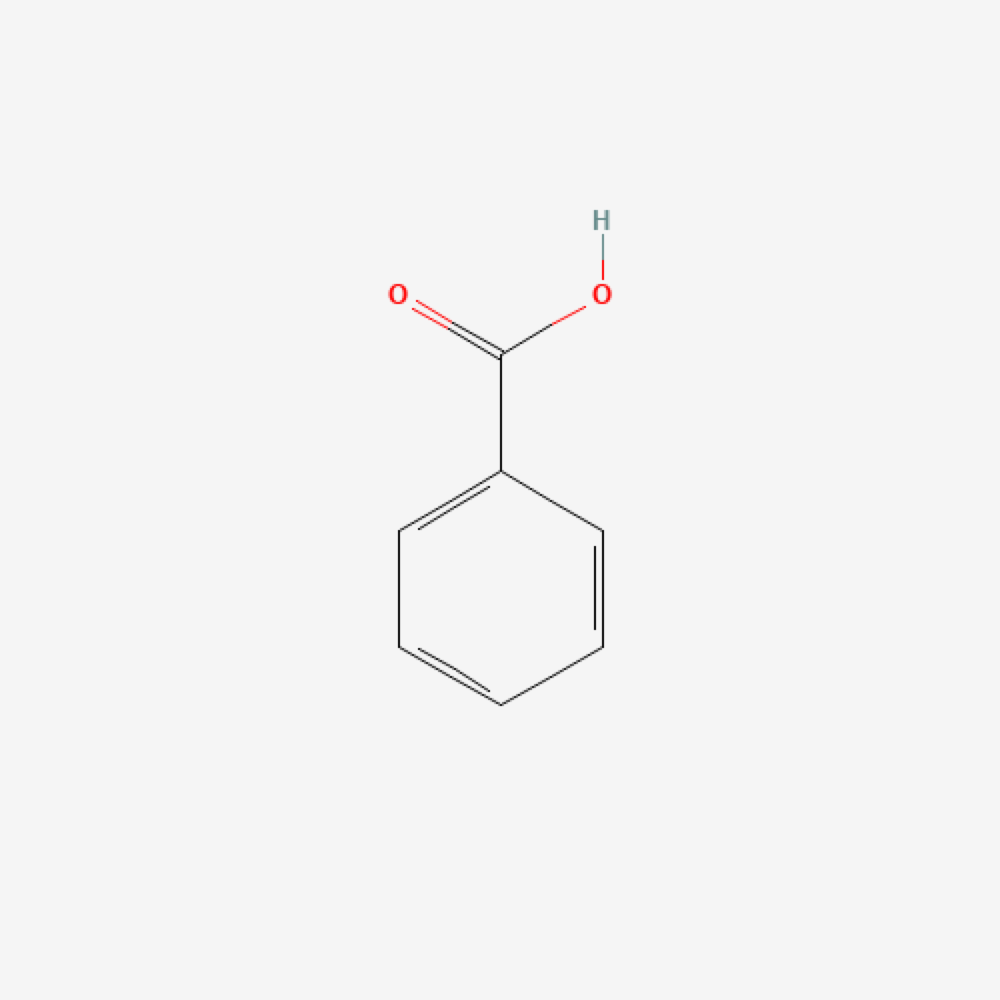
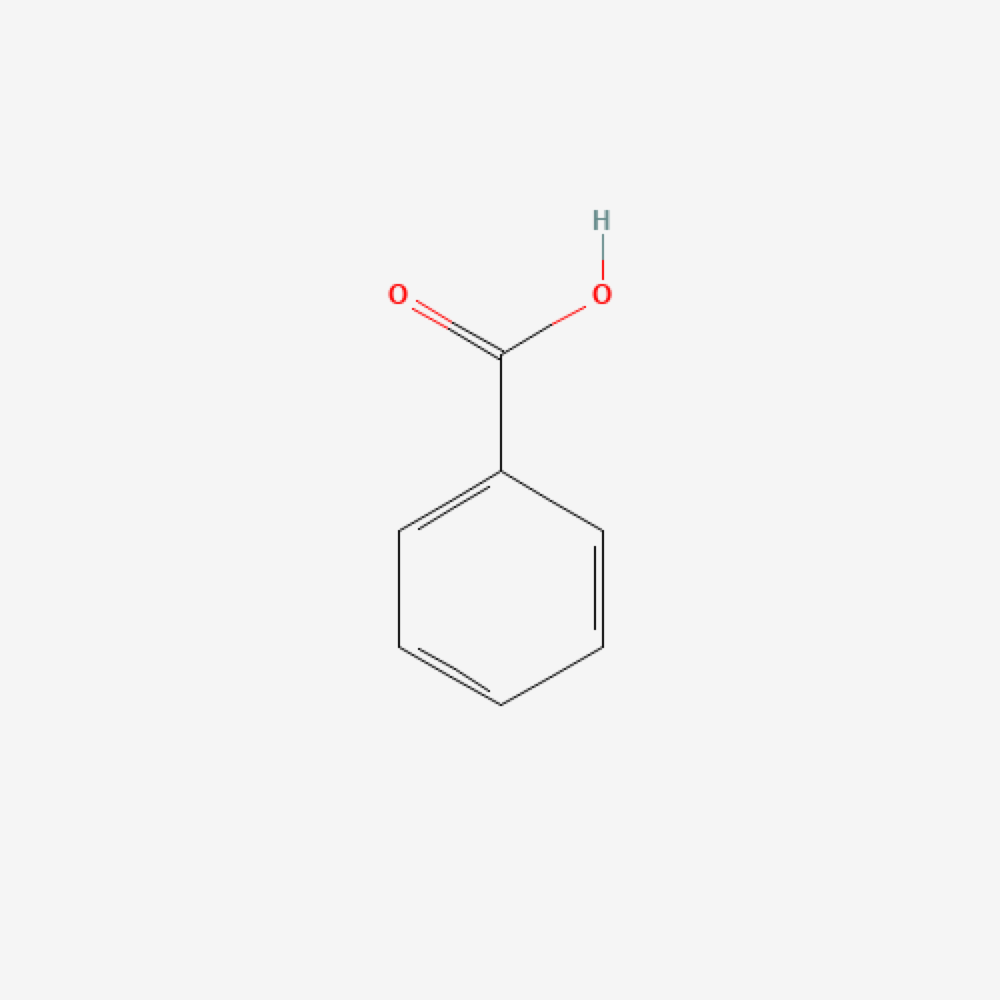
Benzoic acid, C6H5COOH, is a colourless crystalline solid and the simplest aromatic carboxylic acid. Benzoic acid occurs naturally free and bound as benzoic acid esters in many plant and animal species. Appreciable amounts have been found in most berries (around 0.05%). Cranberries contain as much as 300-1300 mg free benzoic acid per kg fruit. Benzoic acid is a fungistatic compound that is widely used as a food preservative. It often is conjugated to glycine in the liver and excreted as hippuric acid. Benzoic acid is a byproduct of phenylalanine metabolism in bacteria. It is also produced when gut bacteria process polyphenols (from ingested fruits or beverages).
Solubility less than 1 mg/mL at 68 °F (NTP, 1992)
Formula
C7H6O2
Mol. Weight
122.12
CAS #
65-85-0
Form
Liquid
State
Benzoic acid appears as a white crystalline solid. Slightly soluble in water. The primary hazard is the potential for environmental damage if released. Immediate steps should be taken to limit spread
See origin →
Functions
Skin Conditioning
A catch-all term for ingredients that improve how skin looks and feels — softer, smoother, more supple. The workhorse behind most moisturizers.
Buffering
Unclogs pores
Skin Types
●all-skin-types
Take the Skin ID quiz to see if this matches your skinEWG
2
CIR
—
Pregnancy
—
CIR Safety Findings
Not Phototoxic
all-shades-safe
Regulatory Agencies
Benzyl Alcohol, Benzoic Acid, Sodium Benzoate
Cosmetic Ingredient Review (CIR) Expert Panel
International Journal of Toxicology
Final Report on the Safety Assessment of Benzyl Alcohol, Benzoic Acid, and Sodium Benzoate
Cosmetic Ingredient Review (CIR) Expert Panel
International Journal of Toxicology
Safety Assessment of Benzyl Alcohol, Benzoic Acid and its Salts, and Benzyl Benzoate
Cosmetic Ingredient Review (CIR) Expert Panel
International Journal of Toxicology
4-Hydroxybenzoic acid rescues multisystemic disease and perinatal lethality in a mouse model of mitochondrial disease.
Corral-Sarasa J, Martínez-Gálvez JM, González-García P, Wendling O, Jiménez-Sánchez L et al.
Cell reports, 2024
4-Hydroxybenzoic Acid
European Commission
EU Cosmetic Ingredient Database (CosIng)
Benzoic acid and its derivatives as naturally occurring compounds in foods and as additives: Uses, exposure, and controversy.
Del Olmo A, Calzada J, Nuñez M
Critical reviews in food science and nutrition, 2017
Benzoic acid and its derivatives as naturally occurring compounds in foods and as additives: Uses, exposure, and controversy.
Del Olmo A, Calzada J, Nuñez M
Critical reviews in food science and nutrition, 2017
Benzoic acid and its derivatives as naturally occurring compounds in foods and as additives: Uses, exposure, and controversy.
Del Olmo A, Calzada J, Nuñez M
Critical reviews in food science and nutrition, 2017
4-Hydroxybenzoic Acid
Environmental Working Group (EWG)
EWG Skin Deep Cosmetics Database
Benzoic Acid
Environmental Working Group (EWG)
EWG Skin Deep Cosmetics Database
Safety Assessment of Benzyl Alcohol, Benzoic Acid and its...
Wilbur Johnson, Wilma F Bergfeld, Donald V Belsito, Ronald A Hill, Curtis D Klaassen, Daniel C Liebler + 5 more
International journal of toxicology, 2017
Safety Assessment of Benzyl Alcohol, Benzoic Acid and its...
Wilbur Johnson, Wilma F Bergfeld, Donald V Belsito, Ronald A Hill, Curtis D Klaassen, Daniel C Liebler + 5 more
International journal of toxicology, 2017
Verified Jun 2026
Data: PubChem · CosIng · EWG