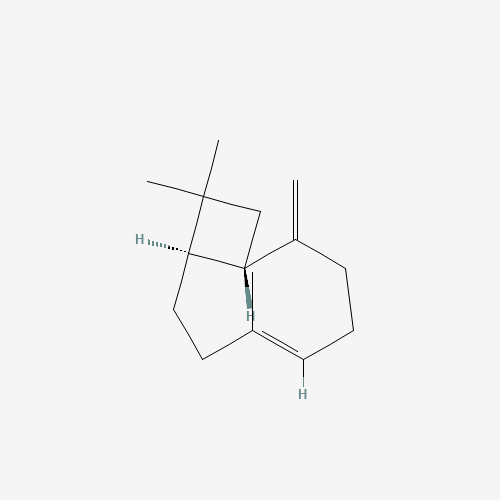
Beta-Caryophyllene
AKA “Caryophyllene, (-)-trans-Caryophyllene, 87-44-5, L-Caryophyllene, trans-beta-caryophyllene, beta-Caryophyllen, (-)-Caryophyllene, FEMA No. 2252, (1R, 4E, 9S)-4, 11, 11-trimethyl-8-methylidenebicyclo[7.2.0]undec-4-ene”
Skin Conditioning
Ingredient Facts
Beta-Caryophyllene
AKA: (-)-trans-Caryophyllene, 87-44-5, L-Caryophyllene, Trans-beta-caryophyllene, (-)-Caryophyllene, FEMA No. 2252, (1R, 4E, 9S)-4, 11, 11-trimethyl-8-methylidenebicyclo[7.2.0]undec-4-ene
Skin Conditioning · Perfuming · EWG: 4
Synthetic
Fragrance
Skin Conditioner
Not Clean
Bicyclo[7.2.0.]undec-4-ene, 4,11,11-trimethyl-8-methylene-, (1R,4E,9S)-; Caryophyllene; [1R,(1R*,4E,9S*)]-4,11,11-Trimethyl-8-methylene-bicyclo[7.2.0]undec-4-ene; 2-Methylene-6,10,10-trimethylbicyclo[7.2.0]undec-5-ene
Solubility less than 1 mg/mL at 70 °F (NTP, 1992)
Formula
C15H24
Mol. Weight
204.35
CAS #
87-44-5
Form
Oil
State
Beta-caryophyllene is a pale yellow oily liquid with an odor midway between odor of cloves and turpentine. (NTP, 1992)
See origin →
Functions
Perfuming
Added for scent. Can be natural or synthetic. Common irritant and allergen — one of the top reasons people react to products.
Skin Conditioning
A catch-all term for ingredients that improve how skin looks and feels — softer, smoother, more supple. The workhorse behind most moisturizers.
Traditional Use
Found in black pepper, cloves, and other spices, this compound has been used in Traditional Chinese Medicine and Ayurveda for centuries for its warming and anti-inflammatory properties. Recently isolated for use in modern skincare formulations.
Best For
General
Pregnancy & Breastfeeding Safe
Yes
Verified Jun 2026
Data: PubChem · CosIng · EWG · CIR