Boric Acid
AKA “Orthoboric acid, 10043-35-3, Boracic acid, Borofax, Boron hydroxide, Boric acid (H3BO3), Boron trihydroxide, Basilit B, Three Elephant”
Acid
Ingredient Facts
Boric acid
AKA: Orthoboric acid, 10043-35-3, Boracic acid, Borofax, Boron hydroxide, Boric acid (H3BO3), Boron trihydroxide, Basilit B, Three Elephant
Acid · Antimicrobial · EWG: 4
Synthetic
Preservative
Acid
Not Clean
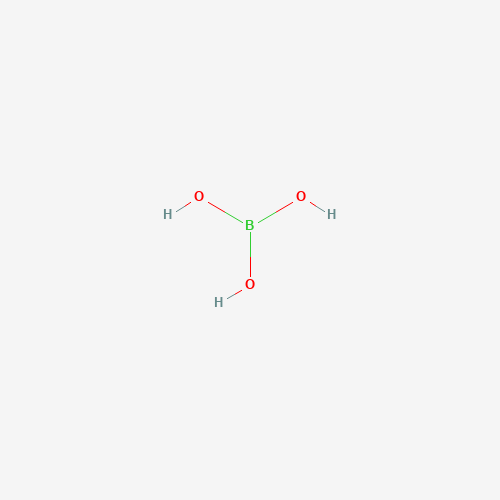
Boric acid (H3BO3) also called hydrogen borate, boracic acid, orthoboric acid is a weak acid of boron often used as an antiseptic, insecticide, flame retardant, neutron absorber, or precursor to other chemical compounds. It has the chemical formula H3BO3 (sometimes written B(OH)3), and exists in the form of colorless crystals or a white powder that dissolves in water. When occurring as a mineral, it is called sassolite. Borate is a food contaminant deriving from paper and paperboard in contact with food. It has limited use as an antibacterial agent in caviar.
Solubility 10 to 50 mg/mL at 66 °F (NTP, 1992)
Formula
BH3O3
Mol. Weight
61.84
CAS #
10043-35-3, 11113-50-1
Form
Liquid
State
Boric acid is an odorless white solid. Melting point 171 °C. Sinks and mixes with water. (USCG, 1999)
See origin →
Functions
Antimicrobial
Keeps your product from growing bacteria, mold, or yeast. Without these, that jar of cream becomes a petri dish in about a week.
Buffering
Denaturant
Fights Bacteria
Traditional Use
Used in traditional medicine and early 20th-century cosmetics as a mild antiseptic and preservative. Historically employed in skin salves and eye washes, though its use has been restricted in many countries due to toxicity concerns.
Skin Types
●all-skin-types
Best For
General
Pregnancy & Breastfeeding Safe
No
EWG
4
CIR
Safe as used
Pregnancy
No
CIR Safety Findings
Not a Sensitizer
medical-approval
all-shades-safe
Concentration Guide
5.0%
0%7%
Reg. Limit
EU regulatory limit: 5.0%. (a) 5% (as boric acid) (b) 0.1% (as boric acid) (c) 3% (as boric acid). (a) Not to be used for children under 3 years of age Not to be used on peeling or irritated skin (b) Not to be swallowed Not to be used for children under 3 years of age (c) Not to be used for chi... Source: EU Cosmetics Regulation (EC) 1223/2009, Annex III (Restricted Substances), Entry 1a.
Regulatory Agencies
Final Report on the Safety Assessment of Sodium Borate and Boric Acid
Cosmetic Ingredient Review (CIR) Expert Panel
International Journal of Toxicology
Boric Acid
European Commission
EU Cosmetic Ingredient Database (CosIng)
Toxicity of boric acid, borax and other boron containing compounds: A review.
Hadrup N, Frederiksen M, Sharma AK
Regulatory toxicology and pharmacology : RTP, 2021
Boric acid and its salts
Health Canada
Health Canada Cosmetic Ingredient Hotlist
Verified Jun 2026
Data: PubChem · CosIng · EWG · CIR