Capric Acid
AKA “Decanoic acid, 334-48-5, n-Decanoic acid, n-Capric acid, Decoic acid, Decylic acid, Caprinic acid, n-Decylic acid, 1-Nonanecarboxylic acid”
Acid
Ingredient Facts
Capric acid
AKA: Decanoic acid, 334-48-5, N-Decanoic acid, N-Capric acid, Decoic acid, Decylic acid, Caprinic acid, N-Decylic acid, 1-Nonanecarboxylic acid
Acid · Cleansing · EWG: 1
Synthetic
Cleanser
Fragrance
Emulsifier
Plant Oil
Acid
Clean
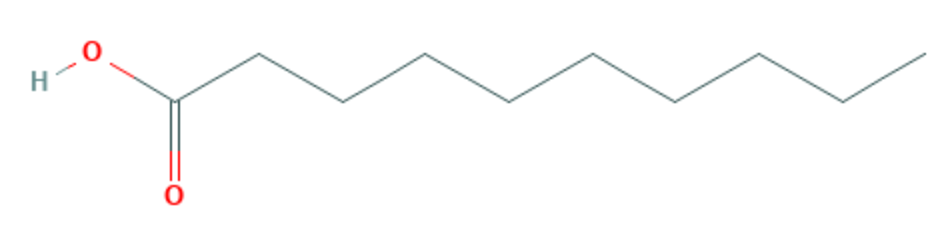
Capric acid is a member of the series of fatty acids found in oils and animal fats. The names of Caproic, Caprylic, and Capric acids are all derived from the word caper (Latin: 'goat'). These are colorless light yellowish transparent oily liquids with unconfortable smells. These are used in organic synthesis, manufacture of perfume, medicine, lubricating grease, rubber and dye.
Solubility less than 1 mg/mL at 64 °F (NTP, 1992)
Formula
C10H20O2
Mol. Weight
172.26
CAS #
334-48-5
Form
Liquid
State
Decanoic acid is a white crystalline solid with a rancid odor. Melting point 31.5 °C. Soluble in most organic solvents and in dilute nitric acid; non-toxic. Used to make esters for perfumes and fruit
See origin →
Functions
Cleansing
Makes oil and water mix so dirt, makeup, and sunscreen can actually be washed away. The reason your face wash foams.
Perfuming
Added for scent. Can be natural or synthetic. Common irritant and allergen — one of the top reasons people react to products.
Cleansing
Makes oil and water mix so dirt, makeup, and sunscreen can actually be washed away. The reason your face wash foams.
Emulsifying
Forces oil and water to stay mixed instead of separating into layers. The unsung hero holding your lotion together.
Surfactant Cleansing
Antioxidant
Traditional Use
A medium-chain saturated fatty acid found naturally in coconut oil and palm oil, used traditionally in soap-making for centuries. Isolated and used in modern cosmetics as a cleansing and conditioning agent.
Skin Types
●all-skin-types, gentle
Best For
General
Pregnancy & Breastfeeding Safe
Yes
10-Hydroxydecanoic Acid
European Commission
EU Cosmetic Ingredient Database (CosIng)
Capric Acid
European Commission
EU Cosmetic Ingredient Database (CosIng)
Hydroxycapric Acid
European Commission
EU Cosmetic Ingredient Database (CosIng)
Undecanoic Acid
European Commission
EU Cosmetic Ingredient Database (CosIng)
10-Hydroxydecanoic Acid
Environmental Working Group (EWG)
EWG Skin Deep Cosmetics Database
Capric Acid
Environmental Working Group (EWG)
EWG Skin Deep Cosmetics Database
Hydroxycapric Acid
Environmental Working Group (EWG)
EWG Skin Deep Cosmetics Database
Combating Lead/HFD Neurotoxicity in Rats: The Synergistic Effect of 10-Hydroxydecanoic Acid and Zinc Oxide Nanoparticles.
Saleh SR, Atef E, Maher AM, Ghareeb DA, Sheta E et al.
Biological trace element research, 2026
Verified Jun 2026
Data: PubChem · CosIng · EWG · CIR