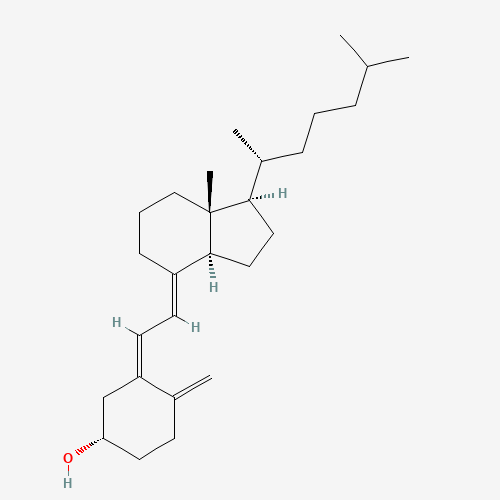
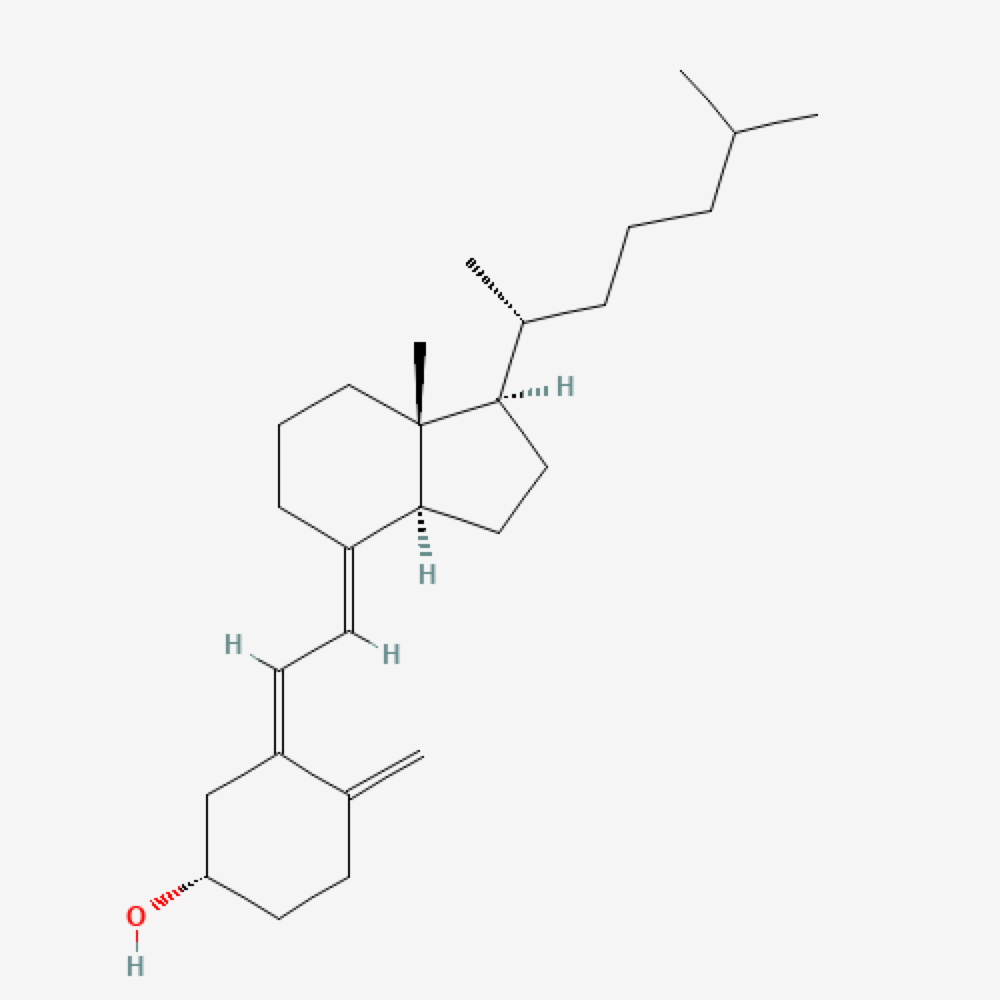
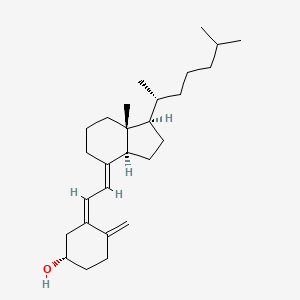
Cholecalciferol
AKA “Vitamin D3, 67-97-0, Colecalciferol, Calciol, Oleovitamin D3, Ricketon, Deparal, Arachitol, Delsterol”
Synthetic
Ingredient Facts
Cholecalciferol
AKA: Vitamin D3, 67-97-0, Colecalciferol, Calciol, Oleovitamin D3, Ricketon, Deparal, Arachitol, Delsterol
Synthetic · Skin Conditioning · EWG: 1
Synthetic
Skin Conditioner
Synthetic
Clean
Cholecalciferol is only found in individuals that have used or taken this drug. It is a derivative of 7-dehydroxycholesterol formed by ultraviolet rays breaking of the C9-C10 bond. It differs from ergocalciferol in having a single bond between C22 and C23 and lacking a methyl group at C24. [PubChem]The first step involved in the activation of vitamin D3 is a 25-hydroxylation which is catalysed by the 25-hydroxylase in the liver and then by other enzymes. The mitochondrial sterol 27-hydroxylase catalyses the first reaction in the oxidation of the side chain of sterol intermediates. The active form of vitamin D3 (calcitriol) binds to intracellular receptors that then function as transcription factors to modulate gene expression. Like the receptors for other steroid hormones and thyroid hormones, the vitamin D receptor has hormone-binding and DNA-binding domains. The vitamin D receptor forms a complex with another intracellular receptor, the retinoid-X receptor, and that heterodimer is wh
Solubility Insoluble (NTP, 1992)
Formula
C27H44O
Mol. Weight
384.60
CAS #
67-97-0
Form
Oil
State
Vitamin d3 appears as fine colorless crystals. Water insoluble. (NTP, 1992)
See origin →
Functions
Skin Conditioning
A catch-all term for ingredients that improve how skin looks and feels — softer, smoother, more supple. The workhorse behind most moisturizers.
Oral Care
Skin Conditioning Miscellaneous
Improves skin feel
Supports dental health
Traditional Use
Vitamin D was isolated in 1932. D3 (cholecalciferol) was synthesized and began appearing in skincare products in the 1980s-1990s after research demonstrated its role in skin cell regulation and immune function.
Skin Types
●all-skin-types
Best For
General
Pregnancy & Breastfeeding Safe
Yes
Investigating transdermal delivery of vitamin D3.
Alsaqr A, Rasoully M, Musteata FM
AAPS PharmSciTech, 2015
Targeting LINC00707 by vitamin D3 attenuates nitrogen mustard-caused dermal toxicity through inhibiting ferroptosis.
Dong X, He Y, Hu X, Wu J, Ye F et al.
Redox biology, 2025
Cholecalciferol
Environmental Working Group (EWG)
EWG Skin Deep Cosmetics Database
Cholecalciferol, 1 Alpha,25 Dihydroxy
Environmental Working Group (EWG)
EWG Skin Deep Cosmetics Database
Vitamin D3
Environmental Working Group (EWG)
EWG Skin Deep Cosmetics Database
Cholecalciferol
Health Canada
Health Canada Cosmetic Ingredient Hotlist
Effects of 1 alpha,25-dihydroxy-vitamin D3 and calcipotriol on organotypic cultures of outer root sheath cells: a potential model to evaluate antipsor
Limat A, Hunziker T, Braathen LR
Archives of dermatological research, 1993
Verified Jun 2026
Data: PubChem · CosIng · EWG · CIR