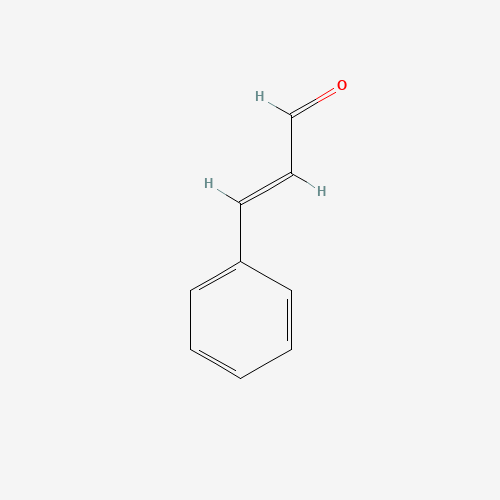
Cinnamal
AKA “cinnamaldehyde, 104-55-2, 3-Phenylacrylaldehyde, Zimtaldehyde, 2-Propenal, 3-phenyl-, 3-Phenylpropenal, Phenylacrolein, 3-Phenyl-2-propenal, (E)-3-phenylprop-2-enal”
Ingredient
Ingredient Facts
Cinnamal
AKA: Cinnamaldehyde, 104-55-2, 3-Phenylacrylaldehyde, Zimtaldehyde, 2-Propenal, 3-phenyl-, 3-Phenylpropenal, Phenylacrolein, 3-Phenyl-2-propenal, (E)-3-phenylprop-2-enal
Ingredient · Denaturant · EWG: 3
Synthetic
Fragrance
Not Clean
Cinnamaldehyde; 2-Propenal, 3-phenyl-
Solubility Dissolves in about 700 parts water, in about 7 volumes of 60% alcohol.
Formula
C9H8O
Mol. Weight
132.16
CAS #
104-55-2
Form
Liquid
State
Liquid, Other Solid; Liquid
See origin →
Functions
Denaturant
Flavouring
Perfuming
Added for scent. Can be natural or synthetic. Common irritant and allergen — one of the top reasons people react to products.
Makes Alcohol Undrinkable
Adds Flavor
Adds Fragrance
Adds pleasant taste
Adds pleasant scent
Traditional Use
Cinnamal is the primary aromatic compound found in cinnamon bark and is isolated for use as a fragrance component. It has no independent traditional use history, but is derived from cinnamon, which was historically valued in perfumery and traditional medicine.
Skin Types
●all-skin-types
Best For
General
Pregnancy & Breastfeeding Safe
Caution
Hexyl cinnamal: consideration of skin-sensitizing properties and suitability as a positive control.
Basketter D, White IR, McFadden JP, Kimber I
Cutaneous and ocular toxicology, 2015
Cinnamal, Cinnamyl Acetate, Cinnamyl Alcohol, Amyl Cinnamal and Amylcinnamyl Alcohol (defer to RIFM review)
Cosmetic Ingredient Review (CIR) Expert Panel
International Journal of Toxicology
Amyl Cinnamal
European Commission
EU Cosmetic Ingredient Database (CosIng)
Cinnamal
European Commission
EU Cosmetic Ingredient Database (CosIng)
Cinnamal
Environmental Working Group (EWG)
EWG Skin Deep Cosmetics Database
Verified Jun 2026
Data: PubChem · CosIng · EWG · CIR