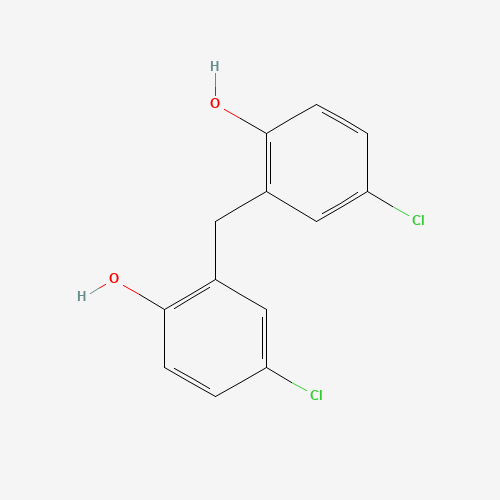
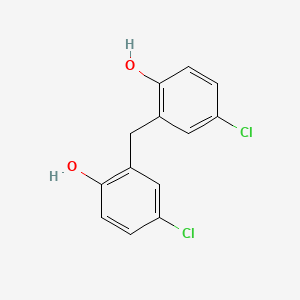
Dichlorophene
AKA “Dichlorophen, 97-23-4, Didroxane, Anthiphen, Parabis, Dicestal, Dichlorofen, Dichlorphen, Trivex”
Ingredient
Ingredient Facts
Dichlorophene
AKA: 97-23-4, Didroxane, Anthiphen, Parabis, Dicestal, Dichlorofen, Dichlorphen, Trivex
Ingredient · Antimicrobial · EWG: 3
Synthetic
Preservative
Not Clean
Dichlorophen is a nontoxic laxative vermicide of chlorinated phenol compound. Dichlorophen is used as a veterinary fungicide, anthelmintic, and anti-protozoan, as well as an ingredient in antimicrobial soaps and shampoos. This agent probably acts by increasing the clearing of intestinal contents, thereby eradicating tapeworm infections from the intestines.
Solubility less than 1 mg/mL at 72 °F (NTP, 1992)
Formula
C13H10Cl2O2
Mol. Weight
269.12
CAS #
97-23-4
Form
Powder
State
Dichlorophene appears as white slightly cream or light pink-colored powder. Melting point 177 °C. Slight phenolic odor and a saline phenolic taste. Moderately toxic. Used as a fungicide and bactericid
See origin →
Functions
Antimicrobial
Keeps your product from growing bacteria, mold, or yeast. Without these, that jar of cream becomes a petri dish in about a week.
Deodorant
Fights Bacteria
Traditional Use
Synthetic antimicrobial agent developed in the mid-20th century for use in soaps, shampoos, and deodorants. Created as an alternative to phenolic antimicrobials with improved efficacy and safety profile.
Skin Types
●all-skin-types
Best For
General
Pregnancy & Breastfeeding Safe
Caution
EWG
3
CIR
Insufficient data
Pregnancy
Caution
CIR Safety Findings
all-shades-safe
Potential Sensitizer
Concentration Guide
0.5%
0%1%
Reg. Limit
EU regulatory limit: 0.5%. Contains Dichlorophen Source: EU Cosmetics Regulation (EC) 1223/2009, Annex III (Restricted Substances), Entry 11.
Regulatory Agencies
Safety Assessment of Dichlorophene and Chlorophene
Cosmetic Ingredient Review (CIR) Expert Panel
International Journal of Toxicology
Dichlorophene
European Commission
EU Cosmetic Ingredient Database (CosIng)
Toxicogenetic evaluation of dichlorophene in peripheral blood and in the cells of the immune system using molecular and flow cytometric approaches.
Lone MI, Nabi A, Dar NJ, Hussain A, Nazam N et al.
Chemosphere, 2017
Safety assessment of dichlorophene and chlorophene.
Yamarik TA
International journal of toxicology, 2004
Verified Jun 2026
Data: PubChem · CosIng · EWG · CIR