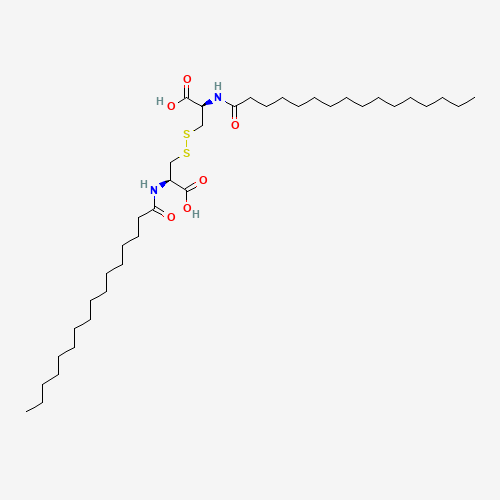
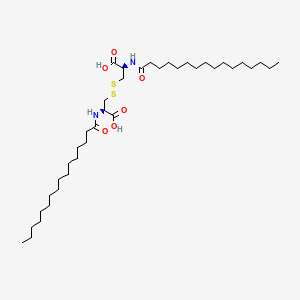
Dipalmitoyl Cystine
AKA “17627-10-0, L-Cystine, N, N'-bis(1-oxohexadecyl)-, N'-Dipalmitoyl-L-cystine, Palmitoyl cystine, S7NI60Y64I, EINECS 241-607-2, DTXSID10884979, CYSTINE, N'-DIPALMITOYL-, L-, RefChem:588777”
Hair Conditioning
Ingredient Facts
Dipalmitoyl cystine
AKA: 17627-10-0, L-Cystine, N'-bis(1-oxohexadecyl)-, N'-Dipalmitoyl-L-cystine, S7NI60Y64I, EINECS 241-607-2, DTXSID10884979, N'-DIPALMITOYL-, L-, RefChem:588777
Hair Conditioning · Antistatic · EWG: 4
Synthetic
Skin Conditioner
Hair Care
Not Clean
The panel concluded that the 115 amino acid alkyl amides listed below are safe in the present practices of use and concentration in cosmetics, when formulated to be non-irritating...Dipalmitoyl Cystine
Formula
C38H72N2O6S2
Mol. Weight
717.10
CAS #
17627-10-0
Form
Powder
See origin →
Functions
Antistatic
Hair Conditioning
A catch-all term for ingredients that improve how skin looks and feels — softer, smoother, more supple. The workhorse behind most moisturizers.
Reduces Static
Conditions Hair
Antioxidant Protection
Locks In Moisture
Wound Healing
Reduces flyaways
Softens and detangles hair
Traditional Use
A synthetic amino acid derivative developed in the late 20th century for use as a skin conditioning and antioxidant agent in cosmetics. It mimics naturally occurring cystine found in keratin but in a stabilized form designed to improve skin barrier function.
Skin Types
●all-skin-types
Best For
Loss of Elasticity
Pregnancy & Breastfeeding Safe
Yes
EWG
4
CIR
Safe as used
Pregnancy
Yes
CIR Safety Findings
Not Phototoxic
medical-approval
all-shades-safe
Concentration Guide
Industry Max
Industry typically uses up to 0.05% in leave-on products (18 products reported). Source: CIR Safety Assessment (CIR Seq 607).
Regulatory Agencies
Cystine
European Commission
EU Cosmetic Ingredient Database (CosIng)
Dipalmitoyl Cystine
European Commission
EU Cosmetic Ingredient Database (CosIng)
Chitosan/β-glucan/cystine multifunctional hydrogel loading retinol liposomes for efficiently treating UV-induced skin damage and aging.
Song Q, Wang Y, Tan Z, Xiang H, Liu Q et al.
Carbohydrate polymers, 2026
Verified Jun 2026
Data: PubChem · CosIng · EWG · CIR