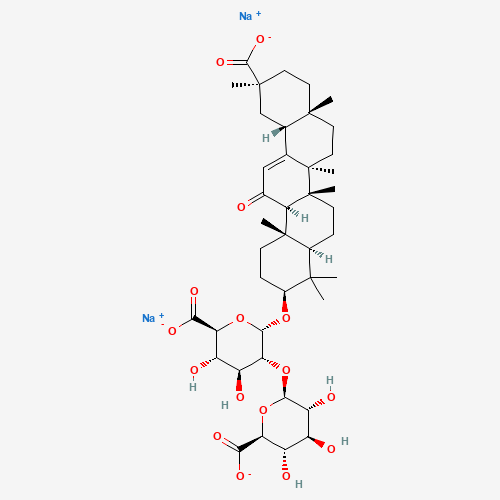
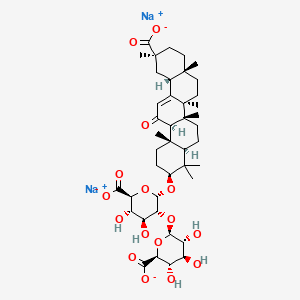
Disodium Glycyrrhizate
AKA “71277-79-7, Disodium glycyrrhizin, UNII-L8Q0US0J7V, L8Q0US0J7V, CCRIS 1966, Glycyrrhizinic acid disodium salt, DISODIUM GLYCYRRHIZATE [WHO-DD], alpha-D-Glucopyranosiduronic acid, (3-beta, 20-beta)-20-carboxy-11-oxo-30-norolean-12-en-3-yl-2-O-beta-D-glucopyranuronosyl-, disodium salt, RefChem:200673
Skin Conditioning
Ingredient Facts
Disodium glycyrrhizate
AKA: 71277-79-7, Disodium glycyrrhizin, UNII-L8Q0US0J7V, L8Q0US0J7V, CCRIS 1966, Glycyrrhizinic acid disodium salt, DISODIUM GLYCYRRHIZATE [WHO-DD], Alpha-D-Glucopyranosiduronic acid, (3-beta, 20-beta)-20-carboxy-11-oxo-30-norolean-12-en-3-yl-2-O-beta-D-glucopyranuronosyl-, Disodium salt, RefChem:200673
Skin Conditioning · Skin Conditioning · EWG: 4
Synthetic
Skin Conditioner
Not Clean
.alpha.-D-Glucopyranosiduronic acid (3.beta., 20.beta.)-20 -carboxy-11-oxo-30-norolean-12-en-3-yl 2-0-.beta.-D-glucopyranurosyl-, disodium salt
Formula
C42H59Na2O16-
Mol. Weight
865.90
CAS #
71277-79-7
Form
Powder
See origin →
Functions
Skin Conditioning
A catch-all term for ingredients that improve how skin looks and feels — softer, smoother, more supple. The workhorse behind most moisturizers.
Brightens uneven skin tone
Evens pigmentation
Quells irritation
Traditional Use
Derived from licorice root (used for over 4,000 years in Traditional Chinese Medicine and Ayurveda); the disodium salt form was developed to provide anti-inflammatory and skin-soothing benefits in modern cosmetics.
Skin Types
all-skin-types
Best For
Redness
Pregnancy & Breastfeeding Safe
Yes
EWG
4
CIR
Safe as used
Pregnancy
Yes
CIR Safety Findings
Not an Irritant
medical-approval
all-shades-safe
Regulatory Status
USApermitted
EUrestricted
JAPANrestricted
CANADArestricted
Verified Jun 2026
Data: PubChem · CosIng · EWG · CIR