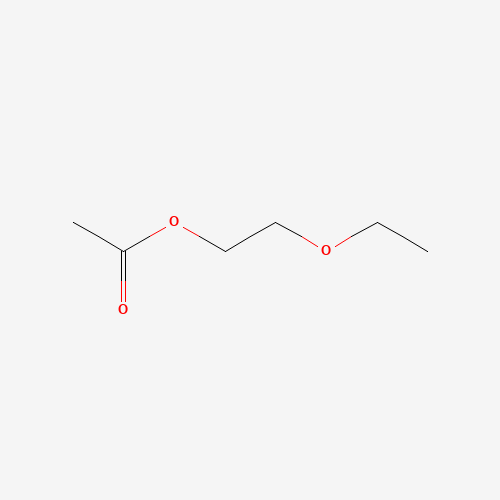
Ethoxyethanol Acetate
AKA “2-Ethoxyethyl acetate, 111-15-9, ETHYLENE GLYCOL MONOETHYL ETHER ACETATE, Cellosolve acetate, Oxitol acetate, Oxytol acetate, 2-Ethoxyethanol acetate, Ethyl cellosolve acetate, 1-Acetoxy-2-ethoxyethane, Ethylglycol acetate”
Ingredient
Ingredient Facts
Ethoxyethanol acetate
AKA: 2-Ethoxyethyl acetate, 111-15-9, ETHYLENE GLYCOL MONOETHYL ETHER ACETATE, Cellosolve acetate, Oxitol acetate, Oxytol acetate, 2-Ethoxyethanol acetate, Ethyl cellosolve acetate, 1-Acetoxy-2-ethoxyethane, Ethylglycol acetate
Ingredient · Solvent · EWG: 4
Synthetic
Solvent
Not Clean
On the basis of the animal and clinical data included in this report, the CIR Expert Panel concludes that Ethoxyethanol and Ethoxyethanol Acetate are unsafe for use in cosmetic products.
Solubility greater than or equal to 100 mg/mL at 66 °F (NTP, 1992)
Formula
C6H12O3
Mol. Weight
132.16
CAS #
111-15-9
Form
Liquid
State
Ethylene glycol monoethyl ether acetate appears as a clear colorless liquid with a pleasant odor. Flash point of 120 °F. Less dense than water. Vapors are heavier than air.
See origin →
Functions
Solvent
Dissolves other ingredients so they distribute evenly in the formula. Often the invisible "base" everything else is mixed into.
Dissolves Ingredients
Locks In Moisture
Dissolves other ingredients
Traditional Use
A synthetic ester solvent created in the early 20th century for industrial applications. Later incorporated into cosmetics as a solvent and fragrance carrier with improved stability compared to simple alcohols.
Skin Types
●all-skin-types
Best For
General
Pregnancy & Breastfeeding Safe
Caution
Final Report on the Safety Assessment of Ethoxyethanol and Ethoxyethanol Acetate
Cosmetic Ingredient Review (CIR) Expert Panel
International Journal of Toxicology
Ethoxyethanol acetate
Health Canada
Health Canada Cosmetic Ingredient Hotlist
Methoxyethanol acetate
Health Canada
Health Canada Cosmetic Ingredient Hotlist
Final report on the safety assessment of ethoxyethanol and ethoxyethanol acetate.
Johnson W Jr, Cosmetic Ingredient Review Expert panel
International journal of toxicology, 2002
Final report on the safety assessment of ethoxyethanol and ethoxyethanol acetate.
Johnson W Jr, Cosmetic Ingredient Review Expert panel
International journal of toxicology, 2002
Verified Jun 2026
Data: PubChem · CosIng · EWG · CIR