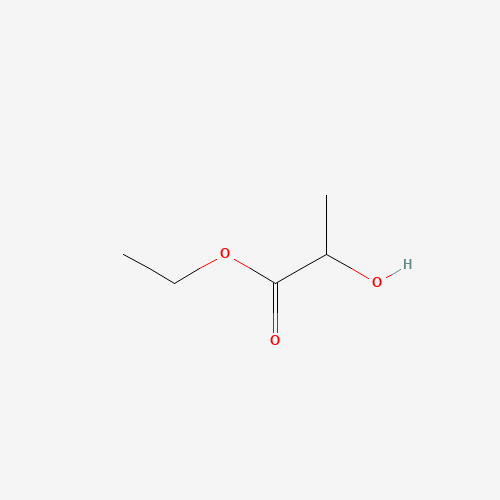
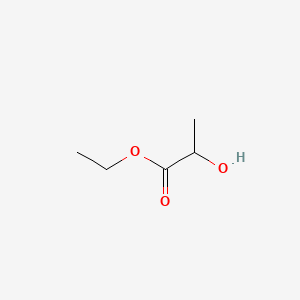
Ethyl Lactate
AKA “97-64-3, Ethyl 2-hydroxypropanoate, Solactol, Actylol, Acytol, Ethyl 2-hydroxypropionate, Propanoic acid, 2-hydroxy-, ethyl ester, Lactate d'ethyle, 2-Hydroxypropanoic acid ethyl ester”
Ingredient
Ingredient Facts
Ethyl lactate
AKA: 97-64-3, Ethyl 2-hydroxypropanoate, Solactol, Actylol, Acytol, Ethyl 2-hydroxypropionate, Propanoic acid, 2-hydroxy-, Ethyl ester, Lactate d'ethyle, 2-Hydroxypropanoic acid ethyl ester
Ingredient · Perfuming · EWG: 4
Synthetic
Fragrance
Solvent
Chemical Exfoliant
Not Clean
Propanoic acid, 2-hydroxy-, ethyl ester
Effective at 47.51%
Solubility Miscible with water
Formula
C5H10O3
Mol. Weight
118.13
CAS #
97-64-3
Form
Liquid
State
Ethyl lactate appears as a clear colorless liquid with a mild odor. Flash point 115 °F. Denser than water and soluble in water. Vapors heavier than air.
See origin →
Functions
Perfuming
Added for scent. Can be natural or synthetic. Common irritant and allergen — one of the top reasons people react to products.
Solvent
Dissolves other ingredients so they distribute evenly in the formula. Often the invisible "base" everything else is mixed into.
Adds Fragrance
Dissolves Ingredients
Antioxidant Protection
Wound Healing
Adds pleasant scent
Dissolves other ingredients
Traditional Use
Developed as a synthetic ester derivative of lactic acid. Used in modern skincare formulations as a mild exfoliant and humectant, offering a gentler profile than pure lactic acid.
Skin Types
●all-skin-types
Best For
Dullness
Pregnancy & Breastfeeding Safe
Yes
EWG
4
CIR
Safe as used
Pregnancy
Yes
CIR Safety Findings
medical-approval
all-shades-safe
Phototoxicity Concern
Concentration Guide
0.015%
95.0%
0%100%
Effective Range
CIR reported use: 0.015-10.2 | 0.5-9b | 0.15-95
Regulatory Agencies
RIFM fragrance ingredient safety assessment, pentanedioic acid, 1,5-dimethyl ester, CAS Registry Number 1119-40-0.
Api AM, Belsito D, Botelho D, Browne D, Bruze M et al.
Food and chemical toxicology : an international journal published for the British Industrial Biological Research Association, 2018
Final Report on the Safety Assessment of Ethyl Ester of PVM/MA Copolymer and Butyl Ester of PVM/MA Copolymer
Cosmetic Ingredient Review (CIR) Expert Panel
International Journal of Toxicology
Ethyl Ester of PVM/MA Copolymer
European Commission
EU Cosmetic Ingredient Database (CosIng)
Ethyl Lactate
European Commission
EU Cosmetic Ingredient Database (CosIng)
Methyl Lactate
European Commission
EU Cosmetic Ingredient Database (CosIng)
Potassium Ethyl Ester of PVM/MA Copolymer
European Commission
EU Cosmetic Ingredient Database (CosIng)
Shea Butter Ethyl Esters
European Commission
EU Cosmetic Ingredient Database (CosIng)
Silybum marianum ethyl ester
European Commission
EU Cosmetic Ingredient Database (CosIng)
Ethyl Ester of PVM/MA Copolymer
Environmental Working Group (EWG)
EWG Skin Deep Cosmetics Database
Methyl Lactate
Environmental Working Group (EWG)
EWG Skin Deep Cosmetics Database
Shea Butter Ethyl Esters
Environmental Working Group (EWG)
EWG Skin Deep Cosmetics Database
Detection of fatty acid ethyl esters in skin surface lipids as biomarkers of ethanol consumption in alcoholics, social drinkers, light drinkers, and t
González-Illán F, Ojeda-Torres G, Díaz-Vázquez LM, Rosario O
Journal of analytical toxicology, 2011
3-Imidazol-4-ylacrylic acid and its ethyl ester
Health Canada
Health Canada Cosmetic Ingredient Hotlist
Synthesis of mixed esters of ascorbic acid using methyl esters of palm and soybean oils.
Hsieh HJ, Chen JW, Giridhar R, Wu WT
Preparative biochemistry & biotechnology, 2005
Extraction of Polyphenols and Vitamins Using Biodegradable ATPS Based on Ethyl Lactate.
Velho P, Marques L, Macedo EA
Molecules (Basel, Switzerland), 2022
Verified Jun 2026
Data: PubChem · CosIng · EWG · CIR