Formic Acid
AKA “64-18-6, Methanoic acid, Formylic acid, Aminic acid, Bilorin, Hydrogen carboxylic acid, Formisoton, Formira, Myrmicyl”
Acid
Ingredient Facts
Formic acid
AKA: 64-18-6, Methanoic acid, Formylic acid, Aminic acid, Bilorin, Hydrogen carboxylic acid, Formisoton, Formira, Myrmicyl
Acid · Preservative · EWG: 4
Synthetic
Preservative
Acid
Not Clean
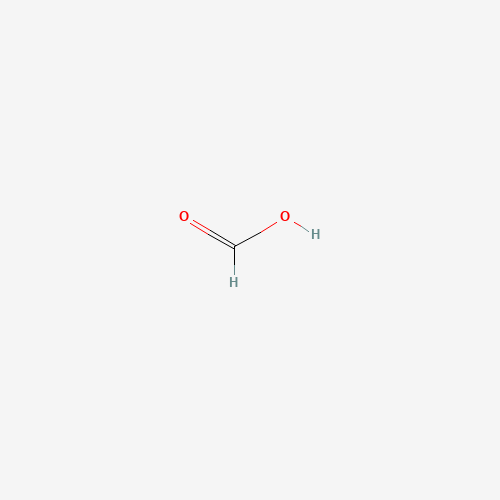
Formic acid is the simplest carboxylic acid, containing a single carbon. Occurs naturally in various sources including the venom of bee and ant stings, and is a useful organic synthetic reagent. Principally used as a preservative and antibacterial agent in livestock feed. Induces severe metabolic acidosis and ocular injury in human subjects. It has a role as a metabolite, an antibacterial agent, a solvent, a protic solvent and an astringent. It is a conjugate acid of a formate.
Solubility greater than or equal to 100 mg/mL at 70 °F (NTP, 1992)
Formula
CH2O2
Mol. Weight
46.02
CAS #
64-18-6
Form
Liquid
State
Formic acid appears as a colorless liquid with a pungent odor. Flash point 156 °F. Density 10.2 lb / gal. Corrosive to metals and tissue.
See origin →
Functions
Ph Adjusters
Preservative
Keeps your product from growing bacteria, mold, or yeast. Without these, that jar of cream becomes a petri dish in about a week.
Moisturizing
Prevents microbial growth
Provides scent
Adjusts product pH
Traditional Use
Historically obtained from ant venom and found in stinging nettles, formic acid was used in traditional European folk medicine for joint and skin conditions. Modern cosmetic use as a pH buffer and preservative dates to the 20th century.
Skin Types
●all-skin-types
Best For
General
Pregnancy & Breastfeeding Safe
Caution
EWG
4
CIR
Safe as used
Pregnancy
Caution
CIR Safety Findings
Not an Irritant
medical-approval
all-shades-safe
Concentration Guide
0.5%
0%1%
Reg. Limit
EU regulatory limit: 0.5%. Source: EU Cosmetics Regulation (EC) 1223/2009, Annex V (Preservatives), Entry 14.
Regulatory Agencies
Final Report on the Safety Assessment of Formic Acid
Cosmetic Ingredient Review (CIR) Expert Panel
International Journal of Toxicology
Safety Assessment of Formic Acid and Sodium Formate as Used in Cosmetics
Cosmetic Ingredient Review (CIR) Expert Panel
International Journal of Toxicology
Formic Acid
European Commission
EU Cosmetic Ingredient Database (CosIng)
Safety Assessment of Formic Acid and Sodium Formate as Used in Cosmetics.
Johnson W Jr, Heldreth B, Bergfeld WF, Belsito DV, Hill RA et al.
International journal of toxicology, 2016
Safety Assessment of Formic Acid and Sodium Formate as Used in Cosmetics.
Johnson W Jr, Heldreth B, Bergfeld WF, Belsito DV, Hill RA et al.
International journal of toxicology, 2016
Verified Jun 2026
Data: PubChem · CosIng · EWG · CIR