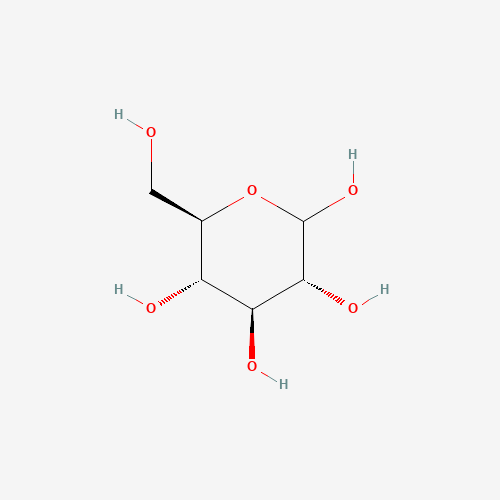
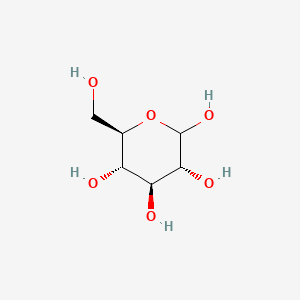
Glucose
AKA “D-Glucopyranose, Glucopyranose, Blood sugar, (3R, 4S, 5S, 6R)-6-(hydroxymethyl)oxane-2, 3, 4, 5-tetrol, Grape sugar, D-Glc, Traubenzucker, Glucosteril, Cartose, anhydrous glucose”
Humectant
Ingredient Facts
Glucose
AKA: D-Glucopyranose, Glucopyranose, Blood sugar, (3R, 4S, 5S, 6R)-6-(hydroxymethyl)oxane-2, 3, 4, 5-tetrol, Grape sugar, D-Glc, Traubenzucker, Glucosteril, Cartose, Anhydrous glucose
Humectant · Humectant · EWG: 1
Synthetic
Humectant
Clean
Glucose is a simple sugar (monosaccharide) generated during phosynthesis involving water, carbon and sunlight in plants. It is produced in humans via hepatic gluconeogenesis and breakdown of polymeric glucose forms (glycogenolysis). It circulates in human circulation as blood glucose and acts as an essential energy source for many organisms through aerobic or anaerobic respiration and fermentation. It is primarily stored as starch in plants and glycogen in animals to be used in various metabolic processes in the cellular level. Its aldohexose stereoisomer, dextrose or D-glucose, is the most commonly occurring isomer of glucose in nature. L-glucose is a synthesized enantiomer that is used as a low-calorie sweetener and laxative. The unspecified form of glucose is commonly supplied as an injection for nutritional supplementation or metabolic disorders where glucose levels are improperly regulated. Glucose is listed on the World Health Organization's List of Essential Medicines, the most
Effective at 48.9%
Solubility Soluble
Formula
C6H12O6
Mol. Weight
180.16
CAS #
50-99-7
Form
Powder
State
Watery odorless colorless liquid. Denser than water and soluble in water. Hence sinks in and mixes with water. (USCG, 1999)
See origin →
Functions
Humectant
A moisture magnet. Pulls water from the air and deeper skin layers up to the surface to keep skin plump and hydrated.
Locks In Moisture
Traditional Use
A simple sugar, glucose was first isolated in the 19th century. Used in modern cosmetics for humectancy; historically obtained from honey and fruits in traditional preparations.
Skin Types
●all-skin-types, gentle
Best For
Dehydration
Pregnancy & Breastfeeding Safe
Yes
EWG
1
CIR
Safe as used
Pregnancy
Yes
CIR Safety Findings
Not a Sensitizer
ewg-1
medical-approval
pregnancy-nursing-safe
all-shades-safe
Concentration Guide
3e-05%
97.8%
0%100%
Effective Range
CIR reported use: 0.0001-0.18 | 0.00003-97.8
Regulatory Agencies
Double Polishing Peel
Alpyn Beauty
The Radiance Ritual
Alpyn Beauty
Mascara 101™
Saie
Slip Tint™ Tinted Moisturizer
Saie
Sunvisor™
Saie
Mini Mascara 101™
Saie
Mini Sunvisor™
Saie
Bestsellers Bundle
Saie
Complexion Boost
Saie
Saieglow™ Duo
Saie
Skin Glow Duo
Saie
Slip Brush Duo
Saie
The Allure Bundle 2024
Saie
The Slip Tint™ Family
Saie
Slip Tint™ Undetectable Baked Setting Powder
Saie
Day & Night Fundamentals
Odacité
Day & Night Eye Care Duo
Odacité
The New Tendency Duo
Nécessaire
The New Tendency Complete Set
Nécessaire
The Body Essentials
Nécessaire
The Body Wash Discovery Collection
Nécessaire
Fortifying Gel Moisturizer
Ursa Major
Multi-Retinol Night Emulsion
Marie Veronique
All Day Age-Delay Emulsion
Marie Veronique
Barrier Build Skin Protectant Cream
ILIA Beauty
Multi Retinol Night Emulsion
Credo Beauty
The Body Lotion 70 ml | Multi-Peptide | Olibanum
Nécessaire
The Body Wash 100 ml | Multi-Enzyme | Olibanum
Nécessaire
Final Report on the Safety Assessment of Glucose Glutamate
Cosmetic Ingredient Review (CIR) Expert Panel
International Journal of Toxicology
Safety Assessment of Methyl Glucose Polyethers and Esters as Used in Cosmetics
Cosmetic Ingredient Review (CIR) Expert Panel
International Journal of Toxicology
Allergic contact dermatitis due to methyl glucose dioleate.
Corazza M, Levratti A, Virgili A
Contact dermatitis, 2001
Cyclotetraglucose
European Commission
EU Cosmetic Ingredient Database (CosIng)
Disodium Glucose Phosphate
European Commission
EU Cosmetic Ingredient Database (CosIng)
Glucose
European Commission
EU Cosmetic Ingredient Database (CosIng)
Glucose Glutamate
European Commission
EU Cosmetic Ingredient Database (CosIng)
Glucose Pentaacetate
European Commission
EU Cosmetic Ingredient Database (CosIng)
Methyl Glucose Caprylate/Caprate
European Commission
EU Cosmetic Ingredient Database (CosIng)
Methyl Glucose Dioleate
European Commission
EU Cosmetic Ingredient Database (CosIng)
Methyl Glucose Isostearate
European Commission
EU Cosmetic Ingredient Database (CosIng)
Methyl Glucose Laurate
European Commission
EU Cosmetic Ingredient Database (CosIng)
Methyl Glucose Sesquicaprylate/Sesquicaprate
European Commission
EU Cosmetic Ingredient Database (CosIng)
Methyl Glucose Sesquicocoate
European Commission
EU Cosmetic Ingredient Database (CosIng)
Methyl Glucose Sesquiisostearate
European Commission
EU Cosmetic Ingredient Database (CosIng)
Methyl Glucose Sesquilaurate
European Commission
EU Cosmetic Ingredient Database (CosIng)
Methyl Glucose Sesquioleate
European Commission
EU Cosmetic Ingredient Database (CosIng)
Methyl Glucose Sesquistearate
European Commission
EU Cosmetic Ingredient Database (CosIng)
PEG-120 Methyl Glucose Dioleate
European Commission
EU Cosmetic Ingredient Database (CosIng)
PEG-120 Methyl Glucose Triisostearate
European Commission
EU Cosmetic Ingredient Database (CosIng)
PEG-120 Methyl Glucose Trioleate
European Commission
EU Cosmetic Ingredient Database (CosIng)
PEG-20 Methyl Glucose Distearate
European Commission
EU Cosmetic Ingredient Database (CosIng)
PEG-20 Methyl Glucose Sesquicaprylate/Sesquicaprate
European Commission
EU Cosmetic Ingredient Database (CosIng)
PEG-20 Methyl Glucose Sesquilaurate
European Commission
EU Cosmetic Ingredient Database (CosIng)
PEG-20 Methyl Glucose Sesquistearate
European Commission
EU Cosmetic Ingredient Database (CosIng)
PEG-80 Methyl Glucose Laurate
European Commission
EU Cosmetic Ingredient Database (CosIng)
PPG-10 Methyl Glucose Ether
European Commission
EU Cosmetic Ingredient Database (CosIng)
PPG-20 Methyl Glucose Ether
European Commission
EU Cosmetic Ingredient Database (CosIng)
PPG-20 Methyl Glucose Ether Acetate
European Commission
EU Cosmetic Ingredient Database (CosIng)
PPG-20 Methyl Glucose Ether Distearate
European Commission
EU Cosmetic Ingredient Database (CosIng)
PPG-25 Methyl Glucose Ether
European Commission
EU Cosmetic Ingredient Database (CosIng)
sodium lauryl glucose carboxylate
European Commission
EU Cosmetic Ingredient Database (CosIng)
Glucose
Environmental Working Group (EWG)
EWG Skin Deep Cosmetics Database
Glucose Pentaacetate
Environmental Working Group (EWG)
EWG Skin Deep Cosmetics Database
Methyl Glucose Caprylate/Caprate
Environmental Working Group (EWG)
EWG Skin Deep Cosmetics Database
Methyl Glucose Dioleate
Environmental Working Group (EWG)
EWG Skin Deep Cosmetics Database
Methyl Glucose Sesquistearate
Environmental Working Group (EWG)
EWG Skin Deep Cosmetics Database
PEG-120 Methyl Glucose Dioleate
Environmental Working Group (EWG)
EWG Skin Deep Cosmetics Database
PEG-120 Methyl Glucose Trioleate
Environmental Working Group (EWG)
EWG Skin Deep Cosmetics Database
PEG-20 Methyl Glucose Distearate
Environmental Working Group (EWG)
EWG Skin Deep Cosmetics Database
PEG-20 Methyl Glucose Sesquistearate
Environmental Working Group (EWG)
EWG Skin Deep Cosmetics Database
PPG-10 Methyl Glucose Ether
Environmental Working Group (EWG)
EWG Skin Deep Cosmetics Database
PPG-20 Methyl Glucose Ether
Environmental Working Group (EWG)
EWG Skin Deep Cosmetics Database
PPG-20 Methyl Glucose Ether Distearate
Environmental Working Group (EWG)
EWG Skin Deep Cosmetics Database
sodium lauryl glucose carboxylate
Environmental Working Group (EWG)
EWG Skin Deep Cosmetics Database
Safety Assessment of Methyl Glucose Polyethers and Esters as Used in Cosmetics.
Johnson W Jr, Heldreth B, Bergfeld WF, Belsito DV, Hill RA et al.
International journal of toxicology, 2016
Safety Assessment of Methyl Glucose Polyethers and Esters as Used in Cosmetics.
Johnson W Jr, Heldreth B, Bergfeld WF, Belsito DV, Hill RA et al.
International journal of toxicology, 2016
Traditionally Used Plants in the Treatment of Diabetes Mellitus: Screening for Uptake Inhibition of Glucose and Fructose in the Caco2-Cell Model.
Schreck K, Melzig MF
Frontiers in pharmacology, 2021
Jingfang Granules improve glucose metabolism disturbance and inflammation in mice with urticaria by up-regulating LKB1/AMPK/SIRT1 axis.
Sun C, Liang H, Zhao Y, Li S, Li X et al.
Journal of ethnopharmacology, 2023
Verified Jun 2026
Data: PubChem · CosIng · EWG · CIR