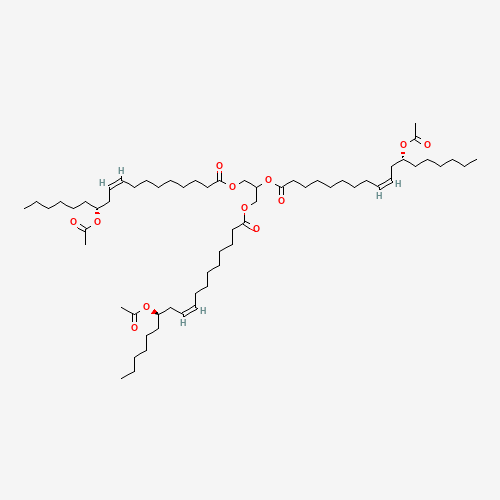
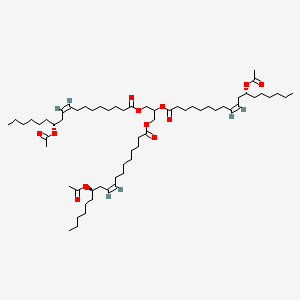
Glyceryl Triacetyl Ricinoleate
AKA “9-Octadecenoic acid, 12-(acetyloxy)-, 1, 2, 3-propanetriyl ester, (9Z, 9'Z, 9''Z, 12R, 12'R, 12''R)-, UNII-6TX6N2LEXN, 6TX6N2LEXN, FLEXRICIN P 8, EINECS 202-935-1, TRIRICINOLEIN TRIACETATE, DTXSID0026674, GLYCERYL TRIACETORICINOLEATE, 3-Propanetriyl tris((R)-12-(acetoxy)oleate)
Emollient
Ingredient Facts
Glyceryl triacetyl ricinoleate
AKA: 9-Octadecenoic acid, 12-(acetyloxy)-, 1, 2, 3-propanetriyl ester, (9Z, 9'Z, 9''Z, 12R, 12'R, 12''R)-, UNII-6TX6N2LEXN, 6TX6N2LEXN, FLEXRICIN P 8, EINECS 202-935-1, TRIRICINOLEIN TRIACETATE, DTXSID0026674, GLYCERYL TRIACETORICINOLEATE, 3-Propanetriyl tris((R)-12-(acetoxy)oleate)
Emollient · Emollient · EWG: 1
Synthetic
Emollient
Skin Conditioner
Clean
1,2,3-Propanetriyl tris[(R)-12-(acetoxy)oleate]
Formula
C63H110O12
Mol. Weight
1059.50
CAS #
101-34-8
Form
Liquid
See origin →
Functions
Emollient
Fills in the tiny cracks between skin cells to make everything feel smooth and soft. The "silky finish" ingredient.
Locks In Moisture
Traditional Use
A synthetic ingredient combining glycerin, acetic acid, and ricinoleic acid (from castor oil). Developed for cosmetic use as an emollient and film-forming agent.
Skin Types
all-skin-types
Best For
Dryness
Pregnancy & Breastfeeding Safe
Yes
EWG
1
CIR
Safe as used
Pregnancy
Yes
CIR Safety Findings
Not a Sensitizer
medical-approval
all-shades-safe
Regulatory Status
USApermitted
EUrestricted
JAPANrestricted
CANADArestricted
Verified Jun 2026
Data: PubChem · CosIng · EWG · CIR