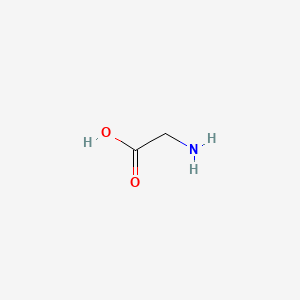
Glycine
AKA “56-40-6, 2-Aminoacetic acid, aminoacetic acid, Aminoethanoic acid, Glycocoll, Glycolixir, Glicoamin, Glycosthene, Aciport”
Skin Conditioning
Ingredient Facts
Glycine
AKA: 56-40-6, 2-Aminoacetic acid, Aminoacetic acid, Aminoethanoic acid, Glycocoll, Glycolixir, Glicoamin, Glycosthene, Aciport
Skin Conditioning · Antistatic · EWG: 1
Plant-Derived Synthetic
Skin Conditioner
Hair Care
Amino Acid
Clean
Glycine is a simple, nonessential amino acid, although experimental animals show reduced growth on low-glycine diets. The average adult ingests 3 to 5 grams of glycine daily. Glycine is involved in the body's production of DNA, phospholipids and collagen, and in release of energy. Glycine levels are effectively measured in plasma in both normal patients and those with inborn errors of glycine metabolism. Nonketotic hyperglycinaemia (OMIM 606899) is an autosomal recessive condition caused by deficient enzyme activity of the glycine cleavage enzyme system (EC 2.1.1.10). The glycine cleavage enzyme system comprises four proteins: P-, T-, H- and L-proteins (EC 1.4.4.2, EC 2.1.2.10 and EC 1.8.1.4 for P-, T- and L-proteins). Mutations have been described in the GLDC (OMIM 238300), AMT (OMIM 238310), and GCSH (OMIM 238330) genes encoding the P-, T-, and H-proteins respectively. The glycine cleavage system catalyses the oxidative conversion of glycine into carbon dioxide and ammonia, with the
Effective at 2.0%
Solubility greater than or equal to 100 mg/mL at 64 °F (NTP, 1992)
Formula
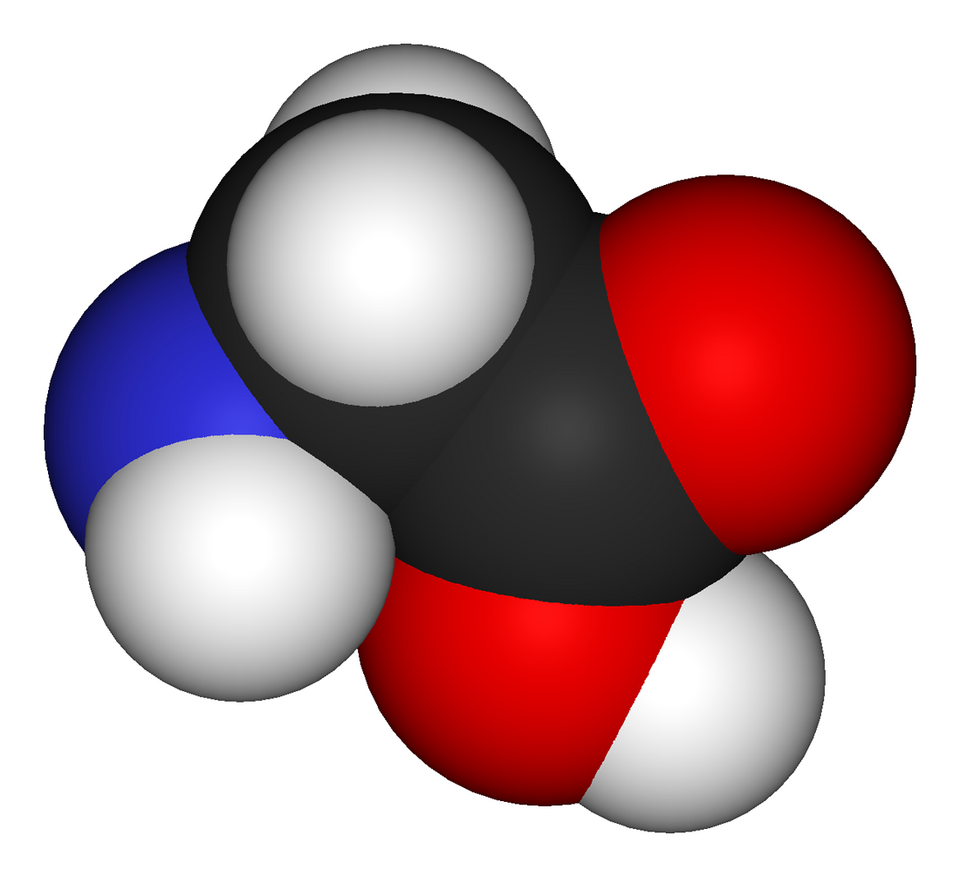
C2H5NO2
Mol. Weight
75.07
CAS #
56-40-6
Form
Powder
See origin →
Functions
Antistatic
Buffering
Hair Conditioning
A catch-all term for ingredients that improve how skin looks and feels — softer, smoother, more supple. The workhorse behind most moisturizers.
Skin Conditioning
A catch-all term for ingredients that improve how skin looks and feels — softer, smoother, more supple. The workhorse behind most moisturizers.
Boosts collagen production
Locks in moisture
Traditional Use
An amino acid discovered in gelatin in 1820 and later identified as a major amino acid in collagen. Historically used in skincare for its hydrating and skin-soothing properties, particularly in modern formulations targeting anti-aging and moisture retention.
Skin Types
●all-skin-types
Best For
Dehydration
Pregnancy & Breastfeeding Safe
Yes
EWG
1
CIR
Safe as used
Pregnancy
Yes
CIR Safety Findings
Not Phototoxic
medical-approval
all-shades-safe
Concentration Guide
4e-06%
4.0%
0%100%
Effective Range
CIR reported use: 0.000004-2 | 0.002-0.005 | 0.0005-4
Regulatory Agencies
Capryloyl Glycine
European Commission
EU Cosmetic Ingredient Database (CosIng)
Glycine
European Commission
EU Cosmetic Ingredient Database (CosIng)
Glycine Max (Soybean) Callus Culture
European Commission
EU Cosmetic Ingredient Database (CosIng)
Glycine Max (Soybean) Callus Culture Extract
European Commission
EU Cosmetic Ingredient Database (CosIng)
Glycine Max (Soybean) Callus Extract
European Commission
EU Cosmetic Ingredient Database (CosIng)
Glycine Max (Soybean) Fiber
European Commission
EU Cosmetic Ingredient Database (CosIng)
Glycine Max (Soybean) Flower/Leaf/Stem Juice
European Commission
EU Cosmetic Ingredient Database (CosIng)
Glycine Max (Soybean) Leaf Cell Extract
European Commission
EU Cosmetic Ingredient Database (CosIng)
Glycine Max (Soybean) Leaf Extract
European Commission
EU Cosmetic Ingredient Database (CosIng)
Glycine Max (Soybean) Phytoplacenta Conditioned Media
European Commission
EU Cosmetic Ingredient Database (CosIng)
Glycine Max (Soybean) Phytoplacenta Extract
European Commission
EU Cosmetic Ingredient Database (CosIng)
Glycine Max (Soybean) Polypeptide
European Commission
EU Cosmetic Ingredient Database (CosIng)
Glycine Max (Soybean) Pulp
European Commission
EU Cosmetic Ingredient Database (CosIng)
Glycine Max (Soybean) Seed Extract
European Commission
EU Cosmetic Ingredient Database (CosIng)
Glycine Max (Soybean) Seed Powder
European Commission
EU Cosmetic Ingredient Database (CosIng)
Glycine Max (Soybean) Seedcake Extract
European Commission
EU Cosmetic Ingredient Database (CosIng)
Glycine Max (Soybean) Seedcoat Extract
European Commission
EU Cosmetic Ingredient Database (CosIng)
Glycine Max (Soybean) Sprout Extract
European Commission
EU Cosmetic Ingredient Database (CosIng)
Glycine Soja (Soybean) Extract
European Commission
EU Cosmetic Ingredient Database (CosIng)
Glycine Soja (Soybean) Fiber
European Commission
EU Cosmetic Ingredient Database (CosIng)
Glycine Soja (Soybean) Flour
European Commission
EU Cosmetic Ingredient Database (CosIng)
Glycine Soja (Soybean) Germ Extract
European Commission
EU Cosmetic Ingredient Database (CosIng)
Glycine Soja (Soybean) Hull
European Commission
EU Cosmetic Ingredient Database (CosIng)
Glycine Soja (Soybean) Lipids
European Commission
EU Cosmetic Ingredient Database (CosIng)
Glycine Soja (Soybean) Oil Unsaponifiables
European Commission
EU Cosmetic Ingredient Database (CosIng)
Glycine Soja (Soybean) Peptide
European Commission
EU Cosmetic Ingredient Database (CosIng)
Glycine Soja (Soybean) Phytoplacenta Extract
European Commission
EU Cosmetic Ingredient Database (CosIng)
Glycine Soja (Soybean) Protein
European Commission
EU Cosmetic Ingredient Database (CosIng)
Glycine Soja (Soybean) Seed
European Commission
EU Cosmetic Ingredient Database (CosIng)
Glycine Soja (Soybean) Seed Extract
European Commission
EU Cosmetic Ingredient Database (CosIng)
Glycine Soja (Soybean) Seed Powder
European Commission
EU Cosmetic Ingredient Database (CosIng)
Glycine Soja (Soybean) Seed Water
European Commission
EU Cosmetic Ingredient Database (CosIng)
Glycine Soja (Soybean) Seedcake Extract
European Commission
EU Cosmetic Ingredient Database (CosIng)
Glycine Soja (Soybean) Sprout Extract
European Commission
EU Cosmetic Ingredient Database (CosIng)
Glycine Soja (Soybean) Sterols
European Commission
EU Cosmetic Ingredient Database (CosIng)
Palmitoyl Glycine
European Commission
EU Cosmetic Ingredient Database (CosIng)
Undecylenoyl Glycine
European Commission
EU Cosmetic Ingredient Database (CosIng)
Capryloyl Glycine
Environmental Working Group (EWG)
EWG Skin Deep Cosmetics Database
Glycine
Environmental Working Group (EWG)
EWG Skin Deep Cosmetics Database
Glycine Soja (Soy) Peptides
Environmental Working Group (EWG)
EWG Skin Deep Cosmetics Database
Glycine Soja (Soybean) Flour
Environmental Working Group (EWG)
EWG Skin Deep Cosmetics Database
Glycine Soja (Soybean) Germ Extract
Environmental Working Group (EWG)
EWG Skin Deep Cosmetics Database
Glycine Soja (Soybean) Lipids
Environmental Working Group (EWG)
EWG Skin Deep Cosmetics Database
Glycine Soja (Soybean) Oil Unsaponifiables
Environmental Working Group (EWG)
EWG Skin Deep Cosmetics Database
Glycine Soja (Soybean) Phytoplacenta Extract
Environmental Working Group (EWG)
EWG Skin Deep Cosmetics Database
Glycine Soja (Soybean) Protein
Environmental Working Group (EWG)
EWG Skin Deep Cosmetics Database
Glycine Soja (Soybean) Seed
Environmental Working Group (EWG)
EWG Skin Deep Cosmetics Database
Glycine Soja (Soybean) Seed Extract
Environmental Working Group (EWG)
EWG Skin Deep Cosmetics Database
Glycine Soja (Soybean) Sprout Extract
Environmental Working Group (EWG)
EWG Skin Deep Cosmetics Database
Glycine Soja (Soybean) Sterols
Environmental Working Group (EWG)
EWG Skin Deep Cosmetics Database
Glycine Soja Soybean Oil
Environmental Working Group (EWG)
EWG Skin Deep Cosmetics Database
Palmitoyl Glycine
Environmental Working Group (EWG)
EWG Skin Deep Cosmetics Database
Undecylenoyl Glycine
Environmental Working Group (EWG)
EWG Skin Deep Cosmetics Database
Capryloyl glycine: A polyfunctional cosmetic ingredient and potential skin sensitizer.
Mangodt EA, Dendooven E, De Fré C, Lambert J, Aerts O
Contact dermatitis, 2019
2-Mercaptonicotinoyl glycine, a new potent melanogenesis ...
Peggy Sextius, Emilie Warrick, Amélie Prévot-Guéguiniat, Guillaume Lereaux, Florence Boirre, Ludwig Baux + 8 more
Pigment cell & melanoma research, 2024
2-Mercaptonicotinoyl glycine, a new potent melanogenesis ...
Peggy Sextius, Emilie Warrick, Amélie Prévot-Guéguiniat, Guillaume Lereaux, Florence Boirre, Ludwig Baux + 8 more
Pigment cell & melanoma research, 2024
Glycine soja Leaf and Stem Extract Ameliorates Atopic Dermatitis-like Skin Inflammation by Inhibiting JAK/STAT Signaling.
Sung YY, Kim M, Kim DS, Son E
International journal of molecular sciences, 2025
Glycine soja Leaf and Stem Extract Ameliorates Atopic Dermatitis-like Skin Inflammation by Inhibiting JAK/STAT Signaling.
Sung YY, Kim M, Kim DS, Son E
International journal of molecular sciences, 2025
Glycine soja Leaf and Stem Extract Ameliorates Atopic Dermatitis-like Skin Inflammation by Inhibiting JAK/STAT Signaling.
Sung YY, Kim M, Kim DS, Son E
International journal of molecular sciences, 2025
Verified Jun 2026
Data: PubChem · CosIng · EWG · CIR