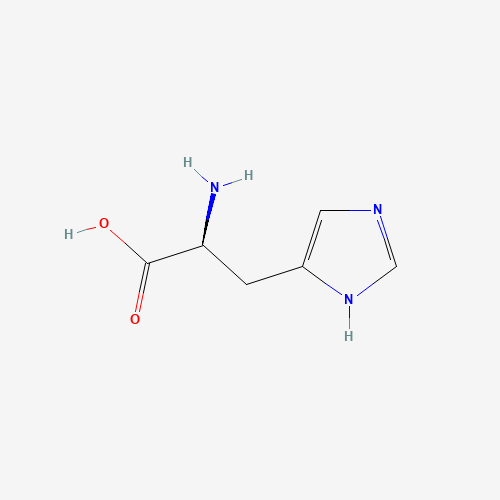
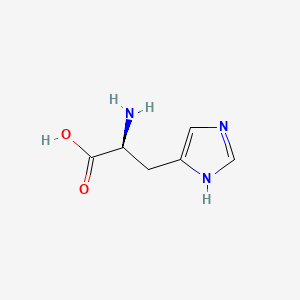
Histidine
AKA “L-histidine, 71-00-1, glyoxaline-5-alanine, L-(-)-Histidine, histidina, Istidina, HISTIDINE, L-, (2S)-2-amino-3-(1H-imidazol-4-yl)propanoic acid, L-Histidin”
Humectant
Ingredient Facts
Histidine
AKA: L-histidine, 71-00-1, Glyoxaline-5-alanine, L-(-)-Histidine, Histidina, Istidina, L-, (2S)-2-amino-3-(1H-imidazol-4-yl)propanoic acid, L-Histidin
Humectant · Humectant · EWG: 1
Synthetic
Humectant
Skin Conditioner
Clean
Histidine is an alpha-amino acid with an imidazole functional group. It is one of the 22 proteinogenic amino acids. Histidine was first isolated by German physician Albrecht Kossel in 1896. Histidine is an essential amino acid in humans and other mammals. It was initially thought that it was only essential for infants, but longer-term studies established that it is also essential for adults. Infants four to six months old require 33 mg/kg of histidine. It is not clear how adults make small amounts of histidine, and dietary sources probably account for most of the histidine in the body. Histidine is a precursor for histamine and carnosine biosynthesis. Inborn errors of histidine metabolism exist and are marked by increased histidine levels in the blood. Elevated blood histidine is accompanied by a wide range of symptoms, from mental and physical retardation to poor intellectual functioning, emotional instability, tremor, ataxia and psychosis. Histidine and other imidazole compounds have
Solubility 45600
Formula
C6H9N3O2
Mol. Weight
155.15
CAS #
71-00-1
Form
Liquid
State
Solid; [Merck Index] Powder; [Sigma-Aldrich MSDS]
See origin →
Functions
Antistatic
Humectant
A moisture magnet. Pulls water from the air and deeper skin layers up to the surface to keep skin plump and hydrated.
Skin Conditioning
A catch-all term for ingredients that improve how skin looks and feels — softer, smoother, more supple. The workhorse behind most moisturizers.
Locks In Moisture
Traditional Use
An amino acid discovered in 1896. Became recognized in the early 20th century for its role in skin barrier function and moisture retention, incorporated into skincare formulations in the 1960s-1970s.
Skin Types
●all-skin-types
Best For
General
Pregnancy & Breastfeeding Safe
Yes
Histidine Metabolism and Function.
Brosnan ME, Brosnan JT
The Journal of nutrition, 2020
Histidine Metabolism and Function.
Brosnan ME, Brosnan JT
The Journal of nutrition, 2020
Histidine Metabolism and Function.
Brosnan ME, Brosnan JT
The Journal of nutrition, 2020
Histidine Metabolism and Function.
Brosnan ME, Brosnan JT
The Journal of nutrition, 2020
Histidine Metabolism and Function.
Brosnan ME, Brosnan JT
The Journal of nutrition, 2020
Histidine Metabolism and Function.
Brosnan ME, Brosnan JT
The Journal of nutrition, 2020
Acetyl Histidine
European Commission
EU Cosmetic Ingredient Database (CosIng)
Histidine
European Commission
EU Cosmetic Ingredient Database (CosIng)
Histidine HCl
European Commission
EU Cosmetic Ingredient Database (CosIng)
Safety and efficacy of l-histidine monohydrochloride monohydrate produced using Corynebacterium glutamicum KCCM 80179 for all animal species.
EFSA Panel on Additives and Products or Substances used in Animal Feed (FEEDAP), Bampidis V, Azimonti G, de Lourdes Bastos M, Christensen H et al.
EFSA journal. European Food Safety Authority, 2019
Histidine
Environmental Working Group (EWG)
EWG Skin Deep Cosmetics Database
Histidine HCl
Environmental Working Group (EWG)
EWG Skin Deep Cosmetics Database
Verified Jun 2026
Data: PubChem · CosIng · EWG · CIR