Hydroquinone
AKA “123-31-9, Benzene-1, 4-diol, 1, 4-benzenediol, Quinol, 4-Dihydroxybenzene, p-Hydroquinone, p-Hydroxyphenol, p-Benzenediol, p-Dihydroxybenzene”
Ingredient
Ingredient Facts
Hydroquinone
AKA: 123-31-9, Benzene-1, 4-diol, 1, 4-benzenediol, Quinol, 4-Dihydroxybenzene, P-Hydroquinone, P-Hydroxyphenol, P-Benzenediol, P-Dihydroxybenzene
Ingredient · Light Stabilizer · EWG: 8
Synthetic
Safety Concern
Not Clean
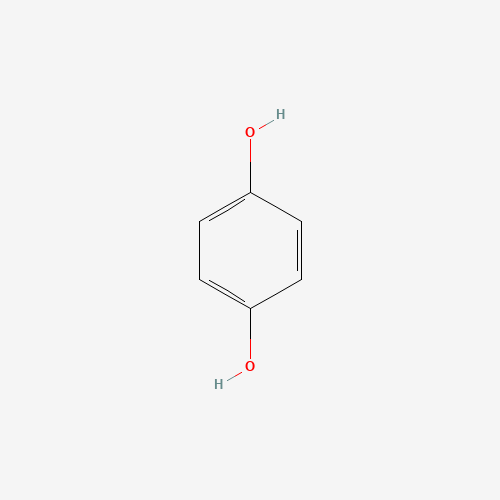
Hydroquinone, also benzene-1,4-diol, is an aromatic organic compound which is a type of phenol. Hydroquinone is commonly used as a biomarker for benzene exposure. The presence of hydroquinone in normal individuals stems mainly from direct dietary ingestion, catabolism of tyrosine and other substrates by gut bacteria, ingestion of arbutin containing foods, cigarette smoking, and the use of some over-the-counter medicines. In human medicine, hydroquinone is used as a topical application in skin whitening to reduce the color of skin. In 2006, the United States Food and Drug Administration revoked its previous approval of hydroquinone and proposed a ban on all over-the-counter preparations. The FDA stated that hydroquinone cannot be ruled out as a potential carcinogen. This conclusion was reached based on the extent of absorption in humans and the incidence of neoplasms in rats in several studies where adult rats were found to have increased rates of tumours, including thyroid follicular c
Solubility 10 to 50 mg/mL at 68 °F (NTP, 1992)
Formula
C6H6O2
Mol. Weight
110.11
CAS #
123-31-9
Form
Powder
State
Hydroquinone appears as light colored crystals or solutions. May irritate the skin, eyes and mucous membranes. Mildly toxic by ingestion or skin absorption.
See origin →
Functions
Light Stabilizer
Shields from UV damage
Traditional Use
Discovered in the 1920s, hydroquinone was developed as a synthetic depigmenting agent to treat hyperpigmentation and melasma. Adopted in skincare in the 1950s-1960s as one of the first clinically proven skin-lightening ingredients.
Skin Types
●all-skin-types
Best For
Hyperpigmentation
Pregnancy & Breastfeeding Safe
No
EWG
8
CIR
Safe as used
Pregnancy
No
Restricted By
CIR Safety Findings
medical-approval
all-shades-safe
Mild Irritant
Concentration Guide
0.02%
0%0%
Reg. Limit
EU regulatory limit: 0.02%. - For professional use only - Avoid skin contact - Read directions for use carefully Source: EU Cosmetics Regulation (EC) 1223/2009, Annex III (Restricted Substances), Entry 14.
Regulatory Agencies
🧂Conflict of interest.
Final amended report on the safety assessment of oxyquinoline and oxyquinoline sulfate as used in cosmetics.
Andersen A
International journal of toxicology, 2006
Final amended report on the safety assessment of oxyquinoline and oxyquinoline sulfate as used in cosmetics.
Andersen A
International journal of toxicology, 2006
Addendum to the Final Report on the Safety Assessment of Hydroquinone
Cosmetic Ingredient Review (CIR) Expert Panel
International Journal of Toxicology
Amended Final Report on the Safety Assessment of t-Butyl Hydroquinone
Cosmetic Ingredient Review (CIR) Expert Panel
International Journal of Toxicology
Final Amended Report on the Safety of Oxyquinoline and Oxyquinoline Sulfate as used in Cosmetics
Cosmetic Ingredient Review (CIR) Expert Panel
International Journal of Toxicology
Final Amended Safety Assessment of Hydroquinone as Used in Cosmetics
Cosmetic Ingredient Review (CIR) Expert Panel
International Journal of Toxicology
Final Report on the Safety Assessment of Di-t-Butylhydroquinone
Cosmetic Ingredient Review (CIR) Expert Panel
International Journal of Toxicology
Final Report on the Safety Assessment of Hydroquinone and Pyrocatechol (Pyrocatechol has been Amended. IJT 16(S1) 11-58 1997.) (Hydroquinone has an Addendum. JACT 13(3) 167-230 1994.)
Cosmetic Ingredient Review (CIR) Expert Panel
International Journal of Toxicology
Final Report on the Safety Assessment of Oxyquinoline and Oxyquinoline Sulfate
Cosmetic Ingredient Review (CIR) Expert Panel
International Journal of Toxicology
Final Report on the Safety Assessment of t-Butyl Hydroquinone (Amended report JACT 10(1) 1-7 1991)
Cosmetic Ingredient Review (CIR) Expert Panel
International Journal of Toxicology
Final Report: Amended Safety Assessment of Hydroquinone as Used in Cosmetics
Cosmetic Ingredient Review (CIR) Expert Panel
International Journal of Toxicology
Di-t-Butylhydroquinone
European Commission
EU Cosmetic Ingredient Database (CosIng)
Hydroquinone
European Commission
EU Cosmetic Ingredient Database (CosIng)
Oxyquinoline
European Commission
EU Cosmetic Ingredient Database (CosIng)
Oxyquinoline Sulfate
European Commission
EU Cosmetic Ingredient Database (CosIng)
Ubiquinol
European Commission
EU Cosmetic Ingredient Database (CosIng)
Hydroquinone
Environmental Working Group (EWG)
EWG Skin Deep Cosmetics Database
Oxyquinoline
Environmental Working Group (EWG)
EWG Skin Deep Cosmetics Database
Oxyquinoline Sulfate
Environmental Working Group (EWG)
EWG Skin Deep Cosmetics Database
t-Butyl Hydroquinone
Environmental Working Group (EWG)
EWG Skin Deep Cosmetics Database
Ubiquinol
Environmental Working Group (EWG)
EWG Skin Deep Cosmetics Database
8-Hydroxyquinoline and its sulfate
Health Canada
Health Canada Cosmetic Ingredient Hotlist
Hydroquinone
Health Canada
Health Canada Cosmetic Ingredient Hotlist
An update on the safety of hydroquinone.
Kavya Shivaram, Katherine Edwards, Tasneem F Mohammad
Archives of dermatological research, 2024
An update on the safety of hydroquinone.
Kavya Shivaram, Katherine Edwards, Tasneem F Mohammad
Archives of dermatological research, 2024
An update on the safety of hydroquinone.
Kavya Shivaram, Katherine Edwards, Tasneem F Mohammad
Archives of dermatological research, 2024
Verified Jun 2026 · 🧪 = conflict
Data: PubChem · CosIng · EWG · CIR