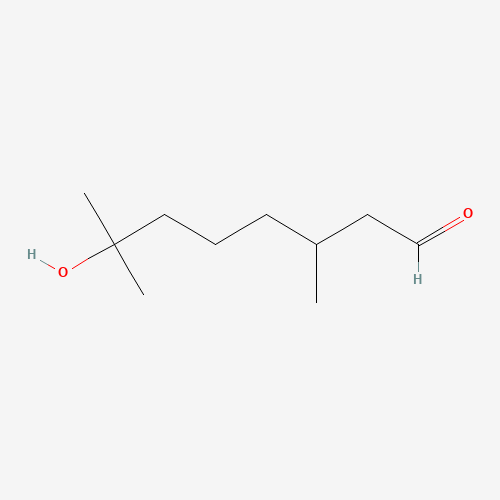
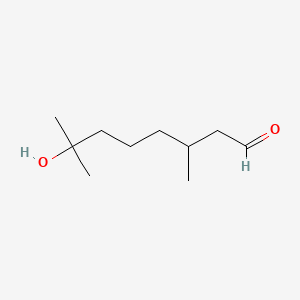
Hydroxycitronellal
AKA “107-75-5, 7-Hydroxy-3, 7-dimethyloctanal, 7-Hydroxycitronellal, Citronellal hydrate, 3, 7-Dimethyl-7-hydroxyoctanal, Phixia, Cyclalia, Cyclosia, Laurine”
Ingredient
Ingredient Facts
Hydroxycitronellal
AKA: 107-75-5, 7-Hydroxy-3, 7-dimethyloctanal, 7-Hydroxycitronellal, Citronellal hydrate, 3, 7-Dimethyl-7-hydroxyoctanal, Phixia, Cyclalia, Cyclosia, Laurine
Ingredient · Perfuming · EWG: 3
Synthetic
Fragrance
Not Clean
Hydroxycitronellal is a synthetic fragrance that is widely used in many cosmetics and hygiene products such as deodorants, soaps, antiseptics, and other household items. It has the smell of lilac, lily, and lily of the valley. Hydroxycitronellal has also been shown to be a dermatologic irritant and allergen, and as a result commercially available products are restricted by the International Fragrance Association (IFRA) to contain only 0.1-3.6%. Sensitivity to hydroxycitronellal may be identified with a clinical patch test.
Solubility slightly
Formula
C10H20O2
Mol. Weight
172.26
CAS #
107-75-5
Form
Liquid
State
Liquid
See origin →
Functions
Perfuming
Added for scent. Can be natural or synthetic. Common irritant and allergen — one of the top reasons people react to products.
Traditional Use
A synthetic fragrance ingredient developed in the mid-20th century by the perfume industry. Created to provide floral and fresh scent notes in cosmetics; has no traditional use but became widely adopted in fragranced personal care products from the 1950s onward.
Skin Types
●all-skin-types
Best For
General
Pregnancy & Breastfeeding Safe
Caution
Allergen Warning
⚠️ EU Fragrance Allergen
EWG
3
CIR
Safe
Pregnancy
Caution
CIR Safety Findings
ewg-3
all-shades-safe
Concentration Guide
0%
0%20%
Reg. Limit
EU regulatory limit: 0%. 1,0 % Source: EU Cosmetics Regulation (EC) 1223/2009, Annex III (Restricted Substances), Entry 72
Regulatory Agencies
The Body Essentials Mini
Nécessaire
The New Tendency Duo
Nécessaire
The New Tendency Complete Set
Nécessaire
The Body Essentials
Nécessaire
The Body Wash Discovery Collection
Nécessaire
The Body Essentials
Credo Beauty
The Body Lotion 70 ml | Multi-Peptide | Santal
Nécessaire
The Body Lotion 70 ml | Multi-Peptide | Olibanum
Nécessaire
The Body Wash 100 ml | Multi-Enzyme | Olibanum
Nécessaire
The Body Wash 100 ml | Multi-Mineral | Santal
Nécessaire
The Body Wash 100 ml | Multi-Acid | Hinoki
Nécessaire
The Body Lotion 450 ml | Multi-Peptide
Credo Beauty
Verified Jun 2026
Data: PubChem · CosIng · EWG · CIR