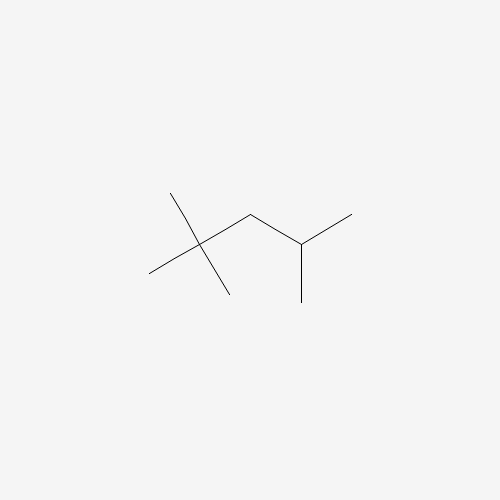
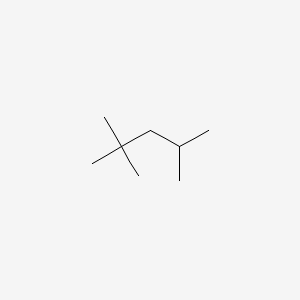
Isooctane
AKA “2, 4-Trimethylpentane, Pentane, 4-trimethyl-, ISO-OCTANE, DTXSID7024370, HSDB 5682, EINECS 208-759-1, UNII-QAB8F5669O, NSC 39117, BRN 1696876”
Ingredient
Ingredient Facts
Isooctane
AKA: 2, 4-Trimethylpentane, Pentane, 4-trimethyl-, ISO-OCTANE, DTXSID7024370, HSDB 5682, EINECS 208-759-1, UNII-QAB8F5669O, NSC 39117, BRN 1696876
Ingredient · Solvent · EWG: 4
Synthetic
Solvent
Not Clean
2,2,4-Trimethylpentane is released to the environment through the manufacture, use, and disposal of products associated with the petroleum and gasoline industry. During an accident, 2,2,4-trimethylpentane penetrated the skin of a human which caused necrosis of the skin and tissue in the hand and required surgery. No other information is available on the acute (short-term) effects in humans. Irritation of the lungs, edema, and hemorrhage have been reported in rodents acutely exposed by inhalation and injection. No information is available on the chronic (long-term), reproductive, developmental, or carcinogenic effects of 2,2,4-trimethylpentane in humans. Kidney and liver effects have been observed in rats chronically exposed via gavage (experimentally placing the chemical in the stomach) and inhalation. EPA has not classified 2,2,4-trimethylpentane with respect to potential carcinogenicity.
Solubility PRACTICALLY INSOL IN WATER; SOMEWHAT SOL IN ABS ALC; SOL IN BENZENE, TOLUENE, XYLENE, CHLOROFORM, ETHER, CARBON DISULFIDE, CARBON TETRACHLORIDE, DMF & OILS, EXCEPT CASTOR OIL.
Formula
C8H18
Mol. Weight
114.23
CAS #
540-84-1
Form
Liquid
State
Isooctane appears as a clear colorless liquid with a petroleum-like odor. Less dense than water and insoluble in water. Vapors are heavier than air.
See origin →
Functions
Solvent
Dissolves other ingredients so they distribute evenly in the formula. Often the invisible "base" everything else is mixed into.
Quells irritation
Traditional Use
A synthetic hydrocarbon developed in the mid-20th century as a volatile solvent for cosmetics. Used to replace or supplement traditional solvents and to improve product spreadability and drying time.
Skin Types
●all-skin-types
Best For
General
Pregnancy & Breastfeeding Safe
Yes
RIFM fragrance ingredient safety assessment, pentanedioic acid, 1,5-dimethyl ester, CAS Registry Number 1119-40-0.
Api AM, Belsito D, Botelho D, Browne D, Bruze M et al.
Food and chemical toxicology : an international journal published for the British Industrial Biological Research Association, 2018
Final Report of the Safety Assessment of Isobutane, Isopentane, n-Butane, and Propane
Cosmetic Ingredient Review (CIR) Expert Panel
International Journal of Toxicology
Isobutane, Butane, Isopentane and Propane
Cosmetic Ingredient Review (CIR) Expert Panel
International Journal of Toxicology
Diethylpentanediol Dineopentanoate
European Commission
EU Cosmetic Ingredient Database (CosIng)
Isooctane
European Commission
EU Cosmetic Ingredient Database (CosIng)
Isopentane
European Commission
EU Cosmetic Ingredient Database (CosIng)
Trimethylpentanediol/Adipic Acid/Glycerin Crosspolymer
European Commission
EU Cosmetic Ingredient Database (CosIng)
Trimethylpentanediol/Isophthalic Acid/Trimellitic Anhydride Copolymer
European Commission
EU Cosmetic Ingredient Database (CosIng)
1,5-Pentanediol
Environmental Working Group (EWG)
EWG Skin Deep Cosmetics Database
2,2,4-Trimethyl-1,3-Pentanediol Monoisobutyrate
Environmental Working Group (EWG)
EWG Skin Deep Cosmetics Database
Isooctane
Environmental Working Group (EWG)
EWG Skin Deep Cosmetics Database
Isopentane
Environmental Working Group (EWG)
EWG Skin Deep Cosmetics Database
Trimethylpentanediol/Adipic Acid/Glycerin Crosspolymer
Environmental Working Group (EWG)
EWG Skin Deep Cosmetics Database
Allergic Contact Dermatitis to Trimethylpentanediol/Adipic Acid/Glycerin Crosspolymer in a Lip Balm.
Lockmann A, Schill T, Schubert S, Buhl T
Contact dermatitis, 2026
A comparison of pentane-1,5-diol to other diols for use in dermatology.
Sundberg JJ, Faergemann J
Expert opinion on investigational drugs, 2008
Isobutane, Isopentane, Butane, and Propane.
Tucker R, Bergfeld WF, Belsito DV, Cohen DE, Klaassen CD et al.
International journal of toxicology, 2025
Isobutane, Isopentane, Butane, and Propane.
Tucker R, Bergfeld WF, Belsito DV, Cohen DE, Klaassen CD et al.
International journal of toxicology, 2025
Isobutane, Isopentane, Butane, and Propane.
Tucker R, Bergfeld WF, Belsito DV, Cohen DE, Klaassen CD et al.
International journal of toxicology, 2025
Verified Jun 2026
Data: PubChem · CosIng · EWG · CIR