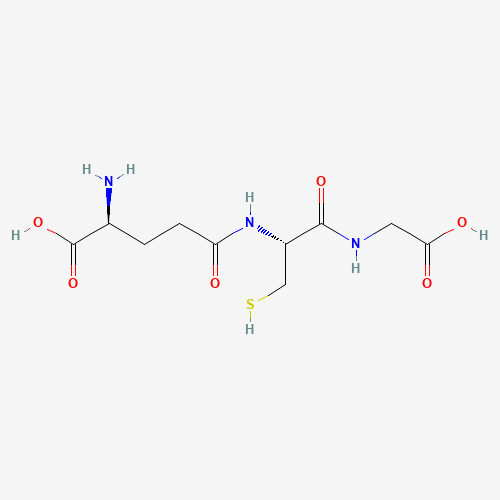
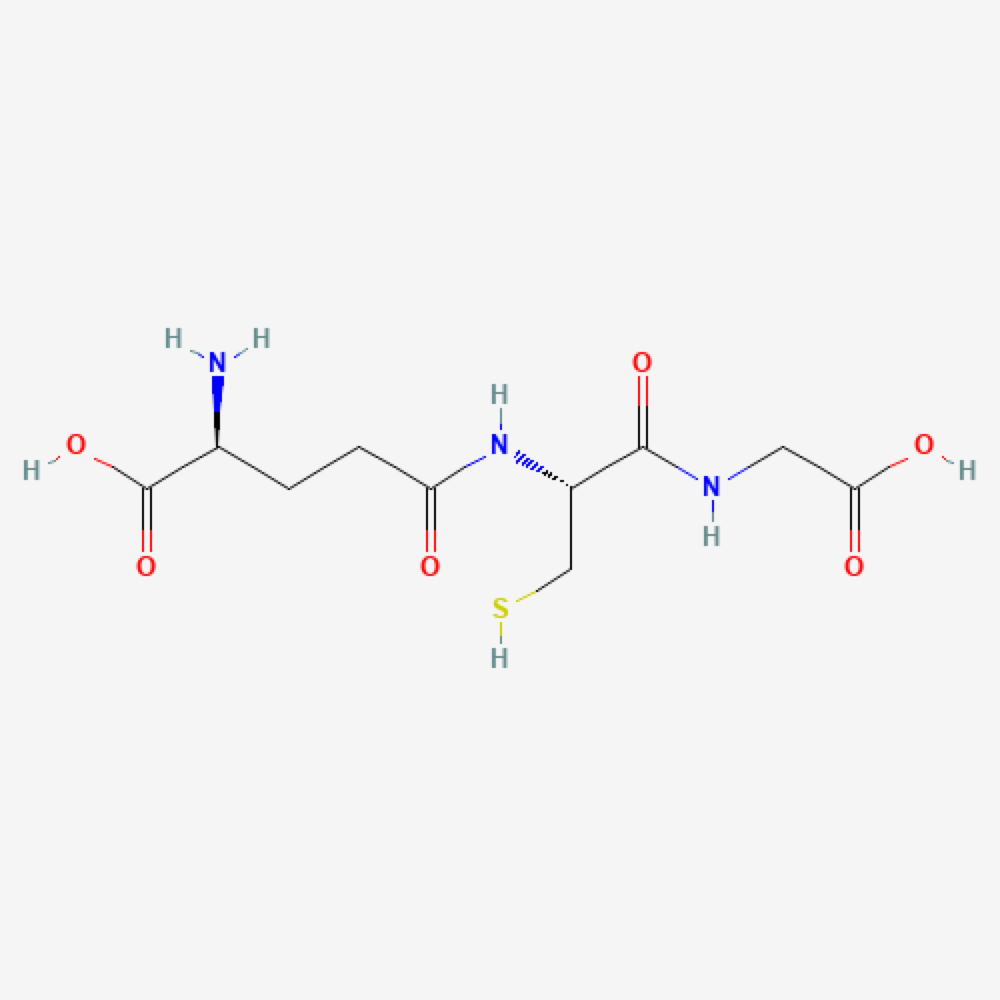
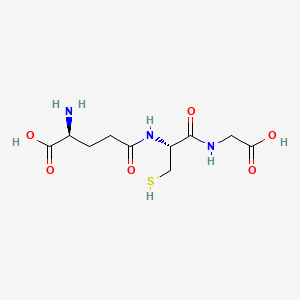
L-Glutathione
AKA “glutathione, 70-18-8, L-Glutathione reduced, Glutathion, Isethion, reduced glutathione, Tathion, Glutinal, Glutathione-SH”
Synthetic
Ingredient Facts
L-Glutathione
AKA: 70-18-8, L-Glutathione reduced, Isethion, Reduced glutathione, Glutinal, Glutathione-SH
Synthetic · Skin Conditioning · EWG: 4
Plant-Derived Synthetic
Skin Conditioner
Synthetic
Not Clean
Glutathione is a compound synthesized from cysteine, perhaps the most important member of the body's toxic waste disposal team. Like cysteine, glutathione contains the crucial thiol (-SH) group that makes it an effective antioxidant. There are virtually no living organisms on this planet-animal or plant whose cells don't contain some glutathione. Scientists have speculated that glutathione was essential to the very development of life on earth. Glutathione has many roles; in none does it act alone. It is a coenzyme in various enzymatic reactions. The most important of these are redox reactions, in which the thiol grouping on the cysteine portion of cell membranes protects against peroxidation; and conjugation reactions, in which glutathione (especially in the liver) binds with toxic chemicals in order to detoxify them. Glutathione is also important in red and white blood cell formation and throughout the immune system. glutathione's clinical uses include the prevention of oxygen toxici
Solubility 292.5 mg/mL
Formula
C10H17N3O6S
Mol. Weight
307.33
CAS #
690633-16-0
See origin →
Functions
Skin Conditioning
A catch-all term for ingredients that improve how skin looks and feels — softer, smoother, more supple. The workhorse behind most moisturizers.
Antioxidant Protection
Neutralizes Free Radicals
Traditional Use
Glutathione, a naturally occurring tripeptide antioxidant, was identified in the late 19th century. Its use in skincare became prominent in the 1990s-2000s when Japanese and Asian cosmetics marketed it for skin-brightening and detoxifying properties.
Skin Types
●all-skin-types
Best For
Hyperpigmentation
Pregnancy & Breastfeeding Safe
Yes
Hexamidine and Hexamidine Diisethionate.
Cherian P, Bergfeld WF, Belsito DV, Cohen DE, Klaassen CD et al.
International journal of toxicology, 2023
Amended Safety Assessment of Isethionate Salts as Used in Cosmetics
Cosmetic Ingredient Review (CIR) Expert Panel
International Journal of Toxicology
Final Report on the Safety Assessment of Hexamidine and Hexamidine Diisethionate
Cosmetic Ingredient Review (CIR) Expert Panel
International Journal of Toxicology
Final Report on the Safety Assessment of Sodium Cocoyl Isethionate
Cosmetic Ingredient Review (CIR) Expert Panel
International Journal of Toxicology
Hexamidine and Hexamidine Diisethionate
Cosmetic Ingredient Review (CIR) Expert Panel
International Journal of Toxicology
Ammonium Cocoyl Isethionate
European Commission
EU Cosmetic Ingredient Database (CosIng)
glutathione
European Commission
EU Cosmetic Ingredient Database (CosIng)
Hexamidine Diisethionate
European Commission
EU Cosmetic Ingredient Database (CosIng)
Sodium Cocoyl Isethionate
European Commission
EU Cosmetic Ingredient Database (CosIng)
Sodium Hydrogenated Cocoyl Methyl Isethionate
European Commission
EU Cosmetic Ingredient Database (CosIng)
Sodium Isethionate
European Commission
EU Cosmetic Ingredient Database (CosIng)
Sodium Lauroyl Isethionate
European Commission
EU Cosmetic Ingredient Database (CosIng)
Sodium Lauroyl Methyl Isethionate
European Commission
EU Cosmetic Ingredient Database (CosIng)
Sodium Methyl Isethionate
European Commission
EU Cosmetic Ingredient Database (CosIng)
Sodium Myristoyl Isethionate
European Commission
EU Cosmetic Ingredient Database (CosIng)
Sodium Oleoyl Isethionate
European Commission
EU Cosmetic Ingredient Database (CosIng)
Sodium Oleyl Methyl Isethionate
European Commission
EU Cosmetic Ingredient Database (CosIng)
Sodium Palm Kerneloyl Isethionate
European Commission
EU Cosmetic Ingredient Database (CosIng)
Sodium Stearoyl Methyl Isethionate
European Commission
EU Cosmetic Ingredient Database (CosIng)
Engineering Yarrowia lipolytica for the Synthesis of Glutathione from Organic By-Products.
Do DTH, Fickers P
Microorganisms, 2020
FSP1 is a glutathione-independent ferroptosis suppressor.
Doll S, Freitas FP, Shah R, Aldrovandi M, da Silva MC et al.
Nature, 2019
FSP1 is a glutathione-independent ferroptosis suppressor.
Doll S, Freitas FP, Shah R, Aldrovandi M, da Silva MC et al.
Nature, 2019
Ammonium Cocoyl Isethionate
Environmental Working Group (EWG)
EWG Skin Deep Cosmetics Database
glutathione
Environmental Working Group (EWG)
EWG Skin Deep Cosmetics Database
Hexamidine Diisethionate
Environmental Working Group (EWG)
EWG Skin Deep Cosmetics Database
Sodium Cocoyl Isethionate
Environmental Working Group (EWG)
EWG Skin Deep Cosmetics Database
Sodium Isethionate
Environmental Working Group (EWG)
EWG Skin Deep Cosmetics Database
Sodium Lauroyl Isethionate
Environmental Working Group (EWG)
EWG Skin Deep Cosmetics Database
Sodium Lauroyl Methyl Isethionate
Environmental Working Group (EWG)
EWG Skin Deep Cosmetics Database
Sodium Methyl Isethionate
Environmental Working Group (EWG)
EWG Skin Deep Cosmetics Database
Why is sodium cocoyl isethionate (SCI) mild to the skin barrier? - An in vitro investigation based on the relative sizes of the SCI micelles and the s
Ghosh S, Blankschtein D
Journal of cosmetic science, 2007
Glutathione as a skin whitening agent: Facts, myths, evid...
Sidharth Sonthalia, Deepashree Daulatabad, Rashmi Sarkar
Indian journal of dermatology, venereology and leprology, 2016
Glutathione as a skin whitening agent: Facts, myths, evid...
Sidharth Sonthalia, Deepashree Daulatabad, Rashmi Sarkar
Indian journal of dermatology, venereology and leprology, 2016
Glutathione as a skin whitening agent: Facts, myths, evid...
Sidharth Sonthalia, Deepashree Daulatabad, Rashmi Sarkar
Indian journal of dermatology, venereology and leprology, 2016
Glutathione as a skin whitening agent: Facts, myths, evidence and controversies.
Sonthalia S, Daulatabad D, Sarkar R
Indian journal of dermatology, venereology and leprology, 2016
Solubilization of sodium cocoyl isethionate.
Sun JZ, Parr JW, Erickson MC
Journal of cosmetic science, 2003
Verified Jun 2026
Data: PubChem · CosIng · EWG · CIR