Lactose
AKA “Milk sugar, CHEBI:17716, beta-D-Gal-(1->4)-D-Glc, beta-D-Galp-(1->4)-D-Glcp, (+)-Lactose, 1-beta-D-Galactopyranosyl-4-D-glucopyranose, beta-D-galactopyranosyl-(1->4)-D-glucopyranose, Lactin, Anhydrous lactose”
Humectant
Ingredient Facts
Lactose
AKA: Milk sugar, CHEBI:17716, Beta-D-Gal-(1->4)-D-Glc, Beta-D-Galp-(1->4)-D-Glcp, (+)-Lactose, 1-beta-D-Galactopyranosyl-4-D-glucopyranose, Beta-D-galactopyranosyl-(1->4)-D-glucopyranose, Lactin, Anhydrous lactose
Humectant · Humectant · EWG: 4
Synthetic
Humectant
Skin Conditioner
Not Clean
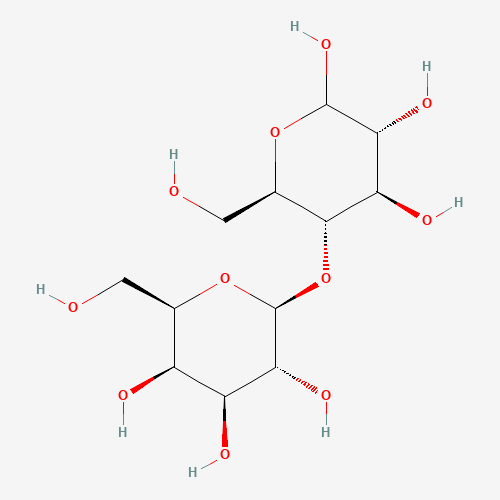
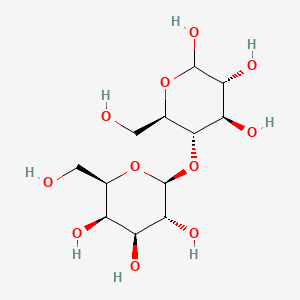
Lactose is a glycosylglucose disaccharide, found most notably in milk, that consists of D-galactose and D-glucose fragments bonded through a beta-14 glycosidic linkage. The glucose fragment can be in either the alpha- or beta-pyranose form, whereas the galactose fragment can only have the beta-pyranose form. It has a role as a human metabolite.
Solubility 50 to 100 mg/mL at 68 °F (NTP, 1992)
Formula
C12H22O11
Mol. Weight
342.30
CAS #
63-42-3
Form
Powder
State
Lactose is a white hard crystalline powder. (NTP, 1992)
See origin →
Functions
Humectant
A moisture magnet. Pulls water from the air and deeper skin layers up to the surface to keep skin plump and hydrated.
Skin Conditioning
A catch-all term for ingredients that improve how skin looks and feels — softer, smoother, more supple. The workhorse behind most moisturizers.
Locks In Moisture
Traditional Use
Lactose, a naturally occurring milk sugar, has been used in traditional skincare preparations for centuries, particularly in Ayurvedic medicine for skin softening. Modern cosmetics use it as a humectant and skin-conditioning agent.
Skin Types
●all-skin-types
Best For
Dryness
Pregnancy & Breastfeeding Safe
Yes
Safety Assessment of Anhydrogalactose,Anhydroglucitol, Anhydroxylitol, Arabinose,Psicose, Saccharide Hydrolysate, andSaccharide Isomerate as Used in Cosmetics
Cosmetic Ingredient Review (CIR) Expert Panel
International Journal of Toxicology
Anhydrogalactose
European Commission
EU Cosmetic Ingredient Database (CosIng)
Galactose
European Commission
EU Cosmetic Ingredient Database (CosIng)
Lactose
European Commission
EU Cosmetic Ingredient Database (CosIng)
Safety Assessment of Anhydrogalactose, Anhydroglucitol, Anhydroxylitol, Arabinose, Psicose, Saccharide Hydrolysate, and Saccharide Isomerate as Used i
Johnson W Jr, Bergfeld WF, Belsito DV, Cohen DE, Klaassen CD et al.
International journal of toxicology, 2025
Safety Assessment of Anhydrogalactose, Anhydroglucitol, Anhydroxylitol, Arabinose, Psicose, Saccharide Hydrolysate, and Saccharide Isomerate as Used i
Johnson W Jr, Bergfeld WF, Belsito DV, Cohen DE, Klaassen CD et al.
International journal of toxicology, 2025
Tensile properties and contours of aging facial skin. A controlled double-blind comparative study of the effects of retinol, melibiose-lactose and the
Piérard-Franchimont C, Castelli D, Cromphaut IV, Bertin C, Ries G et al.
Skin research and technology : official journal of International Society for Bioengineering and the Skin (ISBS) [and] International Society for Digital Imaging of Skin (ISDIS) [and] International Society for Skin Imaging (ISSI), 1998
Antioxidant and Antiaging Properties of Agar Obtained from Brown Seaweed Laminaria digitata (Hudson) in D-Galactose-Induced Swiss Albino Mice.
Reshma BS, Aavula T, Narasimman V, Ramachandran S, Essa MM et al.
Evidence-based complementary and alternative medicine : eCAM, 2022
Galactose-Induced Skin Aging: The Role of Oxidative Stress.
Bauyrzhan Umbayev, Sholpan Askarova, Aigul Almabayeva, Timur Saliev, Abdul-Razak Masoud, Denis Bulanin
Oxidative medicine and cellular longevity, 2020
Sugar alcohols derived from lactose: lactitol, galactitol, and sorbitol.
Zhang W, Chen J, Chen Q, Wu H, Mu W
Applied microbiology and biotechnology, 2020
Verified Jun 2026
Data: PubChem · CosIng · EWG · CIR