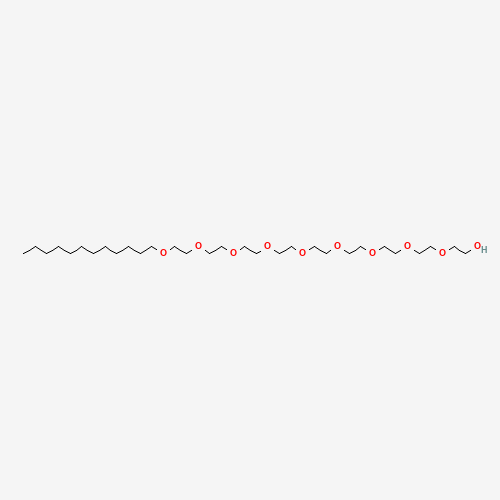
Laureth-9
AKA “Polidocanol, 3055-99-0, Nonaethylene glycol monododecyl ether, Asclera, Aethoxy-sklerol, nonaethylene glycol monolauryl ether, VARITHENA, 2-[2-[2-[2-[2-[2-[2-[2-(2-dodecoxyethoxy)ethoxy]ethoxy]ethoxy]ethoxy]ethoxy]ethoxy]ethoxy]ethanol, PEG-9 lauryl ether, Macrogol 9 lauryl ether”
Surfactant
Ingredient Facts
Laureth-9
AKA: Polidocanol, 3055-99-0, Nonaethylene glycol monododecyl ether, Asclera, Aethoxy-sklerol, Nonaethylene glycol monolauryl ether, VARITHENA, 2-[2-[2-[2-[2-[2-[2-[2-(2-dodecoxyethoxy)ethoxy]ethoxy]ethoxy]ethoxy]ethoxy]ethoxy]ethoxy]ethanol, PEG-9 lauryl ether, Macrogol 9 lauryl ether
Surfactant · Emulsifying · EWG: 4
Synthetic
Cleanser
Emulsifier
Plant Oil
Not Clean
3,6,9,12,15,18,21,24,27-Nonaoxanonatriacontan-1-ol
Effective at 10.0%
Solubility miscible
Formula
C30H62O10
Mol. Weight
582.80
CAS #
3055-99-0, 9002-92-0, 68439-50-9
Form
Liquid
See origin →
Functions
Emulsifying
Forces oil and water to stay mixed instead of separating into layers. The unsung hero holding your lotion together.
Emulsifier
Mixes Oil & Water
Traditional Use
Laureth compounds were developed in the mid-20th century as synthetic non-ionic surfactants derived from lauryl alcohol (a fatty alcohol from coconut or palm oil). They were created to replace natural soaps and provide gentle cleansing properties while maintaining stability in formulations.
Skin Types
●all-skin-types
Best For
General
Pregnancy & Breastfeeding Safe
Yes
EWG
4
CIR
Safe as used
Pregnancy
Yes
CIR Safety Findings
Not a Sensitizer
medical-approval
all-shades-safe
Concentration Guide
0.0004%
20.0%
0.0%
0%28%
Effective Range
Reg. Limit
CIR reported use: 7-15 | 0.005-9 | 0.0004-20 | 6-8 | 0.001-4
Regulatory Agencies
Disodium Laureth-9 Sulfosuccinate
European Commission
EU Cosmetic Ingredient Database (CosIng)
Laureth-9
European Commission
EU Cosmetic Ingredient Database (CosIng)
PPG-3-Laureth-9
European Commission
EU Cosmetic Ingredient Database (CosIng)
Allergic contact dermatitis from laureth-9 and polyquaternium-7 in a skin-care product.
Gallo R, Basso M, Voltolini S, Guarrera M
Contact dermatitis, 2001
Verified Jun 2026
Data: PubChem · CosIng · EWG · CIR