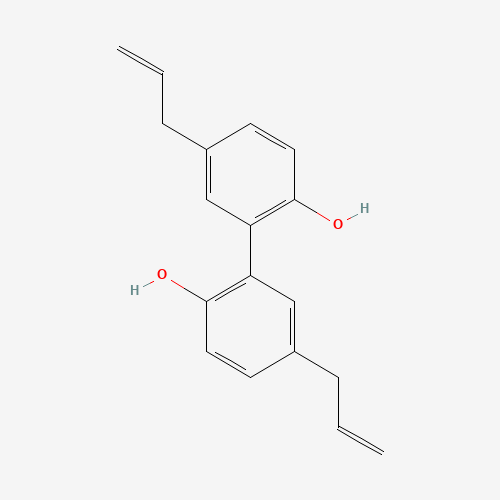
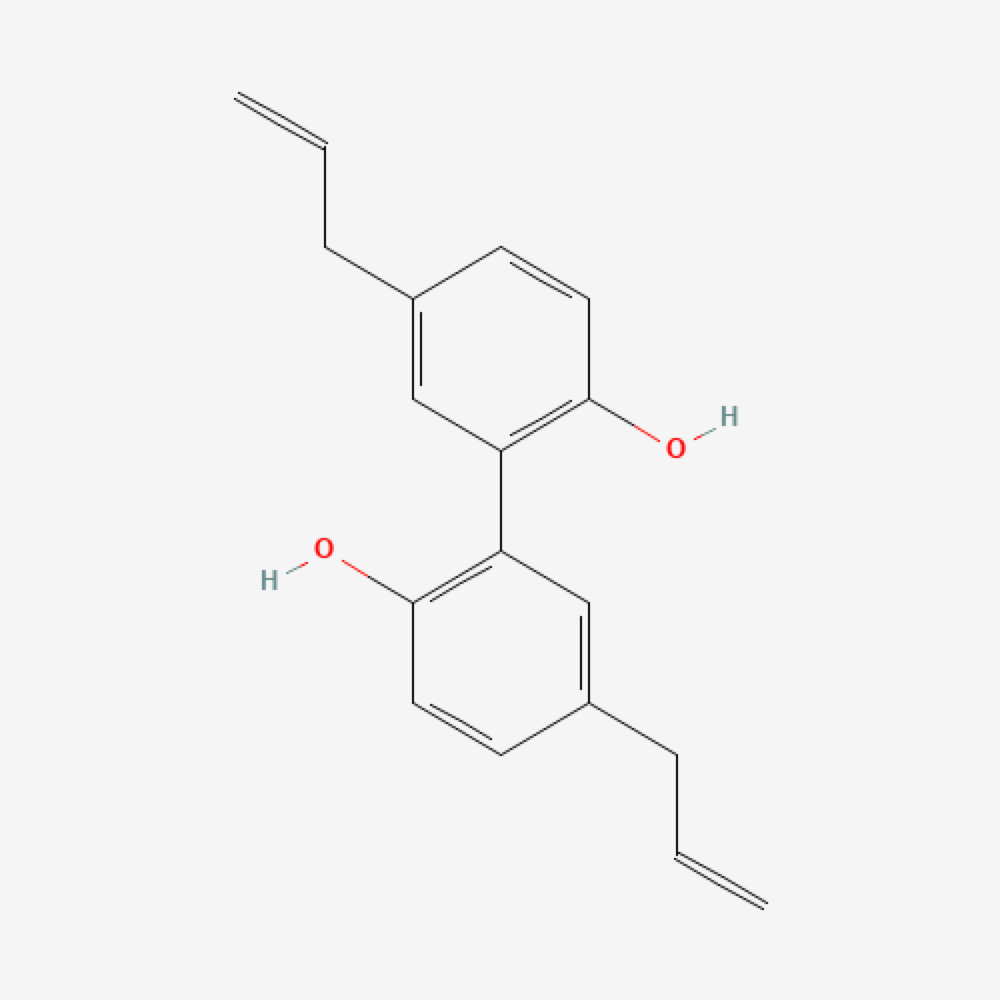
Magnolol
AKA “528-43-8, 5, 5'-Diallyl-2, 2'-dihydroxybiphenyl, Dehydrodichavicol, 2-(2-hydroxy-5-prop-2-enylphenyl)-4-prop-2-enylphenol, 4-allyl-2-(5-allyl-2-hydroxy-phenyl)phenol, 001E35HGVF, DTXSID0044076, NSC-293099, FEMA NO. 4559”
Synthetic
Ingredient Facts
Magnolol
AKA: 528-43-8, 5, 5'-Diallyl-2, 2'-dihydroxybiphenyl, Dehydrodichavicol, 2-(2-hydroxy-5-prop-2-enylphenyl)-4-prop-2-enylphenol, 4-allyl-2-(5-allyl-2-hydroxy-phenyl)phenol, 001E35HGVF, DTXSID0044076, NSC-293099, FEMA NO. 4559
Synthetic · Skin Conditioning · EWG: 1
Synthetic
Skin Conditioner
Synthetic
Clean
Magnolol has been reported in Magnolia henryi, Magnolia officinalis, and other organisms with data available.
Solubility Slightly soluble in water; soluble in DMSO
Formula
C18H18O2
Mol. Weight
266.30
CAS #
528-43-8
Form
Powder
State
White powder; Bitter aroma
See origin →
Functions
Skin Conditioning
A catch-all term for ingredients that improve how skin looks and feels — softer, smoother, more supple. The workhorse behind most moisturizers.
Antioxidant Protection
Neutralizes Free Radicals
Traditional Use
This is the CAS number for salicylic acid. First isolated from willow bark in the 1800s, salicylic acid became a cornerstone of acne treatment in the 20th century after its exfoliating and antibacterial properties were scientifically validated.
Skin Types
●all-skin-types
Best For
Dryness
Pregnancy & Breastfeeding Safe
Caution
Verified Jun 2026
Data: PubChem · CosIng · EWG · CIR