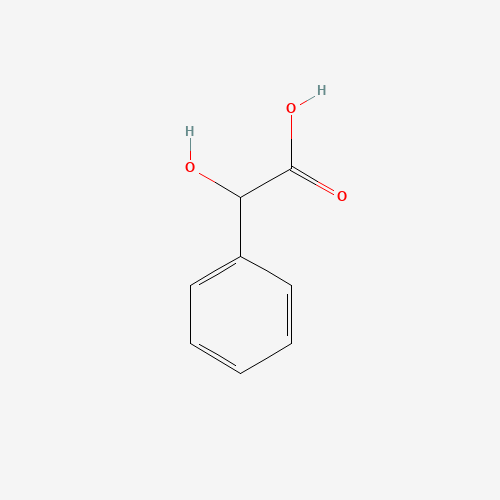
Mandelic Acid
AKA “dl-Mandelic acid, 2-hydroxy-2-phenylacetic acid, 90-64-2, Phenylglycolic acid, Paramandelic acid, Amygdalic acid, Uromaline, Racemic mandelic acid, Phenylhydroxyacetic acid”
Acid
Ingredient Facts
Mandelic acid
AKA: Dl-Mandelic acid, 2-hydroxy-2-phenylacetic acid, 90-64-2, Phenylglycolic acid, Paramandelic acid, Amygdalic acid, Uromaline, Racemic mandelic acid, Phenylhydroxyacetic acid
Acid · Antimicrobial · EWG: 1
Synthetic
Preservative
Chemical Exfoliant
Acid
Clean
Benzeneacetic acid, .alpha.-hydroxy-
Formula
C8H8O3
Mol. Weight
152.15
CAS #
90-64-2
Form
Liquid
State
Pellets or Large Crystals; Liquid
See origin →
Functions
Antimicrobial
Keeps your product from growing bacteria, mold, or yeast. Without these, that jar of cream becomes a petri dish in about a week.
Supports cell turnover
Evens pigmentation
Smooths skin texture
Traditional Use
Derived from bitter almonds, mandelic acid was first isolated in the 19th century. Used historically as a gentler alternative to other hydroxy acids, gaining popularity in modern skincare in the 1990s-2000s for its exfoliating and antibacterial properties, particularly for sensitive skin.
Skin Types
●all-skin-types, gentle
Best For
Hyperpigmentation
Pregnancy & Breastfeeding Safe
Caution
The Body Essentials Mini
Nécessaire
The New Tendency Duo
Nécessaire
The New Tendency Complete Set
Nécessaire
The Body Essentials
Nécessaire
The Body Wash Discovery Collection
Nécessaire
The Body Treatment Duo
Nécessaire
The Body Tool
Nécessaire
Chemistry Deodorant
Kosas
The Body Essentials
Credo Beauty
The Deodorant | Mandelic Acid
Nécessaire
The Body Wash 100 ml | Multi-Acid | Hinoki
Nécessaire
The Body Lotion 450 ml | Multi-Peptide
Credo Beauty
The Body Tool
Credo Beauty
The Body Brush
Credo Beauty
Mandelic Acid
European Commission
EU Cosmetic Ingredient Database (CosIng)
Mandelic Acid
Environmental Working Group (EWG)
EWG Skin Deep Cosmetics Database
Effects of Topical Mandelic Acid Treatment on Facial Skin...
Stanley W Jacobs, Eric J Culbertson
Facial plastic surgery : FPS, 2018
Effects of Topical Mandelic Acid Treatment on Facial Skin...
Stanley W Jacobs, Eric J Culbertson
Facial plastic surgery : FPS, 2018
Effects of Topical Mandelic Acid Treatment on Facial Skin...
Stanley W Jacobs, Eric J Culbertson
Facial plastic surgery : FPS, 2018
Verified Jun 2026
Data: PubChem · CosIng · EWG · CIR