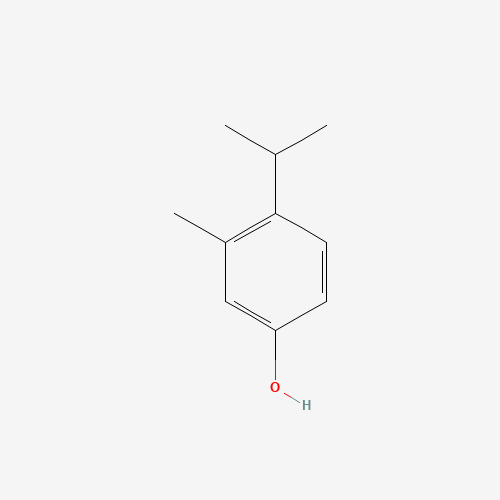
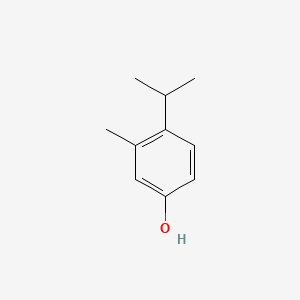
o-Cymen-5-ol
AKA “4-Isopropyl-3-methylphenol, 3228-02-2, 3-Methyl-4-isopropylphenol, 3-methyl-4-propan-2-ylphenol, 3-Methyl-4-(1-methylethyl)phenol, H41B6Q1I9L, NSC-62111, DTXSID10186026, RefChem:55740”
Preservative
Ingredient Facts
o-Cymen-5-ol
AKA: 4-Isopropyl-3-methylphenol, 3228-02-2, 3-Methyl-4-isopropylphenol, 3-methyl-4-propan-2-ylphenol, 3-Methyl-4-(1-methylethyl)phenol, H41B6Q1I9L, NSC-62111, DTXSID10186026, RefChem:55740
Preservative · Antimicrobial · EWG: 2
Synthetic
Preservative
Clean
The CIR Expert panel concludes Sodium p-Chloro-m-Cresol, p-Chloro-m-Cresol, Chlorothymol, m-Cresol, o-Cresol, Isopropyl Cresols, Thymol, o-Cymen-5-ol, Cavacrol are safe at concentrations up to 0.5% in cosmetics; however, the available data are insufficient to support the safety of p-Cresol and Mixed Cresols for use in cosmetic products.
Formula
C10H14O
Mol. Weight
150.22
CAS #
3228-02-2, 39660-61-2
Form
Liquid
See origin →
Functions
Antimicrobial
Keeps your product from growing bacteria, mold, or yeast. Without these, that jar of cream becomes a petri dish in about a week.
Deodorant
Preservative
Keeps your product from growing bacteria, mold, or yeast. Without these, that jar of cream becomes a petri dish in about a week.
Fights Bacteria
Traditional Use
A synthetic antimicrobial compound derived from natural cymene found in essential oils. Developed in the 20th century as a preservative alternative to replace or supplement traditional antimicrobial essential oils.
Skin Types
●all-skin-types
Best For
Acne
Pregnancy & Breastfeeding Safe
Caution
EWG
2
CIR
Safe as used
Pregnancy
Caution
CIR Safety Findings
Not a Sensitizer
medical-approval
all-shades-safe
Concentration Guide
0.1%
0%0%
Reg. Limit
EU regulatory limit: 0.1%. Source: EU Cosmetics Regulation (EC) 1223/2009, Annex V (Preservatives), Entry 38.
Regulatory Agencies
Substantivity of mouth-rinse formulations containing cetylpyridinium chloride and O-cymen-5-ol: a randomized-crossover trial.
Aguilera FR, Viñas M, Sierra JM, Vinuesa T, R Fernandez de Henestrosa A et al.
BMC oral health, 2022
Final Report on the Safety Assessment of o-Cymen-5-ol
Cosmetic Ingredient Review (CIR) Expert Panel
International Journal of Toxicology
Final Report on the Safety Assessment of Sodium p-Chloro-m-Cresol, p-Chloro-m-Cresol, Chlorothymol, Mixed Cresols, m-Cresol, o-Cresol, p-Cresol, Isopropyl Cresols, Thymol, o-Cymen-5-ol and Carvacrol
Cosmetic Ingredient Review (CIR) Expert Panel
International Journal of Toxicology
o-Cymen-5-ol
European Commission
EU Cosmetic Ingredient Database (CosIng)
o-Cymen-5-ol
Environmental Working Group (EWG)
EWG Skin Deep Cosmetics Database
Verified Jun 2026
Data: PubChem · CosIng · EWG · CIR