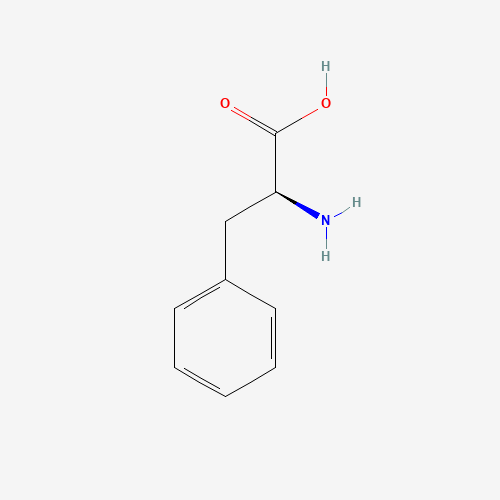
Phenylalanine
AKA “L-phenylalanine, 63-91-2, (2S)-2-amino-3-phenylpropanoic acid, (S)-2-Amino-3-phenylpropanoic acid, 3-Phenyl-L-alanine, (S)-Phenylalanine, (L)-Phenylalanine, 3-Phenylalanine, beta-Phenyl-L-alanine”
Skin Conditioning
Ingredient Facts
Phenylalanine
AKA: L-phenylalanine, 63-91-2, (2S)-2-amino-3-phenylpropanoic acid, (S)-2-Amino-3-phenylpropanoic acid, 3-Phenyl-L-alanine, (S)-Phenylalanine, (L)-Phenylalanine, 3-Phenylalanine, Beta-Phenyl-L-alanine
Skin Conditioning · Hair Conditioning · EWG: 1
Synthetic
Skin Conditioner
Hair Care
Clean
Phenylalanine is an essential amino acid and the precursor for the amino acid tyrosine. Like tyrosine, it is the precursor of catecholamines in the body (tyramine, dopamine, epinephrine and norepinephrine). The psychotropic drugs (mescaline, morphine, codeine, and papaverine) also have phenylalanine as a constituent. Phenylalanine is a precursor of the neurotransmitters called catecholamines, which are adrenalin-like substances. Phenylalanine is highly concentrated in the human brain and plasma. Normal metabolism of phenylalanine requires biopterin, iron, niacin, vitamin B6, copper and vitamin C. An average adult ingests 5 g of phenylalanine per day and may optimally need up to 8 g daily. Phenylalanine is highly concentrated in high protein foods, such as meat, cottage cheese and wheat germ. A new dietary source of phenylalanine is artificial sweeteners containing aspartame. Aspartame appears to be nutritious except in hot beverages; however, it should be avoided by phenylketonurics an
Effective at 0.05%
Solubility 10 to 50 mg/mL at 77 °F (NTP, 1992)
Formula
C9H11NO2
Mol. Weight
165.19
CAS #
63-91-2, 150-30-1
Form
Powder
State
L-phenylalanine is an odorless white crystalline powder. Slightly bitter taste. pH (1% aqueous solution) 5.4 to 6. (NTP, 1992)
See origin →
Functions
Hair Conditioning
A catch-all term for ingredients that improve how skin looks and feels — softer, smoother, more supple. The workhorse behind most moisturizers.
Skin Conditioning
A catch-all term for ingredients that improve how skin looks and feels — softer, smoother, more supple. The workhorse behind most moisturizers.
Locks in moisture
Traditional Use
An essential amino acid discovered in the early 20th century; historically used in skincare formulations to support skin hydration and as a precursor to neurotransmitters that may improve skin health. Limited traditional use prior to modern biochemistry.
Skin Types
●all-skin-types
Best For
Dryness
Pregnancy & Breastfeeding Safe
Yes
EWG
1
CIR
Safe as used
Pregnancy
Yes
CIR Safety Findings
Not Phototoxic
medical-approval
all-shades-safe
Concentration Guide
5e-05%
0.1%
0%100%
Effective Range
CIR reported use: 0.00005-0.1 | 0.0001-0.07 | 0.00009-0.03
Regulatory Agencies
Phenylalanine
European Commission
EU Cosmetic Ingredient Database (CosIng)
Undecylenoyl Phenylalanine
European Commission
EU Cosmetic Ingredient Database (CosIng)
Phenylalanine
Environmental Working Group (EWG)
EWG Skin Deep Cosmetics Database
Undecylenoyl Phenylalanine
Environmental Working Group (EWG)
EWG Skin Deep Cosmetics Database
Antimicrobial Nanoparticles Composed of Zein and Arginine-Phenylalanine-Based Surfactants for Wound Related Infections: Antioxidant and Skin-Related A
Sousa FFO, Hafidi Z, García MT, Moran MDC, Vazquez S et al.
Antibiotics (Basel, Switzerland), 2024
Verified Jun 2026
Data: PubChem · CosIng · EWG · CIR