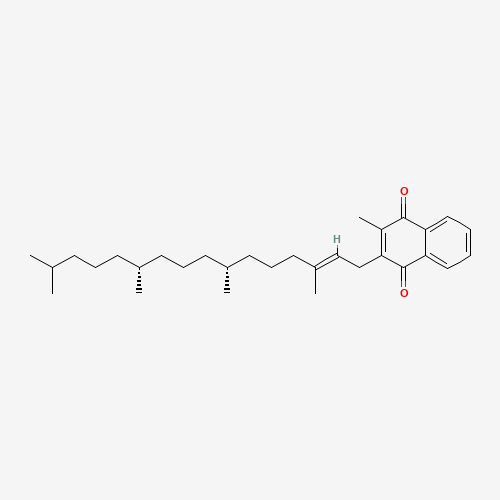
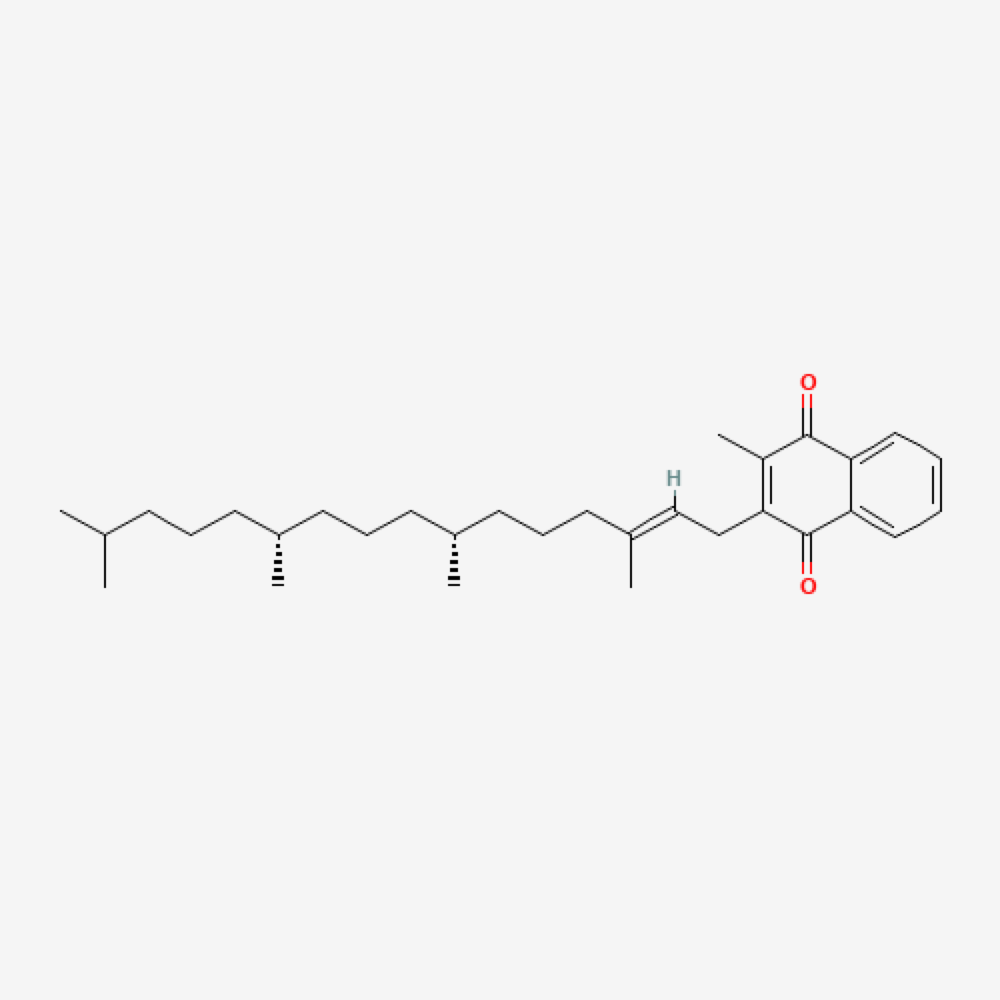
Phytonadione
AKA “VITAMIN K1, 84-80-0, Phylloquinone, Phytomenadione, Phytylmenadione, Mephyton, 3-Phytylmenadione, Monodion, Synthex P”
Synthetic
Ingredient Facts
Phytonadione
AKA: VITAMIN K1, 84-80-0, Phylloquinone, Phytomenadione, Phytylmenadione, Mephyton, 3-Phytylmenadione, Monodion, Synthex P
Synthetic · Skin Conditioning · EWG: 4
Synthetic
Skin Conditioner
Synthetic
Not Clean
Vitamin K1, also called phylloquinone or phytonadione, is a fat soluble vitamin. Phylloquinone is a cofactor of the enzyme γ-carboxylase, which modifies and activates precursors to coagulation factors II, VII, IX, and X. It is indicated in the treatment of coagulation disorders due to faulty formation of coagulation factors II, VII, IX, and X caused by deficiency or interference in the activity of vitamin K. Phylloquinone has been synthesized since at least 1939, and was approved by the FDA prior to 1955.
Solubility Insoluble in water
Formula
C31H46O2
Mol. Weight
450.70
CAS #
84-80-0, 81818-54-4
Form
Oil
State
Yellow viscous liquid; [Merck Index] Dark yellow or green viscous liquid; [Sigma-Aldrich MSDS]
See origin →
Functions
Skin Conditioning
A catch-all term for ingredients that improve how skin looks and feels — softer, smoother, more supple. The workhorse behind most moisturizers.
Skin Conditioning Miscellaneous
Improves skin feel
Traditional Use
Vitamin K was discovered in 1929 by Danish biochemist Henrik Dam. Phylloquinone (K1) was identified in leafy greens and first used in skincare in the 1990s for its ability to reduce bruising, redness, and support skin barrier function.
Skin Types
●all-skin-types
Best For
Dark Circles
Pregnancy & Breastfeeding Safe
Yes
Verified Jun 2026
Data: PubChem · CosIng · EWG · CIR