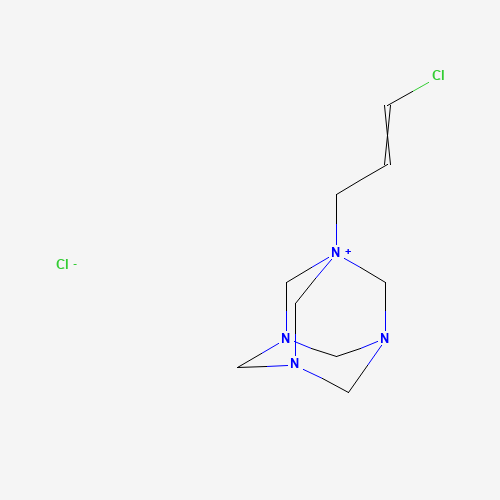
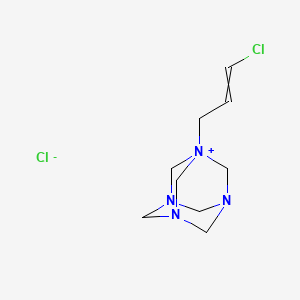
Quaternium-15
AKA “4080-31-3, DTXSID5024760, CHEBI:59607, Dowicil 100, 1-(3-Chloroallyl)-3, 5, 7-triaza-1-azoniaadamantane chloride, N-(3-Chloroallyl)hexaminium chloride, Dowicide Q, Quaternium 15, Cinartc 200”
Preservative
Ingredient Facts
Quaternium-15
AKA: 4080-31-3, DTXSID5024760, CHEBI:59607, Dowicil 100, 1-(3-Chloroallyl)-3, 7-triaza-1-azoniaadamantane chloride, N-(3-Chloroallyl)hexaminium chloride, Dowicide Q, Quaternium 15, Cinartc 200
Preservative · Antimicrobial · EWG: 8
Synthetic
Preservative
Not Clean
Methenamine 3-chloroallylochloride
Solubility greater than 100 mg/mL at 72 °F (NTP, 1992)
Formula
C9H16Cl2N4
Mol. Weight
251.15
CAS #
4080-31-3, 51229-78-8
Form
Liquid
State
1-(3-chloroallyl)-3,5,7-triaza-1-azoniaadamantane chloride is a cream-colored powder. (NTP, 1992)
See origin →
Functions
Antimicrobial
Keeps your product from growing bacteria, mold, or yeast. Without these, that jar of cream becomes a petri dish in about a week.
Preservative
Keeps your product from growing bacteria, mold, or yeast. Without these, that jar of cream becomes a petri dish in about a week.
Fights Bacteria
Traditional Use
Developed in the mid-20th century as a synthetic antimicrobial preservative and formaldehyde releaser. Widely adopted in cosmetics during the 1960s-1980s to prevent bacterial and fungal contamination, though later restricted in some regions due to sensitization concerns.
Skin Types
●all-skin-types
Best For
General
Pregnancy & Breastfeeding Safe
Caution
Allergen Warning
⚠️ Formaldehyde Releaser
EWG
8
CIR
Safe as used
Pregnancy
Caution
Restricted By
CIR Safety Findings
medical-approval
all-shades-safe
Phototoxicity Concern
Concentration Guide
0.2%
0%0%
Reg. Limit
EU regulatory limit: 0.2%. Source: EU Cosmetics Regulation (EC) 1223/2009, Annex V (Preservatives), Entry 31.
Regulatory Agencies
🧂Conflict of interest.
Final Report of the Amended Safety Assessment of Quaternium-15 as used in cosmetics
Cosmetic Ingredient Review (CIR) Expert Panel
International Journal of Toxicology
Final Report on the Safety Assessment of Quaternium-15
Cosmetic Ingredient Review (CIR) Expert Panel
International Journal of Toxicology
Quaternium-15
European Commission
EU Cosmetic Ingredient Database (CosIng)
Quaternium-15
Environmental Working Group (EWG)
EWG Skin Deep Cosmetics Database
Verified Jun 2026 · 🧪 = conflict
Data: PubChem · CosIng · EWG · CIR