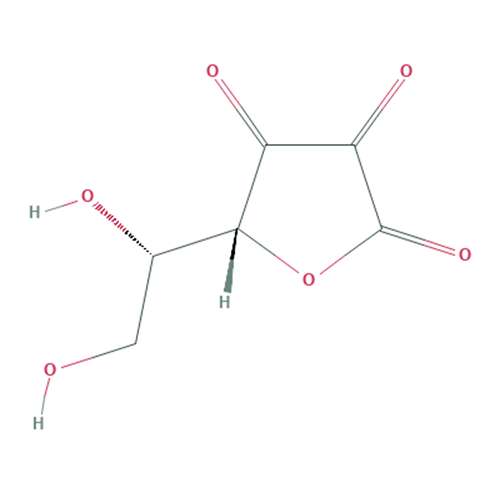
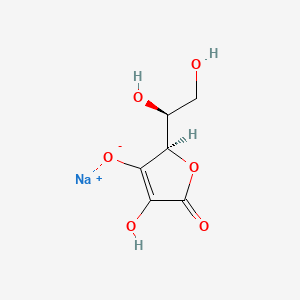
Sodium Ascorbate
AKA “134-03-2, L-Ascorbic acid sodium salt, Sodium L-ascorbate, Vitamin C sodium, Ascorbic acid sodium salt, Monosodium L-ascorbate, Ascorbicin, Sodascorbate, Ascorbate de sodium”
Antioxidant
Ingredient Facts
Sodium ascorbate
AKA: 134-03-2, L-Ascorbic acid sodium salt, Sodium L-ascorbate, Vitamin C sodium, Ascorbic acid sodium salt, Monosodium L-ascorbate, Ascorbicin, Sodascorbate, Ascorbate de sodium
Antioxidant · Antioxidant · EWG: 2
Synthetic
Antioxidant
Vitamin C
Clean
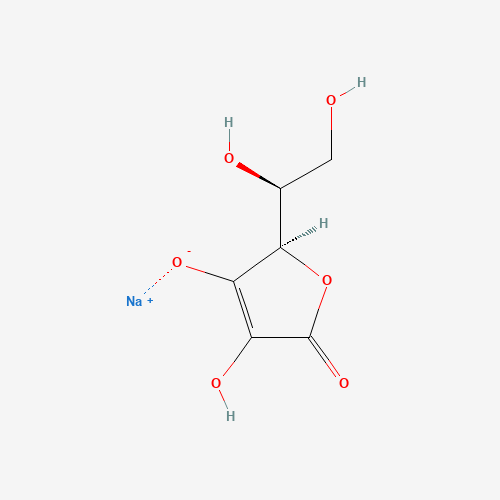
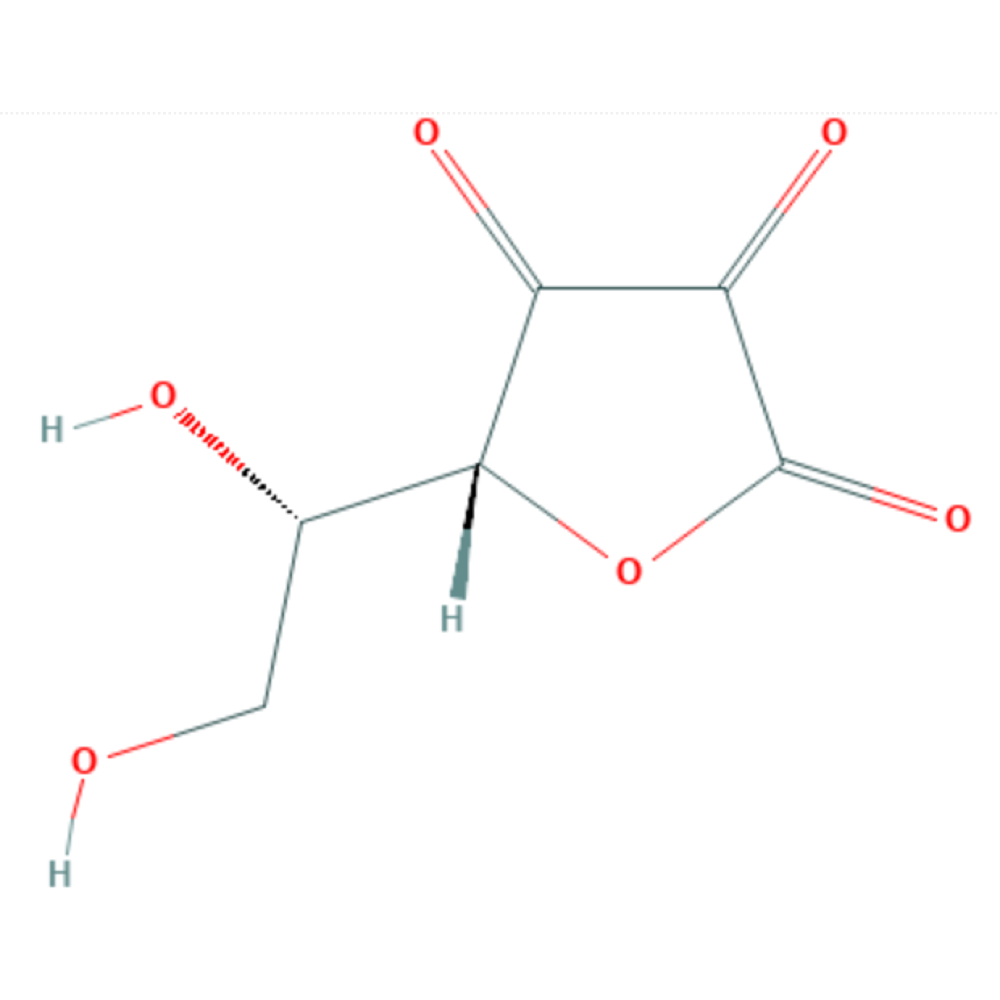
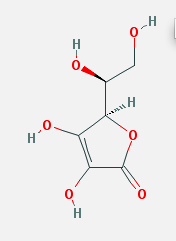
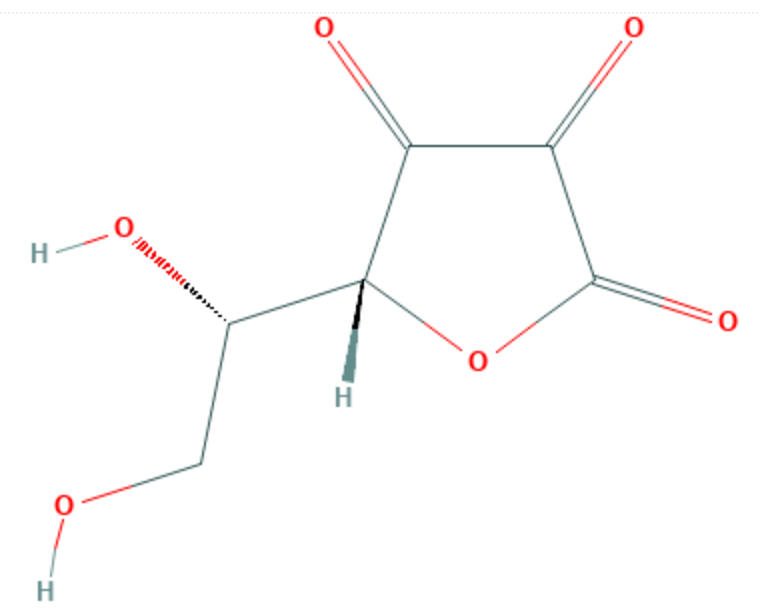
Sodium ascorbate is an organic sodium salt resulting from the replacement of the proton from the 3-hydroxy group of ascorbic acid by a sodium ion. It has a role as a coenzyme, a reducing agent, a flour treatment agent, a plant metabolite, a human metabolite, a food antioxidant and a Daphnia magna metabolite. It is a vitamin C and an organic sodium salt. It contains a L-ascorbate.
Solubility greater than or equal to 100 mg/mL at 63 °F (NTP, 1992)
Formula
C6H7NaO6
Mol. Weight
198.11
CAS #
134-03-2
Form
Powder
State
Minute crystals or white powder. pH of aqueous solutions 5.6 to 7.0 or even higher (a 10% solution, made from a commercial grade, may have a pH of 7.4 to 7.7). (NTP, 1992)
See origin →
Functions
Antioxidant
Fights free radicals — the unstable molecules from UV, pollution, and stress that break down collagen and cause premature aging.
Neutralizes Free Radicals
Traditional Use
Vitamin C was identified in the 1930s; sodium ascorbate is a stable, water-soluble form developed in the mid-20th century as an antioxidant ingredient in skincare. Used to provide vitamin C's brightening and anti-aging benefits in cosmetic formulations.
Skin Types
●all-skin-types
Best For
Dullness
Pregnancy & Breastfeeding Safe
Yes
Final Report on the Safety Assessment of L-Ascorbic Acid, Calcium Ascorbate, Magnesium Ascorbate, Magnesium Ascorbyl Phosphate, Sodium Ascorbate, and Sodium Ascorbyl Phosphate as Used in Cosmetics
Cosmetic Ingredient Review (CIR) Expert Panel
International Journal of Toxicology
Sodium Ascorbate
European Commission
EU Cosmetic Ingredient Database (CosIng)
Final report of the safety assessment of L-Ascorbic Acid, Calcium Ascorbate, Magnesium Ascorbate, Magnesium Ascorbyl Phosphate, Sodium Ascorbate, and
Elmore AR
International journal of toxicology, 2005
Final report of the safety assessment of L-Ascorbic Acid, Calcium Ascorbate, Magnesium Ascorbate, Magnesium Ascorbyl Phosphate, Sodium Ascorbate, and
Elmore AR
International journal of toxicology, 2005
Final report of the safety assessment of L-Ascorbic Acid, Calcium Ascorbate, Magnesium Ascorbate, Magnesium Ascorbyl Phosphate, Sodium Ascorbate, and
Elmore AR
International journal of toxicology, 2005
Final report of the safety assessment of L-Ascorbic Acid, Calcium Ascorbate, Magnesium Ascorbate, Magnesium Ascorbyl Phosphate, Sodium Ascorbate, and
Elmore AR
International journal of toxicology, 2005
Sodium Ascorbate
Environmental Working Group (EWG)
EWG Skin Deep Cosmetics Database
Sodium L-ascorbate enhances elastic fibers deposition by fibroblasts from normal and pathologic human skin.
Hinek A, Kim HJ, Wang Y, Wang A, Mitts TF
Journal of dermatological science, 2014
Verified Jun 2026
Data: PubChem · CosIng · EWG · CIR