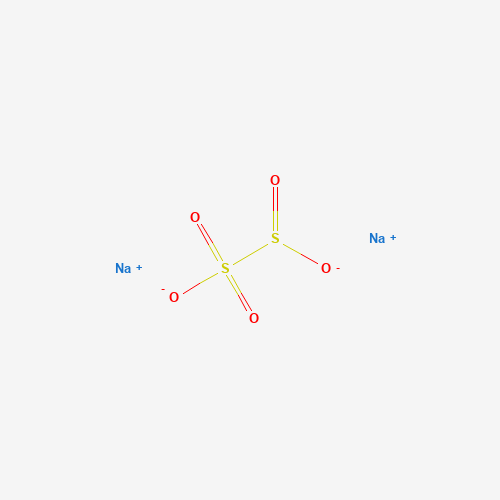
Sodium Metabisulfite
AKA “7681-57-4, Sodium pyrosulfite, Sodium disulfite, Disodium pyrosulfite, Natrii disulfis, Campden Tablets, Disodium metabisulfite, Natrium pyrosulfit, Natriummetabisulfit”
Preservative
Ingredient Facts
Sodium metabisulfite
AKA: 7681-57-4, Sodium pyrosulfite, Sodium disulfite, Disodium pyrosulfite, Natrii disulfis, Campden Tablets, Disodium metabisulfite, Natrium pyrosulfit, Natriummetabisulfit
Preservative · Antioxidant · EWG: 6
Synthetic
Antioxidant
Preservative
Medicated Active
Not Clean
Sodium metabisulfite appears as a white crystalline or powder solid with a slight sulfur odor. Toxic by inhalation. Strongly irritates skin and tissue. Noncombustible, but may decompose to emit toxic oxide fumes of sulfur and sodium when heated to high temperature. A corrosive acid when mixed with water. Used as a food preservative and as a laboratory reagent.
Solubility 54 % (NIOSH, 2024)
Formula
Na2O5S2
Mol. Weight
190.11
CAS #
7681-57-4, 7757-74-6
Form
Powder
State
Sodium metabisulfite appears as a white crystalline or powder solid with a slight sulfur odor. Toxic by inhalation. Strongly irritates skin and tissue. Noncombustible, but may decompose to emit toxic
See origin →
Functions
Antioxidant
Fights free radicals — the unstable molecules from UV, pollution, and stress that break down collagen and cause premature aging.
Preservative
Keeps your product from growing bacteria, mold, or yeast. Without these, that jar of cream becomes a petri dish in about a week.
Reducing
Neutralizes Free Radicals
Traditional Use
Developed in the 19th century as a preservative and antioxidant, first used industrially before being adopted in cosmetics in the mid-20th century to prevent oxidation and microbial growth in skincare products.
Skin Types
●all-skin-types
Best For
General
Pregnancy & Breastfeeding Safe
Caution
EWG
6
CIR
Safe as used
Pregnancy
Caution
CIR Safety Findings
Not an Irritant
medical-approval
all-shades-safe
Concentration Guide
0.2%
0%0%
Reg. Limit
EU regulatory limit: 0.2%. SO2) Source: EU Cosmetics Regulation (EC) 1223/2009, Annex V (Preservatives), Entry 9.
Regulatory Agencies
Final Report on the Safety Assessment of Sodium Sulfite, Potassium Sulfite, Ammonium Sulfite, Sodium Bisulfite, Ammonium Bisulfite, Sodium Metabisulfite, and Potassium Metabisulfite
Cosmetic Ingredient Review (CIR) Expert Panel
International Journal of Toxicology
Sodium Metabisulfite
European Commission
EU Cosmetic Ingredient Database (CosIng)
Sodium Metabisulfite
Environmental Working Group (EWG)
EWG Skin Deep Cosmetics Database
Verified Jun 2026
Data: PubChem · CosIng · EWG · CIR