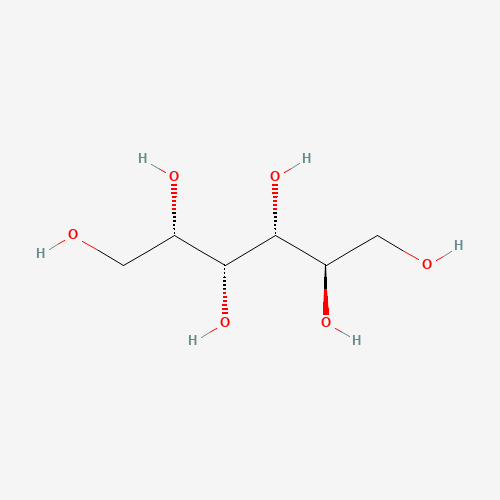
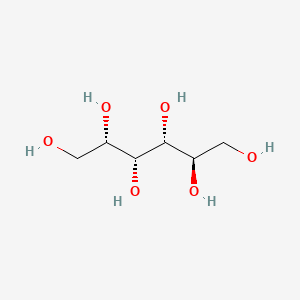
Sorbitol
AKA “D-Sorbitol, 50-70-4, D-Glucitol, glucitol, Glucarine, (-)-Sorbitol, Nivitin, D-(-)-Sorbitol, Diakarmon”
Ingredient
Ingredient Facts
Sorbitol
AKA: D-Sorbitol, 50-70-4, D-Glucitol, Glucitol, Glucarine, (-)-Sorbitol, Nivitin, D-(-)-Sorbitol, Diakarmon
Ingredient · Humectant · EWG: 1
Synthetic
Humectant
Clean
Sorbitol is a sugar alcohol found in fruits and plants with diuretic, laxative and cathartic property. Unabsorbed sorbitol retains water in the large intestine through osmotic pressure thereby stimulating peristalsis of the intestine and exerting its diuretic, laxative and cathartic effect. In addition, sorbitol has one-third fewer calories and 60 % the sweetening activity of sucrose and is used as a sugar replacement in diabetes.
Solubility 2750000
Formula
C6H14O6
Mol. Weight
182.17
CAS #
50-70-4, 1259528-21-6
Form
Liquid
State
Sorbitol is an odorless colorless solid. Sinks and mixes with water. (USCG, 1999)
See origin →
Functions
Humectant
A moisture magnet. Pulls water from the air and deeper skin layers up to the surface to keep skin plump and hydrated.
Draws water to skin
Traditional Use
A sugar alcohol first isolated from rowan berries in the 1870s and later synthesized commercially in the 20th century. Used in traditional medicine for its gentle laxative properties and adopted in cosmetics as a humectant and sweetener.
Skin Types
●all-skin-types
Best For
Dehydration
Pregnancy & Breastfeeding Safe
Yes
Safety Assessment of Mannitol, Sorbitol, and Xylitol as U...
Priya Cherian, Wilma F Bergfeld, Donald V Belsito, Curtis D Klaassen, Daniel C Liebler, James G Marks + 6 more
International journal of toxicology, 2025
Rereview not opened - use not supported: Glyceryl Collagenate, Glyceryl Sesquioleate, Glyceryl/Sorbitol Oleate/Hydroxystearate, Glyceryl Stearate/Maleate, and Glyceryl Thiopropionate
Cosmetic Ingredient Review (CIR) Expert Panel
International Journal of Toxicology
Safety Assessment of Anhydrogalactose,Anhydroglucitol, Anhydroxylitol, Arabinose,Psicose, Saccharide Hydrolysate, andSaccharide Isomerate as Used in Cosmetics
Cosmetic Ingredient Review (CIR) Expert Panel
International Journal of Toxicology
Safety Assessment of Mannitol, Sorbitol and Xylitol as Used in Cosmetics
Cosmetic Ingredient Review (CIR) Expert Panel
International Journal of Toxicology
Anhydroglucitol
European Commission
EU Cosmetic Ingredient Database (CosIng)
Glyceryl/Sorbitol Oleate/Hydroxystearate
European Commission
EU Cosmetic Ingredient Database (CosIng)
D-Sorbitol
Environmental Working Group (EWG)
EWG Skin Deep Cosmetics Database
Sorbitol
Environmental Working Group (EWG)
EWG Skin Deep Cosmetics Database
Safety Assessment of Anhydrogalactose, Anhydroglucitol, Anhydroxylitol, Arabinose, Psicose, Saccharide Hydrolysate, and Saccharide Isomerate as Used i
Johnson W Jr, Bergfeld WF, Belsito DV, Cohen DE, Klaassen CD et al.
International journal of toxicology, 2025
Safety Assessment of Anhydrogalactose, Anhydroglucitol, Anhydroxylitol, Arabinose, Psicose, Saccharide Hydrolysate, and Saccharide Isomerate as Used i
Johnson W Jr, Bergfeld WF, Belsito DV, Cohen DE, Klaassen CD et al.
International journal of toxicology, 2025
Sugar alcohols derived from lactose: lactitol, galactitol, and sorbitol.
Zhang W, Chen J, Chen Q, Wu H, Mu W
Applied microbiology and biotechnology, 2020
Verified Jun 2026
Data: PubChem · CosIng · EWG · CIR