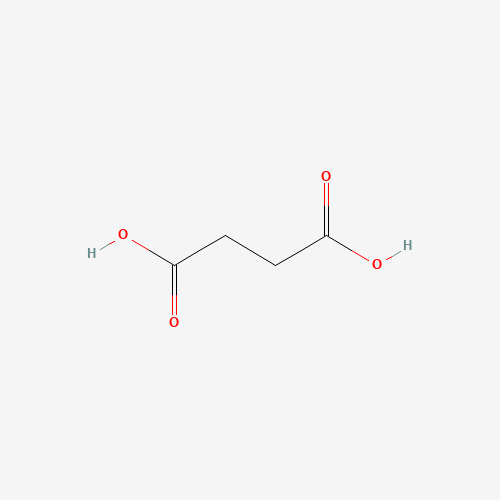
Succinic Acid
AKA “butanedioic acid, 110-15-6, Amber acid, Asuccin, Wormwood acid, Dihydrofumaric acid, Katasuccin, Bernsteinsaure, 1, 2-Ethanedicarboxylic acid”
Acid
Ingredient Facts
Succinic acid
AKA: Butanedioic acid, 110-15-6, Amber acid, Asuccin, Wormwood acid, Dihydrofumaric acid, Katasuccin, Bernsteinsaure, 1, 2-Ethanedicarboxylic acid
Acid · Buffering · EWG: 1
Synthetic
Acid
Clean
Succinic acid is a dicarboxylic acid. The anion, succinate, is a component of the citric acid cycle capable of donating electrons to the electron transfer chain. Succinic acid is created as a byproduct of the fermentation of sugar. It lends to fermented beverages such as wine and beer a common taste that is a combination of saltiness, bitterness and acidity. Succinate is commonly used as a chemical intermediate, in medicine, the manufacture of lacquers, and to make perfume esters. It is also used in foods as a sequestrant, buffer, and a neutralizing agent. Succinate plays a role in the citric acid cycle, an energy-yielding process and is metabolized by succinate dehydrogenase to fumarate. Succinate dehydrogenase (SDH) plays an important role in the mitochondria, being both part of the respiratory chain and the Krebs cycle. SDH with a covalently attached FAD prosthetic group, binds enzyme substrates (succinate and fumarate) and physiological regulators (oxaloacetate and ATP). Oxidizing
Solubility 5 to 10 mg/mL at 72 °F (NTP, 1992)
Formula
C4H6O4
Mol. Weight
118.09
CAS #
110-15-6
Form
Liquid
State
Succinic acid appears as white crystals or shiny white odorless crystalline powder. pH of 0.1 molar solution: 2.7. Very acid taste. (NTP, 1992)
See origin →
Functions
Buffering
Antioxidant
Moisturizing
Brightening
Provides scent
Maintains optimal pH
Traditional Use
An organic acid found naturally in amber and produced by fermentation, historically used in traditional medicine for its antimicrobial and skin-conditioning properties. Now synthesized and used in modern cosmetics as a pH buffer and skin conditioning agent.
Skin Types
●all-skin-types
Best For
General
Pregnancy & Breastfeeding Safe
Yes
Verified Jun 2026
Data: PubChem · CosIng · EWG · CIR