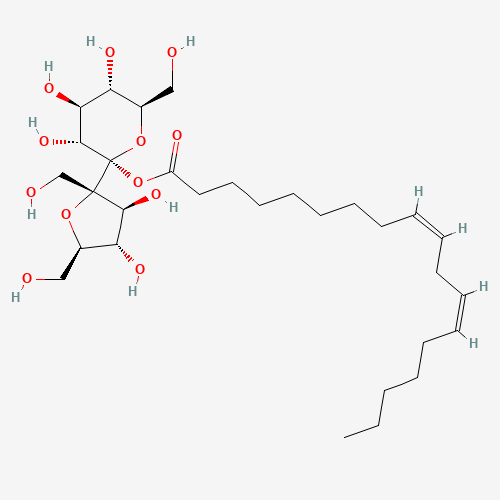
Sucrose Polylinoleate
AKA “EINECS 260-188-7, 56449-51-5, alpha-D-Glucopyranoside, beta-D-fructofuranosyl, (Z, Z)-9, 12-octadecadienoate, RefChem:111179, 260-188-7, SCHEMBL29361715, DTXSID601021312”
Surfactant
Ingredient Facts
Sucrose polylinoleate
AKA: EINECS 260-188-7, 56449-51-5, Alpha-D-Glucopyranoside, Beta-D-fructofuranosyl, (Z, Z)-9, 12-octadecadienoate, RefChem:111179, 260-188-7, SCHEMBL29361715, DTXSID601021312
Surfactant · Emollient · EWG: 4
Plant-Derived
Emollient
Cleanser
Emulsifier
Skin Conditioner
Plant Oil
Not Clean
.alpha.-d-Glucopyranoside, .beta.-d-fructofuranosyl, (Z,Z)-9,12-octadecadienoate
Formula
C30H52O12
Mol. Weight
604.70
CAS #
56449-51-5
See origin →
Functions
Skin Conditioning
A catch-all term for ingredients that improve how skin looks and feels — softer, smoother, more supple. The workhorse behind most moisturizers.
Emollient
Fills in the tiny cracks between skin cells to make everything feel smooth and soft. The "silky finish" ingredient.
Cleansing
Makes oil and water mix so dirt, makeup, and sunscreen can actually be washed away. The reason your face wash foams.
Emulsifying
Forces oil and water to stay mixed instead of separating into layers. The unsung hero holding your lotion together.
Locks In Moisture
Traditional Use
Created by esterifying sucrose with linoleic acid (an essential fatty acid from plant oils). Developed for cosmetics as a conditioning and barrier-repairing agent, designed to mimic skin-beneficial lipids in moisturizing formulations.
Skin Types
●all-skin-types
Best For
General
Pregnancy & Breastfeeding Safe
Yes
Verified Jun 2026
Data: PubChem · CosIng · EWG · CIR