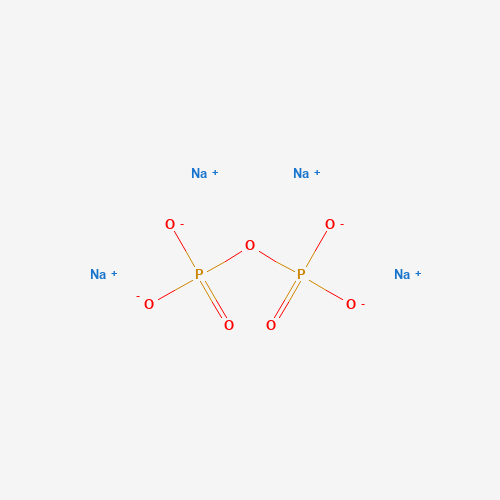
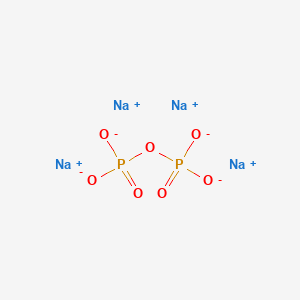
Tetrasodium Pyrophosphate
AKA “Sodium pyrophosphate, 7722-88-5, TSPP, Tetrasodium diphosphate, Phosphotex, Diphosphoric acid, tetrasodium salt, Sodium diphosphate, Victor TSPP, Natrium pyrophosphat”
Ingredient
Ingredient Facts
Tetrasodium pyrophosphate
AKA: 7722-88-5, TSPP, Tetrasodium diphosphate, Phosphotex, Diphosphoric acid, Tetrasodium salt, Sodium diphosphate, Victor TSPP, Natrium pyrophosphat
Ingredient · Anticaking · EWG: 1
Synthetic
Chelating Agent
Clean
Tetrasodium pyrophosphate appears as odorless, white powder or granules. mp: 995 °C. Density: 2.53 g/cm3. Solubility in water: 3.16 g/100 mL (cold water); 40.26 g/100 mL boiling water. Used as a wool de-fatting agent, in bleaching operations, as a food additive. The related substance tetrasodium pyrophosphate decahydrate (Na4P2O7*10H2O) occurs as colorless transparent crystals. Loses its water when heated to 93.8 °C.
Solubility 7 % at 77 °F (NIOSH, 2024)
Formula
Na4O7P2
Mol. Weight
265.90
CAS #
7722-88-5
Form
Powder
State
Tetrasodium pyrophosphate appears as odorless, white powder or granules. mp: 995 °C. Density: 2.53 g/cm3. Solubility in water: 3.16 g/100 mL (cold water); 40.26 g/100 mL boiling water. Used as a wool
See origin →
Functions
Anticaking
Buffering
Chelating
Grabs onto metal ions in water that would destabilize the formula. Keeps your product from going bad or changing color.
Oral Care
Prevents Clumping
Stabilizes pH
Removes Metal Ions
Supports dental health
Maintains optimal pH
Binds metal ions
Traditional Use
Inorganic salt developed in the 20th century as a buffering and chelating agent in cosmetics. Used industrially before being adopted to improve product stability and texture.
Skin Types
●all-skin-types
Best For
General
Pregnancy & Breastfeeding Safe
Yes
Disodium Pyrophosphate
European Commission
EU Cosmetic Ingredient Database (CosIng)
Tetrasodium Pyrophosphate
European Commission
EU Cosmetic Ingredient Database (CosIng)
Disodium Pyrophosphate
Environmental Working Group (EWG)
EWG Skin Deep Cosmetics Database
Tetrasodium Pyrophosphate
Environmental Working Group (EWG)
EWG Skin Deep Cosmetics Database
Mutagenicity of octane and tetrasodium pyrophosphate in bacterial reverse mutation (Ames) test.
Kim SJ, Rim KT, Kim HY, Yang JS
The Journal of toxicological sciences, 2010
Verified Jun 2026
Data: PubChem · CosIng · EWG · CIR