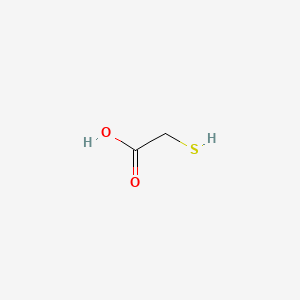
Thioglycolic Acid
AKA “mercaptoacetic acid, 68-11-1, 2-Mercaptoacetic acid, Sulfanylacetic acid, 2-Thioglycolic acid, Thioglycollic acid, Acetic acid, mercapto-, Thiovanic acid, Mercaptoessigsaeure”
Acid
Ingredient Facts
Thioglycolic acid
AKA: Mercaptoacetic acid, 68-11-1, 2-Mercaptoacetic acid, Sulfanylacetic acid, 2-Thioglycolic acid, Thioglycollic acid, Acetic acid, Mercapto-, Thiovanic acid, Mercaptoessigsaeure
Acid · Antioxidant · EWG: 6
Synthetic
Antioxidant
Acid
Not Clean
Based on the available data, the CIR Expert Panel concluded that ... Thioglycolic Acid is safe for use in hair straighteners, permanent waves, tonics, dressings, and so forth, wave sets, other non-coloring hair products, and hair dyes and colors, as described in this safety assessment, at concentrations up to 15.2% (as Thioglycolic Acid). Hairdressers should avoid skin contact and minimize consumer skin exposure. ... Thioglycolic Acid in depilatories is safe when formulated to be non-irritating under conditions of recommended use.
Solubility greater than or equal to 100 mg/mL at 64 °F (NTP, 1992)
Formula
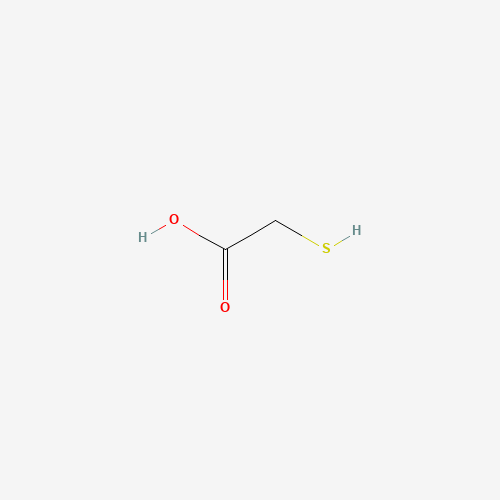
C2H4O2S
Mol. Weight
92.12
CAS #
68-11-1
Form
Liquid
State
Thioglycolic acid appears as a colorless liquid with an unpleasant odor. Density 1.325 g / cm3. Used to make permanent wave solutions and depilatories. Corrosive to metals and tissue.
See origin →
Functions
Antioxidant
Fights free radicals — the unstable molecules from UV, pollution, and stress that break down collagen and cause premature aging.
Depilatory
Hair Waving Or Straightening
Reducing
Supports cell turnover
Smooths skin texture
Brightens uneven skin tone
Traditional Use
Synthetic chemical developed in the early 20th century as a reducing agent for hair permanent waving and depilation. Replaced traditional methods of hair alteration and became the basis for modern chemical hair relaxers and wave treatments.
Skin Types
●all-skin-types
Best For
Uneven Texture
Pregnancy & Breastfeeding Safe
Caution
EWG
6
CIR
Safe as used
Pregnancy
Caution
CIR Safety Findings
medical-approval
all-shades-safe
Mild Irritant
Concentration Guide
14.4%
0%20%
Reg. Limit
EU/SCCS limit: 14.4% in cosmetic products. Opinion: SCCS/1520/13
Regulatory Agencies
Safety Assessment of Tetrasodium Glutamate Diacetate and Beta-Alanine Diacetic Acid as Used in Cosmetics.
Burnett CL, Bergfeld WF, Belsito DV, Cohen DE, Klaassen CD et al.
International journal of toxicology, 2025
Safety Assessment of Tetrasodium Glutamate Diacetate and Beta-Alanine Diacetic Acid as Used in Cosmetics.
Burnett CL, Bergfeld WF, Belsito DV, Cohen DE, Klaassen CD et al.
International journal of toxicology, 2025
HPLC determination of thioglycolic acid and other aliphatic thiols in cosmetic formulations using ethacrynic acid as precolumn derivatization reagent.
Cavrini V, Andrisano V, Gatti R, Scapini G
International journal of cosmetic science, 1990
Sodium Dehydroacetate and Dehydroacetic Acid.
Cherian P, Bergfeld WF, Belsito DV, Cohen DE, Klaassen CD et al.
International journal of toxicology, 2024
Sodium Dehydroacetate and Dehydroacetic Acid.
Cherian P, Bergfeld WF, Belsito DV, Cohen DE, Klaassen CD et al.
International journal of toxicology, 2024
Final Report on the Safety Assessment of Ammonium and Glyceryl Thioglycolates and Thioglycolic Acid
Cosmetic Ingredient Review (CIR) Expert Panel
International Journal of Toxicology
Final Report on the Safety Assessment of Sodium Dehydroacetate and Dehydroacetic Acid
Cosmetic Ingredient Review (CIR) Expert Panel
International Journal of Toxicology
Safety Assessment of Tetrasodium Glutamate Diacetate and Beta-Alanine Diacetic Acid as Used in Cosmetics
Cosmetic Ingredient Review (CIR) Expert Panel
International Journal of Toxicology
Sodium Dehydroacetate and Dehydroacetic Acid
Cosmetic Ingredient Review (CIR) Expert Panel
International Journal of Toxicology
Acetic Acid
European Commission
EU Cosmetic Ingredient Database (CosIng)
Beta-Alanine Diacetic Acid
European Commission
EU Cosmetic Ingredient Database (CosIng)
dehydroacetic acid
European Commission
EU Cosmetic Ingredient Database (CosIng)
Thioglycolic Acid
European Commission
EU Cosmetic Ingredient Database (CosIng)
Acetic acid and the skin: a review of vinegar in dermatology.
Elhage KG, St Claire K, Daveluy S
International journal of dermatology, 2022
Acetic acid and the skin: a review of vinegar in dermatology.
Elhage KG, St Claire K, Daveluy S
International journal of dermatology, 2022
Acetic Acid
Environmental Working Group (EWG)
EWG Skin Deep Cosmetics Database
dehydroacetic acid
Environmental Working Group (EWG)
EWG Skin Deep Cosmetics Database
Thioglycolic Acid
Environmental Working Group (EWG)
EWG Skin Deep Cosmetics Database
Potential application of novel liquid crystal nanoparticles of isostearyl glyceryl ether for transdermal delivery of 4-biphenyl acetic acid.
Fujii MY, Asakawa Y, Fukami T
International journal of pharmaceutics, 2020
Preparation of (13)C-labeled ceramide by acetic acid bacteria and its incorporation in mice.
Fukami H, Tachimoto H, Kishi M, Kaga T, Waki H et al.
Journal of lipid research, 2010
Thioglycolic acid and its salts
Health Canada
Health Canada Cosmetic Ingredient Hotlist
Thioglycolic acid esters
Health Canada
Health Canada Cosmetic Ingredient Hotlist
Trichloroacetic acid
Health Canada
Health Canada Cosmetic Ingredient Hotlist
[Pharmacological studies of N-(2-mercapto-2-methylpropionyl)-L-cysteine (SA 96). VI. Effects on vitamin B6, metals and skin collagen in rats].
Yamauchi H, Morikawa K, Kuwano M, Hikida M, Fujimura K et al.
Nihon yakurigaku zasshi. Folia pharmacologica Japonica, 1985
Verified Jun 2026
Data: PubChem · CosIng · EWG · CIR