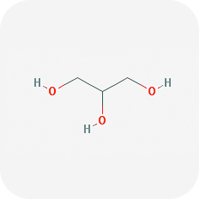
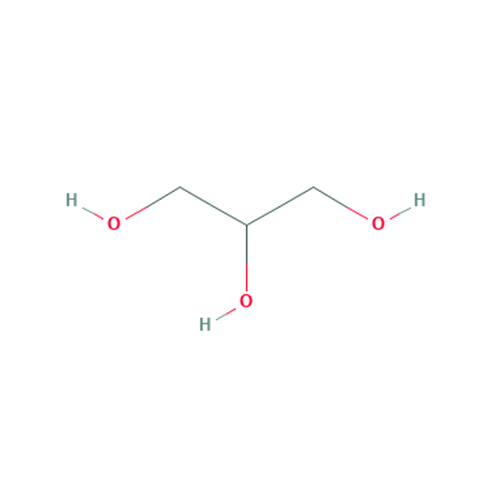
Triacetin
AKA “102-76-1, Glyceryl triacetate, Glycerol triacetate, Enzactin, Triacetine, Glycerin triacetate, Triacetylglycerol, Fungacetin, Glyped”
Ingredient
Ingredient Facts
Triacetin
AKA: 102-76-1, Glyceryl triacetate, Glycerol triacetate, Enzactin, Triacetine, Glycerin triacetate, Triacetylglycerol, Fungacetin, Glyped
Ingredient · Antimicrobial · EWG: 1
Synthetic
Preservative
Occlusive
Solvent
Clean
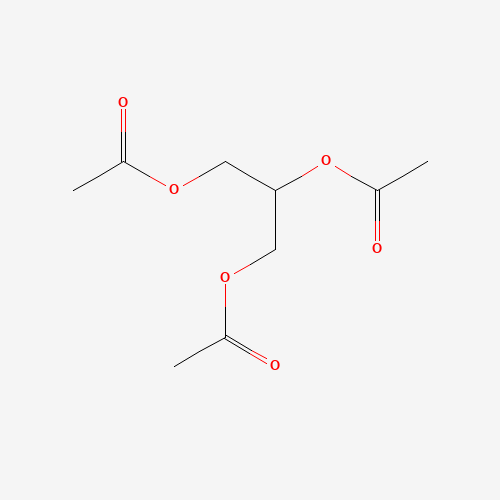
Triacetin is a triglyceride obtained by acetylation of the three hydroxy groups of glycerol. It has fungistatic properties (based on release of acetic acid) and has been used in the topical treatment of minor dermatophyte infections. It has a role as a solvent, an adjuvant, a fuel additive, a food emulsifier, a plant metabolite, a food humectant, a food additive carrier and an antifungal drug. It is functionally related to an acetic acid.
Solubility In water, 52,130 mg/L at 24.5 °C
Formula
C9H14O6
Mol. Weight
218.20
CAS #
102-76-1
Form
Powder
State
Liquid; Dry Powder
See origin →
Functions
Antimicrobial
Keeps your product from growing bacteria, mold, or yeast. Without these, that jar of cream becomes a petri dish in about a week.
Film Forming
Creates a physical seal on skin to lock moisture in and keep irritants out. The "slugging" ingredient — barrier protection.
Plasticiser
Solvent
Dissolves other ingredients so they distribute evenly in the formula. Often the invisible "base" everything else is mixed into.
Draws water to skin
Fights acne
Causing bacteria
Traditional Use
Developed in the 19th century as a plasticizer and solvent. Adopted by the cosmetics industry in the 20th century primarily as a humectant and preservative booster in nail polishes and other formulations.
Skin Types
●all-skin-types
Best For
General
Pregnancy & Breastfeeding Safe
Yes
Final Report on the Safety Assessment of Triacetin
Cosmetic Ingredient Review (CIR) Expert Panel
International Journal of Toxicology
Triacetin
Cosmetic Ingredient Review (CIR) Expert Panel
International Journal of Toxicology
Triacetin
European Commission
EU Cosmetic Ingredient Database (CosIng)
Triacetin
Environmental Working Group (EWG)
EWG Skin Deep Cosmetics Database
Triacetin.
Fiume M, Bergfeld WF, Belsito DV, Hill RA, Klaassen CD et al.
International journal of toxicology, 2023
Verified Jun 2026
Data: PubChem · CosIng · EWG · CIR