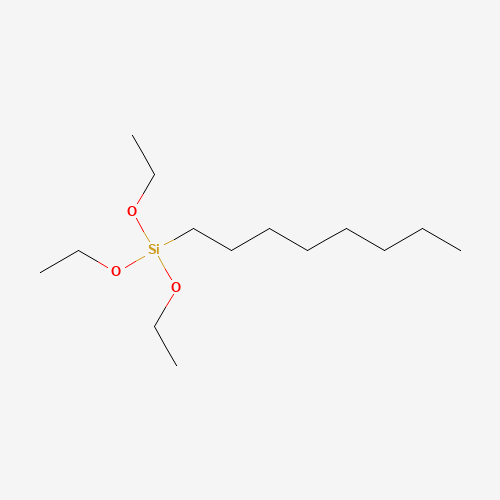
Triethoxycaprylylsilane
AKA “Triethoxyoctylsilane, Triethoxy(octyl)silane, 2943-75-1, Octyltriethoxysilane, Octyl(triethoxy)silane, Dynasylan OCTEO, Prosil 9202, Silquest A 137, Prosil 9234”
Synthetic
Ingredient Facts
Triethoxycaprylylsilane
AKA: Triethoxyoctylsilane, Triethoxy(octyl)silane, 2943-75-1, Octyltriethoxysilane, Octyl(triethoxy)silane, Dynasylan OCTEO, Prosil 9202, Silquest A 137, Prosil 9234
Synthetic · Emollient · EWG: 1
Synthetic
Emollient
Skin Conditioner
Plant Oil
Synthetic
Clean
The CIR Expert Panel concluded that the alkyl PEG ethers, listed below, are safe in the present practices of use and concentration described in this safety assessment when formulated to be nonirritating. This assessment is also intended to address future alkyl PEG ether cosmetic ingredients that vary from those ingredients recited herein only by the number of ethylene glycol repeat units...Oleth-30...
Formula
C14H32O3Si
Mol. Weight
276.49
CAS #
2943-75-1
Form
Powder
State
Dry Powder; Liquid; Dry Powder, Liquid
See origin →
Functions
Emollient
Fills in the tiny cracks between skin cells to make everything feel smooth and soft. The "silky finish" ingredient.
Skin Conditioning
A catch-all term for ingredients that improve how skin looks and feels — softer, smoother, more supple. The workhorse behind most moisturizers.
Holds Formula Together
Holds ingredients together
Traditional Use
A modern silicone-derived coupling agent developed in the late 20th century for cosmetic use. Functions as a water-repellent and film-forming agent, part of the broader silicone polymer family adopted by cosmetics in the 1950s onward.
Skin Types
●all-skin-types
Best For
General
Verified Jun 2026
Data: PubChem · CosIng · EWG · CIR