%2520flower_leaf_stem%2520Extract.jpeg)
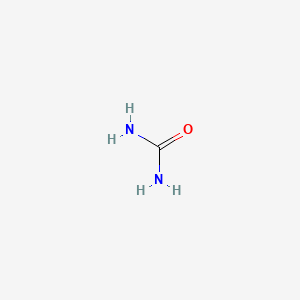
Urea
AKA “57-13-6, carbamide, Carbonyldiamide, Ureophil, Carbonyldiamine, Ureaphil, Keratinamin, Urevert, Alphadrate”
Humectant
Ingredient Facts
Urea
AKA: 57-13-6, Carbamide, Carbonyldiamide, Ureophil, Carbonyldiamine, Ureaphil, Keratinamin, Urevert, Alphadrate
Humectant · Humectant · EWG: 3
Synthetic
Humectant
Skin Conditioner
Not Clean
Urea is a nitrogenous compound containing a carbonyl group attached to two amine groups with osmotic diuretic activity. In vivo, urea is formed in the liver via the urea cycle from ammonia and is the final end product of protein metabolism. Administration of urea elevates blood plasma osmolality, resulting in enhanced flow of water from tissues, including the brain, cerebrospinal fluid and eye, into interstitial fluid and plasma, thereby decreasing pressure in those tissues and increasing urine outflow.
Solubility Soluble (NTP, 1992)
Formula
CH4N2O
Mol. Weight
60.06
CAS #
57-13-6
Form
Liquid
State
Urea appears as solid odorless white crystals or pellets. Density 1.335 g /cc. Noncombustible.
See origin →
Functions
Antistatic
Buffering
Humectant
A moisture magnet. Pulls water from the air and deeper skin layers up to the surface to keep skin plump and hydrated.
Skin Conditioning
A catch-all term for ingredients that improve how skin looks and feels — softer, smoother, more supple. The workhorse behind most moisturizers.
Locks In Moisture
Traditional Use
Known to ancient alchemists; rediscovered as a chemical compound in 1773. Historically used in folk medicine for skin conditions; widely adopted in 20th-century skincare for its humectant and keratolytic properties in treating dry and damaged skin.
Skin Types
●all-skin-types
Best For
Dryness
Pregnancy & Breastfeeding Safe
Yes
EWG
3
CIR
Safe as used
Pregnancy
Yes
CIR Safety Findings
medical-approval
all-shades-safe
Dermal Absorption 10%
Concentration Guide
Dermal absorption: 10%. Source: CIR Safety Assessment (CIR Seq 310).
Regulatory Agencies
Safety Assessment of Hydroxyethyl Urea as Used in Cosmetics.
Akinsulie A, Bergfeld WF, Belsito DV, Hill RA, Klaassen CD et al.
International journal of toxicology, 2024
Topical urea in skincare: A review.
Leonardo Celleno
Dermatologic therapy, 2018
Topical urea in skincare: A review.
Leonardo Celleno
Dermatologic therapy, 2018
Topical urea in skincare: A review.
Leonardo Celleno
Dermatologic therapy, 2018
Topical urea in skincare: A review.
Celleno L
Dermatologic therapy, 2018
Final Report of the Safety Assessment for Imidazolidinyl Urea
Cosmetic Ingredient Review (CIR) Expert Panel
International Journal of Toxicology
Final Report on the Safety Assessment of Diazolidinyl Urea
Cosmetic Ingredient Review (CIR) Expert Panel
International Journal of Toxicology
Final Report on the Safety Assessment of Polyoxymethylene Urea
Cosmetic Ingredient Review (CIR) Expert Panel
International Journal of Toxicology
Final Report on the Safety Assessment of Urea
Cosmetic Ingredient Review (CIR) Expert Panel
International Journal of Toxicology
Imidazolidinyl Urea
Cosmetic Ingredient Review (CIR) Expert Panel
International Journal of Toxicology
Safety Assessment of Hydroxyethyl Urea As Used in Cosmetics
Cosmetic Ingredient Review (CIR) Expert Panel
International Journal of Toxicology
Scientific Literature Review: Safety Assessment of Centaurea cyanus Flower-Derived Ingredients as Used in Cosmetics
Cosmetic Ingredient Review (CIR) Expert Panel
International Journal of Toxicology
Diazolidinyl Urea
European Commission
EU Cosmetic Ingredient Database (CosIng)
Echinacea Purpurea (echinacea) flower/leaf/stem Extract
European Commission
EU Cosmetic Ingredient Database (CosIng)
Echinacea Purpurea Extract
European Commission
EU Cosmetic Ingredient Database (CosIng)
Hydroxyethyl Urea
European Commission
EU Cosmetic Ingredient Database (CosIng)
Imidazolidinyl Urea
European Commission
EU Cosmetic Ingredient Database (CosIng)
Polyoxymethylene Urea
European Commission
EU Cosmetic Ingredient Database (CosIng)
Urea
European Commission
EU Cosmetic Ingredient Database (CosIng)
Influence of excipients on moisturizing effect of urea.
Couteau C, Coiffard LJ, Sébille-Rivain V
Drug development and industrial pharmacy, 2006
Diazolidinyl Urea
Environmental Working Group (EWG)
EWG Skin Deep Cosmetics Database
Hydroxyethyl Urea
Environmental Working Group (EWG)
EWG Skin Deep Cosmetics Database
Imidazolidinyl Urea
Environmental Working Group (EWG)
EWG Skin Deep Cosmetics Database
Polyoxymethylene Urea
Environmental Working Group (EWG)
EWG Skin Deep Cosmetics Database
Urea
Environmental Working Group (EWG)
EWG Skin Deep Cosmetics Database
1-Butyl-3-(N-crotonoylsulfanilyl) urea
Health Canada
Health Canada Cosmetic Ingredient Hotlist
Claviceps purpurea Tul., its alkaloids and galenical preparations
Health Canada
Health Canada Cosmetic Ingredient Hotlist
Digitalis purpurea L., all heterosides of
Health Canada
Health Canada Cosmetic Ingredient Hotlist
Thiourea and its derivatives
Health Canada
Health Canada Cosmetic Ingredient Hotlist
Urea
Health Canada
Health Canada Cosmetic Ingredient Hotlist
Urea (carbamide) peroxide
Health Canada
Health Canada Cosmetic Ingredient Hotlist
Recombinant scFv-Fc Anti-kallikrein 7 Antibody-Loaded Thermosensitive Hydrogels Against Skin Desquamation Disorders.
Laureano AFS, Vigato AA, Puzer L, de Araujo DR
ACS applied bio materials, 2024
Biorevitalizing effect of a novel facial serum containing apple stem cell extract, pro-collagen lipopeptide, creatine, and urea on skin aging signs.
Sanz MT, Campos C, Milani M, Foyaca M, Lamy A et al.
Journal of cosmetic dermatology, 2016
Safety assessment of diammonium phosphate and urea used in the manufacture of cigarettes.
Stavanja MS, Curtin GM, Ayres PH, Bombick ER, Borgerding MF et al.
Experimental and toxicologic pathology : official journal of the Gesellschaft fur Toxikologische Pathologie, 2008
Verified Jun 2026
Data: PubChem · CosIng · EWG · CIR