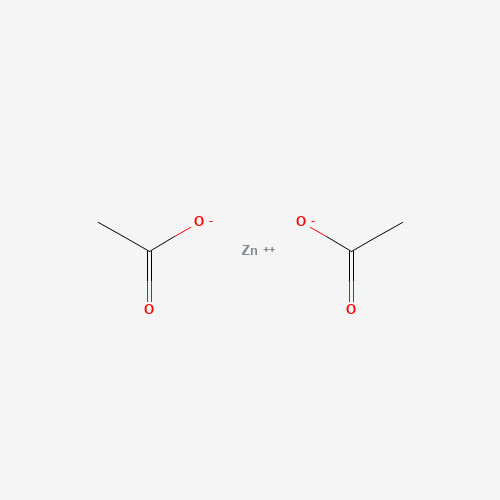
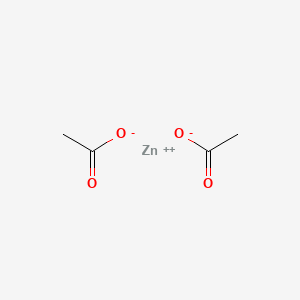
Zinc Acetate
AKA “557-34-6, Zinc diacetate, Zinc(II) acetate, Dicarbomethoxyzinc, Acetic acid, zinc(II) salt, zinc salt, Zinc acetate anhydrous, Siltex CL 4, Anhydrous Zinc Acetate”
Ingredient
Ingredient Facts
Zinc acetate
AKA: 557-34-6, Zinc diacetate, Zinc(II) acetate, Dicarbomethoxyzinc, Acetic acid, Zinc(II) salt, Zinc salt, Zinc acetate anhydrous, Siltex CL 4, Anhydrous Zinc Acetate
Ingredient · Antimicrobial · EWG: 4
Synthetic
Preservative
Not Clean
Zinc Acetate is a zinc salt of acetic acid essential for the synthesis of cholesterol, protein, and fats. Zinc plays an important role in the proper functioning of the immune system. Zinc is required for the enzyme activities necessary for cell division, cell growth, and wound healing as well as the release of vitamin A from the liver. It plays a role in the acuity of the senses of smell and taste and is required to maintain prostate reproductive health and insulin function. Zinc is also involved in the metabolism of carbohydrates. Zinc acetate is administered orally or parenterally as a nutritional supplement.
Solubility Solubility: 40 g/ 100 g water at 25 °C; 67 g/100 g water at 100 °C; 3 g/ 100 g alcohol at 25 °C /Zinc acetate dihydrate/
Formula
C4H6O4Zn
Mol. Weight
183.50
CAS #
557-34-6
Form
Powder
State
Obtained in both anhydrous form and as a dihydrate. Both are white crystalline solids. The primary hazard is the threat posed to the environment. Immediate steps should be taken to limit spread to the
See origin →
Functions
Antimicrobial
Keeps your product from growing bacteria, mold, or yeast. Without these, that jar of cream becomes a petri dish in about a week.
Accelerates skin healing
Fights acne
Causing bacteria
Traditional Use
Zinc salts have been used in traditional medicine for centuries to treat skin wounds and promote healing. Zinc acetate specifically became a standard pharmaceutical ingredient in the 20th century for its antimicrobial and astringent properties.
Skin Types
●all-skin-types
Best For
Acne
Pregnancy & Breastfeeding Safe
Yes
EWG
4
CIR
Safe as used
Pregnancy
Yes
CIR Safety Findings
medical-approval
all-shades-safe
Mild Irritant
Concentration Guide
2.0%
0%3%
Reg. Limit
FDA OTC limit (Skin Protectant): 2%. 21 CFR 347.10
Regulatory Agencies
Safety Assessment of Tetrasodium Glutamate Diacetate and Beta-Alanine Diacetic Acid as Used in Cosmetics.
Burnett CL, Bergfeld WF, Belsito DV, Cohen DE, Klaassen CD et al.
International journal of toxicology, 2025
Safety Assessment of Tetrasodium Glutamate Diacetate and Beta-Alanine Diacetic Acid as Used in Cosmetics.
Burnett CL, Bergfeld WF, Belsito DV, Cohen DE, Klaassen CD et al.
International journal of toxicology, 2025
Sodium Dehydroacetate and Dehydroacetic Acid.
Cherian P, Bergfeld WF, Belsito DV, Cohen DE, Klaassen CD et al.
International journal of toxicology, 2024
Sodium Dehydroacetate and Dehydroacetic Acid.
Cherian P, Bergfeld WF, Belsito DV, Cohen DE, Klaassen CD et al.
International journal of toxicology, 2024
Final Report on the Safety Assessment of Sodium Dehydroacetate and Dehydroacetic Acid
Cosmetic Ingredient Review (CIR) Expert Panel
International Journal of Toxicology
Final Report: Safety Assessment of Zinc Salts as Used in Cosmetics
Cosmetic Ingredient Review (CIR) Expert Panel
International Journal of Toxicology
Safety Assessment of Tetrasodium Glutamate Diacetate and Beta-Alanine Diacetic Acid as Used in Cosmetics
Cosmetic Ingredient Review (CIR) Expert Panel
International Journal of Toxicology
Sodium Dehydroacetate and Dehydroacetic Acid
Cosmetic Ingredient Review (CIR) Expert Panel
International Journal of Toxicology
Acetic Acid
European Commission
EU Cosmetic Ingredient Database (CosIng)
Beta-Alanine Diacetic Acid
European Commission
EU Cosmetic Ingredient Database (CosIng)
dehydroacetic acid
European Commission
EU Cosmetic Ingredient Database (CosIng)
Zinc Acetate
European Commission
EU Cosmetic Ingredient Database (CosIng)
Acetic acid and the skin: a review of vinegar in dermatology.
Elhage KG, St Claire K, Daveluy S
International journal of dermatology, 2022
Acetic acid and the skin: a review of vinegar in dermatology.
Elhage KG, St Claire K, Daveluy S
International journal of dermatology, 2022
Acetic Acid
Environmental Working Group (EWG)
EWG Skin Deep Cosmetics Database
dehydroacetic acid
Environmental Working Group (EWG)
EWG Skin Deep Cosmetics Database
Zinc Acetate
Environmental Working Group (EWG)
EWG Skin Deep Cosmetics Database
Potential application of novel liquid crystal nanoparticles of isostearyl glyceryl ether for transdermal delivery of 4-biphenyl acetic acid.
Fujii MY, Asakawa Y, Fukami T
International journal of pharmaceutics, 2020
Preparation of (13)C-labeled ceramide by acetic acid bacteria and its incorporation in mice.
Fukami H, Tachimoto H, Kishi M, Kaga T, Waki H et al.
Journal of lipid research, 2010
Trichloroacetic acid
Health Canada
Health Canada Cosmetic Ingredient Hotlist
Safety Assessment of Zinc Salts as Used in Cosmetics.
Scott LN, Fiume M, Zhu J, Bergfeld WF, Belsito DV et al.
International journal of toxicology, 2024
Safety Assessment of Zinc Salts as Used in Cosmetics.
Scott LN, Fiume M, Zhu J, Bergfeld WF, Belsito DV et al.
International journal of toxicology, 2024
Safety Assessment of Zinc Salts as Used in Cosmetics.
Scott LN, Fiume M, Zhu J, Bergfeld WF, Belsito DV et al.
International journal of toxicology, 2024
Safety Assessment of Zinc Salts as Used in Cosmetics.
Scott LN, Fiume M, Zhu J, Bergfeld WF, Belsito DV et al.
International journal of toxicology, 2024
Safety Assessment of Zinc Salts as Used in Cosmetics.
Scott LN, Fiume M, Zhu J, Bergfeld WF, Belsito DV et al.
International journal of toxicology, 2024
Safety Assessment of Zinc Salts as Used in Cosmetics.
Scott LN, Fiume M, Zhu J, Bergfeld WF, Belsito DV et al.
International journal of toxicology, 2024
Safety Assessment of Zinc Salts as Used in Cosmetics.
Scott LN, Fiume M, Zhu J, Bergfeld WF, Belsito DV et al.
International journal of toxicology, 2024
Safety Assessment of Zinc Salts as Used in Cosmetics.
Scott LN, Fiume M, Zhu J, Bergfeld WF, Belsito DV et al.
International journal of toxicology, 2024
Safety Assessment of Zinc Salts as Used in Cosmetics.
Scott LN, Fiume M, Zhu J, Bergfeld WF, Belsito DV et al.
International journal of toxicology, 2024
Safety Assessment of Zinc Salts as Used in Cosmetics.
Scott LN, Fiume M, Zhu J, Bergfeld WF, Belsito DV et al.
International journal of toxicology, 2024
Safety Assessment of Zinc Salts as Used in Cosmetics.
Scott LN, Fiume M, Zhu J, Bergfeld WF, Belsito DV et al.
International journal of toxicology, 2024
Safety Assessment of Zinc Salts as Used in Cosmetics.
Scott LN, Fiume M, Zhu J, Bergfeld WF, Belsito DV et al.
International journal of toxicology, 2024
Verified Jun 2026
Data: PubChem · CosIng · EWG · CIR