Zinc Sulfate
AKA “Zinc sulphate, 7733-02-0, Zinc sulfate anhydrous, Zincate, White vitriol, zinc(II) sulfate, Zinc sulfate (1:1), Medizinc, Solvezinc”
Ingredient
Ingredient Facts
Zinc sulfate
AKA: Zinc sulphate, 7733-02-0, Zinc sulfate anhydrous, Zincate, White vitriol, Zinc(II) sulfate, Zinc sulfate (1:1), Medizinc, Solvezinc
Ingredient · Antimicrobial · EWG: 5
Synthetic
Preservative
Astringent
Not Clean
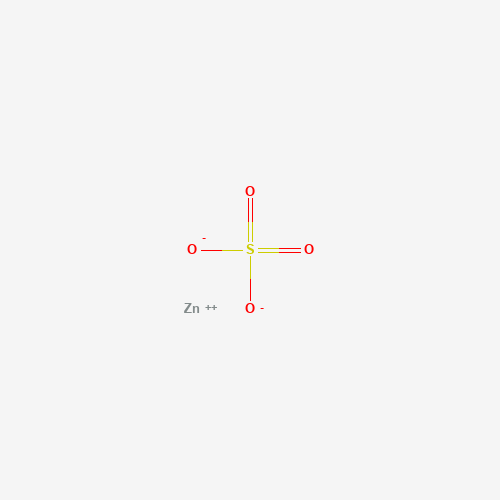
Zinc sulfate is used as a malting/fermenting aid and as a nutrient supplement Zinc sulfate (ZnSO4) is a colorless crystalline, water-soluble chemical compound. The hydrated form, ZnSO4*7H2O, the mineral goslarite, was historically known as white vitriol and can be prepared by reacting zinc with aqueous sulfuric acid. It may also be prepared by adding solid zinc to a copper(II) sulfate solution.<br /> Zinc sulfate has been shown to exhibit antibiotic and anti-spectic functions (A7766, A7767).<br /> Zinc sulfate belongs to the family of Transition Metal Sulfates. These are inorganic compounds in which the largest oxoanion is sulfate, and in which the heaviest atom not in an oxoanion is a transition metal.
Solubility Solubility: 54.480 lb/100 lb water /Heptahydrate/
Formula
O4SZn
Mol. Weight
161.40
CAS #
7446-19-7, 7733-02-0, 7746-20-0
Form
Powder
State
Anhydrous zinc sulfate is a colorless crystalline solid. Zinc sulfate is also obtained as a hexahydrate, ZnSO4.6H2O, and as a heptahydrate ZnSO4.7H2O. All forms are soluble in water. All are noncombus
See origin →
Functions
Antimicrobial
Keeps your product from growing bacteria, mold, or yeast. Without these, that jar of cream becomes a petri dish in about a week.
Antiplaque
Astringent
Tightens and contracts skin tissue, temporarily shrinking pores and reducing oiliness. That "clean, tight" feeling after toner.
Oral Care
Controls excess oil
Fights acne
Causing bacteria
Minimizes pores
Traditional Use
A traditional inorganic zinc salt with historical use in medicinal astringent preparations and eye treatments since the 19th century. Used in modern cosmetics as an astringent and antimicrobial ingredient.
Skin Types
●all-skin-types
Best For
Acne
Pregnancy & Breastfeeding Safe
Yes
Verified Jun 2026
Data: PubChem · CosIng · EWG · CIR