
.png)

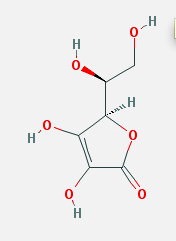
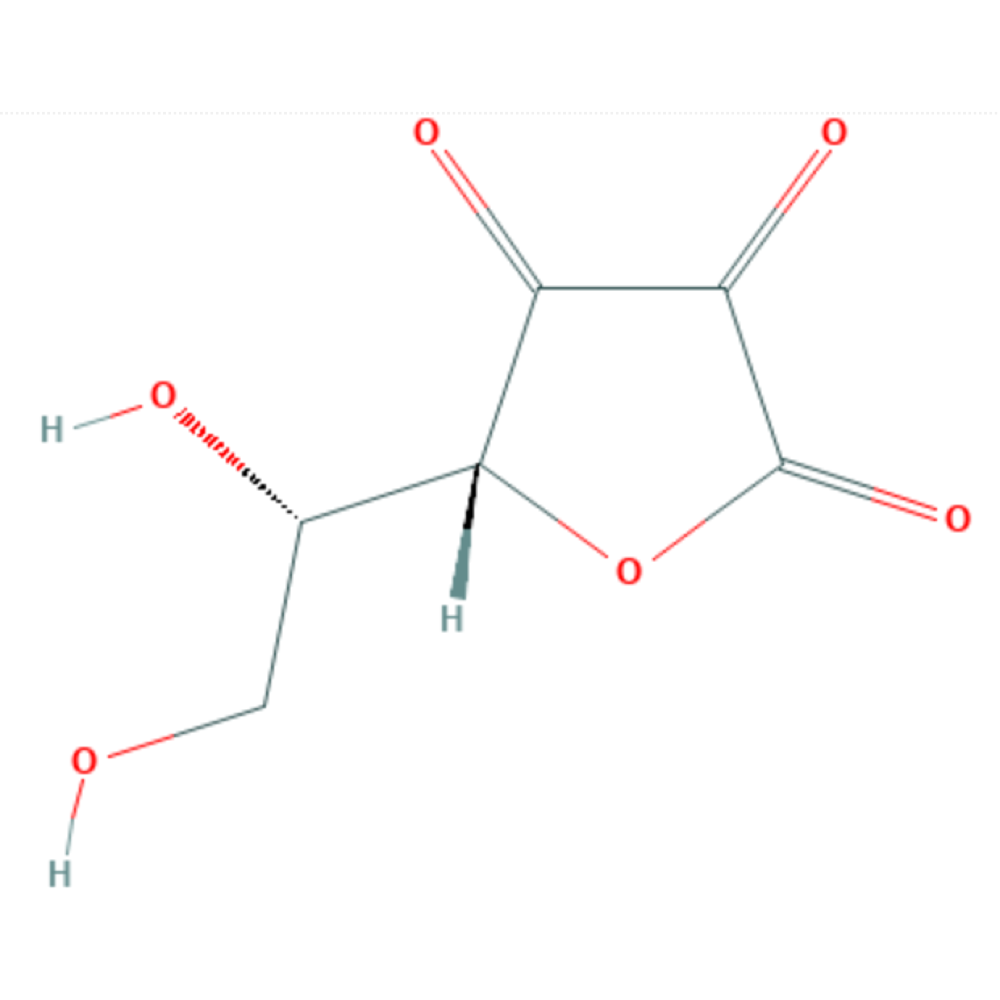
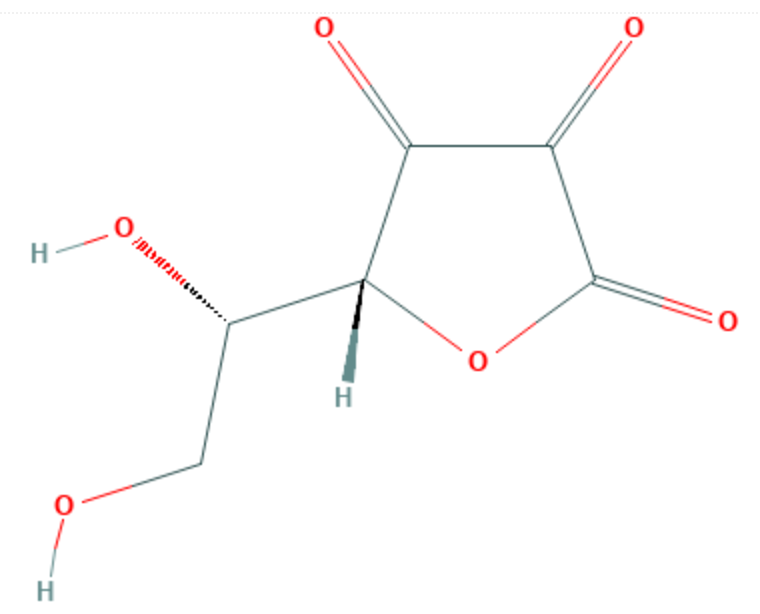
L-Ascorbic Acid
AKA “ascorbic acid, vitamin C, 50-81-7, L(+)-Ascorbic acid, Ascoltin, Ascorbicap, Cevitamic acid, Allercorb, Ascorbajen”
Acid
Ingredient Facts
L-ascorbic acid
AKA: Vitamin C, 50-81-7, L(+)-Ascorbic acid, Ascoltin, Ascorbicap, Cevitamic acid, Allercorb, Ascorbajen
Acid · Skin Conditioning · EWG: 4
Synthetic
Skin Conditioner
Acid
Not Clean
Ascorbic Acid is a natural water-soluble vitamin (Vitamin C). Ascorbic acid is a potent reducing and antioxidant agent that functions in fighting bacterial infections, in detoxifying reactions, and in the formation of collagen in fibrous tissue, teeth, bones, connective tissue, skin, and capillaries. Found in citrus and other fruits, and in vegetables, vitamin C cannot be produced or stored by humans and must be obtained in the diet. (NCI04)
Solubility greater than or equal to 100 mg/mL at 73 °F (NTP, 1992)
Formula
C6H8O6
Mol. Weight
176.12
CAS #
112894-37-8
Form
Liquid
State
L-ascorbic acid is a white to very pale yellow crystalline powder with a pleasant sharp acidic taste. Almost odorless. (NTP, 1992)
See origin →
Functions
Skin Conditioning
A catch-all term for ingredients that improve how skin looks and feels — softer, smoother, more supple. The workhorse behind most moisturizers.
Neutralizes free radicals
Brightens uneven skin tone
Boosts collagen production
Evens pigmentation
Traditional Use
Vitamin C was identified in 1932. Its use in skincare emerged in the 1980s when dermatologists recognized its antioxidant and collagen-stimulating properties. It became a cornerstone anti-aging ingredient after studies showed it could reduce sun damage and improve skin texture.
Skin Types
●all-skin-types
Best For
Sun Damage
Pregnancy & Breastfeeding Safe
Yes
Vitamin C (Ascorbic Acid).
Abdullah M, Jamil RT, Attia FN
, 2026
Vitamin C (Ascorbic Acid).
Abdullah M, Jamil RT, Attia FN
, 2026
Topical Vitamin C and the Skin: Mechanisms of Action and ...
Firas Al-Niaimi, Nicole Yi Zhen Chiang
The Journal of clinical and aesthetic dermatology, 2017
Topical Vitamin C in Dermatology
Al-Niaimi F, Chiang NYZ
Journal of Clinical and Aesthetic Dermatology, 2017
Topical Vitamin C and the Skin: Mechanisms of Action and Clinical Applications.
Al-Niaimi F, Chiang NYZ
The Journal of clinical and aesthetic dermatology, 2017
Ascorbic Acid (Vitamin C) as a Cosmeceutical to Increase ...
Yong Chool Boo
Antioxidants (Basel, Switzerland), 2022
Ascorbic Acid (Vitamin C) as a Cosmeceutical to Increase ...
Yong Chool Boo
Antioxidants (Basel, Switzerland), 2022
Ascorbic Acid (Vitamin C) as a Cosmeceutical to Increase Dermal Collagen for Skin Antiaging Purposes: Emerging Combination Therapies.
Boo YC
Antioxidants (Basel, Switzerland), 2022
The role of Bromelain and Liposomal Vitamin C in the trea...
Giacomo Buso, Paolo Santini, Francesca Ghirardini, Francesca Cannavacciuolo, Adriana Visonà, Beniamino Zalunardo + 2 more
VASA. Zeitschrift fur Gefasskrankheiten, 2025
Extended Re-review Summary: Safety Assessment of Ascorbic Acid and Ascorbates as Used in Cosmetics
Cosmetic Ingredient Review (CIR) Expert Panel
International Journal of Toxicology
Final Report on the Safety Assessment of L-Ascorbic Acid, Calcium Ascorbate, Magnesium Ascorbate, Magnesium Ascorbyl Phosphate, Sodium Ascorbate, and Sodium Ascorbyl Phosphate as Used in Cosmetics
Cosmetic Ingredient Review (CIR) Expert Panel
International Journal of Toxicology
Safety Assessment of Ethers and Esters of Ascorbic Acid as Used in Cosmetics
Cosmetic Ingredient Review (CIR) Expert Panel
International Journal of Toxicology
Ascorbic Acid (Vitamin C)
European Commission
EU Cosmetic Ingredient Database (CosIng)
Magnesium Ascorbyl Phosphate [Vitamin C]
European Commission
EU Cosmetic Ingredient Database (CosIng)
Final report of the safety assessment of L-Ascorbic Acid, Calcium Ascorbate, Magnesium Ascorbate, Magnesium Ascorbyl Phosphate, Sodium Ascorbate, and
Elmore AR
International journal of toxicology, 2005
Final report of the safety assessment of L-Ascorbic Acid, Calcium Ascorbate, Magnesium Ascorbate, Magnesium Ascorbyl Phosphate, Sodium Ascorbate, and
Elmore AR
International journal of toxicology, 2005
Final report of the safety assessment of L-Ascorbic Acid, Calcium Ascorbate, Magnesium Ascorbate, Magnesium Ascorbyl Phosphate, Sodium Ascorbate, and
Elmore AR
International journal of toxicology, 2005
Final report of the safety assessment of L-Ascorbic Acid, Calcium Ascorbate, Magnesium Ascorbate, Magnesium Ascorbyl Phosphate, Sodium Ascorbate, and
Elmore AR
International journal of toxicology, 2005
Ascorbic Acid (Vitamin C)
Environmental Working Group (EWG)
EWG Skin Deep Cosmetics Database
Development of phospholipid nanoparticles encapsulating 3-O-cetyl ascorbic acid and tocopherol acetate (TA-Cassome) for improving their skin accumulat
Fushimi T, Uchino T, Miyazaki Y, Hatta I, Asano M et al.
International journal of pharmaceutics, 2018
[Vitamin C and its derivatives in maintaining the good skin condition].
Goik U
Postepy biochemii, 2024
Vitamin C-squalene bioconjugate promotes epidermal thicke...
R Gref, C Deloménie, A Maksimenko, E Gouadon, G Percoco, E Lati + 3 more
Scientific reports, 2020
Design of Novel Tricaprylin-Incorporated Multi-Layered Liposomal System for Skin Delivery of Ascorbic Acid with Improved Chemical Stability.
Ho MJ, Park DW, Kang MJ
Pharmaceuticals (Basel, Switzerland), 2023
Synthesis of mixed esters of ascorbic acid using methyl esters of palm and soybean oils.
Hsieh HJ, Chen JW, Giridhar R, Wu WT
Preparative biochemistry & biotechnology, 2005
Vanillic acid and vitamin C attenuated di-2-ethylhexyl ph...
B Ogunlade, S C Gbotolorun, O A Adedotun, K Iteire, J Adejayi
Reproduction & fertility, 2022
Topical L-ascorbic acid: percutaneous absorption studies.
Pinnell SR, Yang H, Omar M, Monteiro-Riviere N, DeBuys HV et al.
Dermatologic surgery : official publication for American Society for Dermatologic Surgery [et al.], 2001
Topical L-ascorbic acid: percutaneous absorption studies.
Pinnell SR, Yang H, Omar M, Monteiro-Riviere N, DeBuys HV et al.
Dermatologic surgery : official publication for American Society for Dermatologic Surgery [et al.], 2001
Topical L-ascorbic acid: percutaneous absorption studies.
Pinnell SR, Yang H, Omar M, Monteiro-Riviere N, DeBuys HV et al.
Dermatologic surgery : official publication for American Society for Dermatologic Surgery [et al.], 2001
Roles of Vitamin C in Skin Health
Pullar JM, Carr AC, Vissers MCM
Nutrients, 2017
Verified Jun 2026
Data: PubChem · CosIng · EWG · CIR