Niacin
AKA “nicotinic acid, 59-67-6, Pyridine-3-carboxylic acid, 3-pyridinecarboxylic acid, 3-Carboxypyridine, vitamin B3, wampocap, Apelagrin, Pellagrin”
Ingredient
Ingredient Facts
Niacin
AKA: Nicotinic acid, 59-67-6, Pyridine-3-carboxylic acid, 3-pyridinecarboxylic acid, 3-Carboxypyridine, Vitamin B3, Wampocap, Apelagrin, Pellagrin
Ingredient · Antistatic · EWG: 4
Synthetic
Not Clean
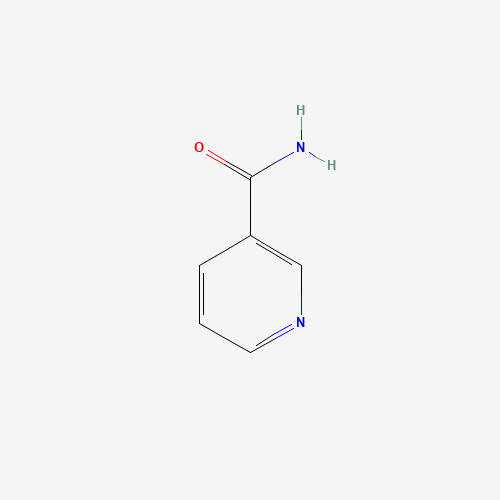
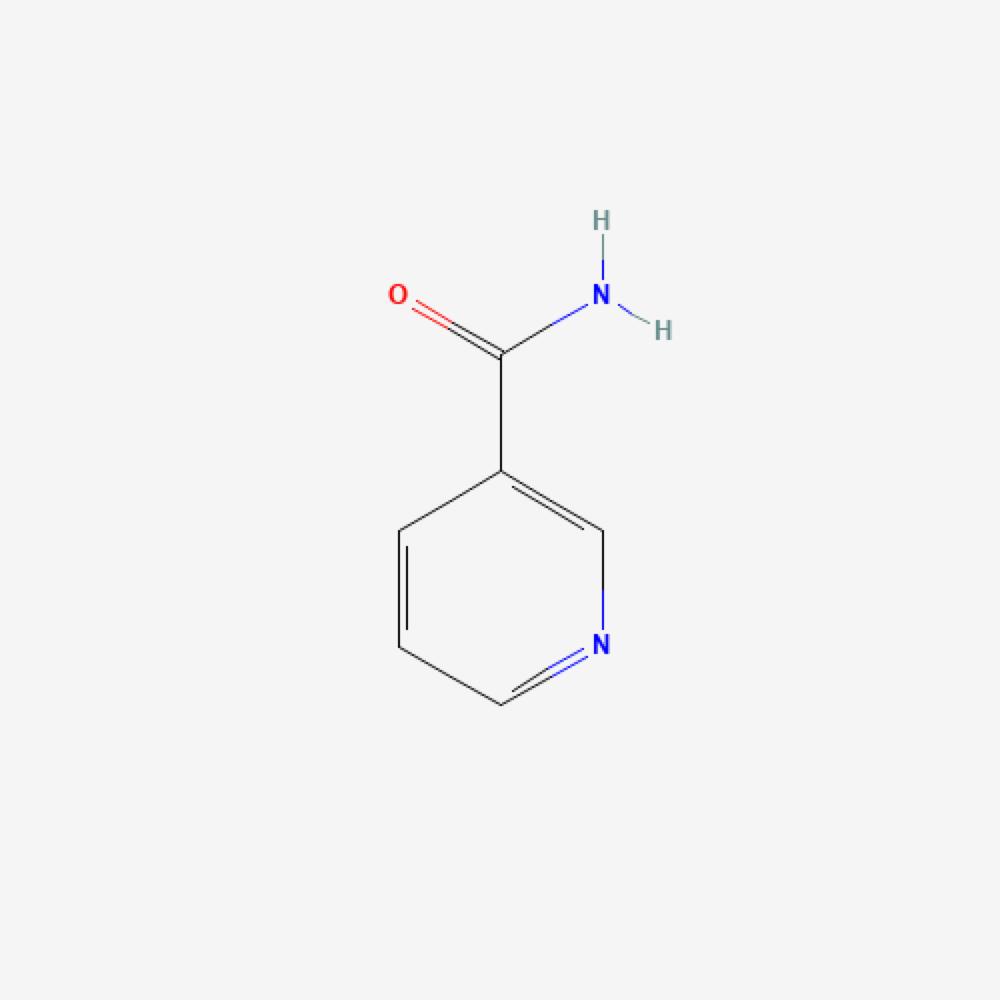
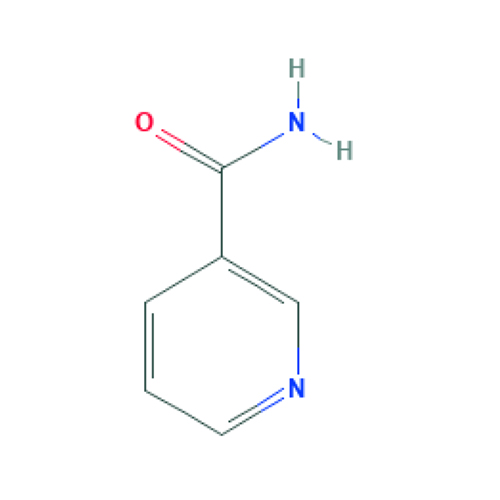
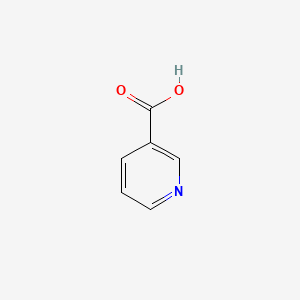
Nicotinic acid, also known as niacin or vitamin B3, is a water-soluble vitamin whose derivatives such as NADH, NAD, NAD+, and NADP play essential roles in energy metabolism in the living cell and DNA repair. The designation vitamin B3 also includes the amide form, nicotinamide or niacinamide. Severe lack of niacin causes the deficiency disease pellagra, whereas a mild deficiency slows down the metabolism decreasing cold tolerance. The recommended daily allowance of niacin is 2-12 mg a day for children, 14 mg a day for women, 16 mg a day for men, and 18 mg a day for pregnant or breast-feeding women. It is found in various animal and plant tissues and has pellagra-curative, vasodilating, and antilipemic properties. The liver can synthesize niacin from the essential amino acid tryptophan (see below), but the synthesis is extremely slow and requires vitamin B6; 60 mg of tryptophan are required to make one milligram of niacin. Bacteria in the gut may also perform the conversion but are inef
Solubility 10 to 50 mg/mL at 63 °F (NTP, 1992)
Formula
C6H5NO2
Mol. Weight
123.11
CAS #
59-67-6
Form
Powder
State
Nicotinic acid is an odorless white crystalline powder with a feebly acid taste. pH (saturated aqueous solution) 2.7. pH (1.3% solution) 3-3.5. (NTP, 1992)
See origin →
Functions
Antistatic
Smoothing
Smooths skin texture
Traditional Use
Vitamin B3 was discovered in 1937 as part of the B-complex vitamin group. Its use in skincare became prominent in the 1990s when research demonstrated its ability to improve skin barrier function, reduce inflammation, and minimize pore appearance, leading to widespread adoption in cosmetic formulations.
Skin Types
●all-skin-types
Best For
Redness
Pregnancy & Breastfeeding Safe
Yes
Niacinamide Improves Aging Skin Appearance
Bissett DL, Oblong JE, Berge CA
Dermatologic Surgery, 2005
Final Report on the Safety Assessment of Niacinamide and Niacin
Cosmetic Ingredient Review (CIR) Expert Panel
International Journal of Toxicology
Niacin
European Commission
EU Cosmetic Ingredient Database (CosIng)
Niacinamide
European Commission
EU Cosmetic Ingredient Database (CosIng)
Niacinamide (Vitamin B3)
European Commission
EU Cosmetic Ingredient Database (CosIng)
Niacinamide
Environmental Working Group (EWG)
EWG Skin Deep Cosmetics Database
Niacinamide - mechanisms of action and its topical use in...
Johannes Wohlrab, Daniela Kreft
Skin pharmacology and physiology, 2014
Niacinamide - mechanisms of action and its topical use in...
Johannes Wohlrab, Daniela Kreft
Skin pharmacology and physiology, 2014
Niacinamide - mechanisms of action and its topical use in...
Johannes Wohlrab, Daniela Kreft
Skin pharmacology and physiology, 2014
Niacinamide Mechanisms of Action
Wohlrab J, Kreft D
Skin Pharmacology and Physiology, 2014
Niacinamide - mechanisms of action and its topical use in dermatology.
Wohlrab J, Kreft D
Skin pharmacology and physiology, 2014
Niacinamide - mechanisms of action and its topical use in dermatology.
Wohlrab J, Kreft D
Skin pharmacology and physiology, 2014
Niacinamide - mechanisms of action and its topical use in dermatology.
Wohlrab J, Kreft D
Skin pharmacology and physiology, 2014
An Investigation of the Influence of PEG 400 and PEG-6-Caprylic/Capric Glycerides on Dermal Delivery of Niacinamide.
Zhang Y, Lane ME, Moore DJ
Polymers, 2020
Dermal Delivery of Niacinamide-In Vivo Studies.
Zhang Y, Kung CP, Iliopoulos F, Sil BC, Hadgraft J et al.
Pharmaceutics, 2021
Dermal Delivery of Niacinamide-In Vivo Studies.
Zhang Y, Kung CP, Iliopoulos F, Sil BC, Hadgraft J et al.
Pharmaceutics, 2021
Verified Jun 2026
Data: PubChem · CosIng · EWG · CIR