Glyoxal
AKA “107-22-2, Ethanedial, oxaldehyde, Oxalaldehyde, 1, 2-Ethanedione, Biformyl, Diformyl, Biformal, Oxal”
Ingredient
Ingredient Facts
Glyoxal
AKA: 107-22-2, Ethanedial, Oxaldehyde, Oxalaldehyde, 1, 2-Ethanedione, Biformyl, Diformyl, Biformal
Ingredient · Antimicrobial · EWG: 9
Synthetic
Preservative
Fragrance
Not Clean
Based on the available data, the CIR Panel concludes that Glyoxal is safe for use in products intended to be applied to the nail at concentrations ≤ 1.25%. The available data are insufficient to support the safety for other uses.
Solubility greater than or equal to 100 mg/mL at 72 °F (NTP, 1992)
Formula
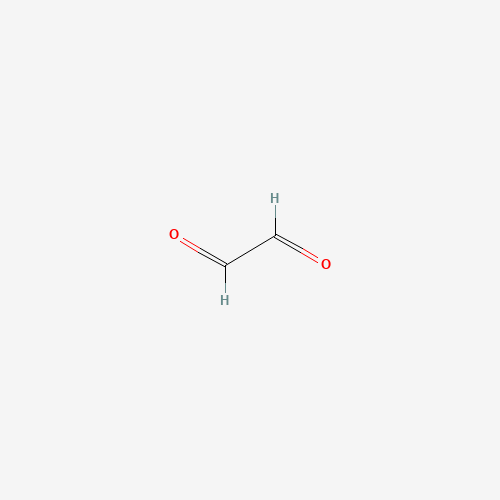
C2H2O2
Mol. Weight
58.04
CAS #
107-22-2
Form
Liquid
State
Glyoxal appears as yellow crystals melting at15 °C. Hence often encountered as a light yellow liquid with a weak sour odor. Vapor has a green color and burns with a violet flame.
See origin →
Functions
Antimicrobial
Keeps your product from growing bacteria, mold, or yeast. Without these, that jar of cream becomes a petri dish in about a week.
Perfuming
Added for scent. Can be natural or synthetic. Common irritant and allergen — one of the top reasons people react to products.
Fights Bacteria
Traditional Use
A synthetic organic compound developed in the 19th century for industrial uses. Adopted in cosmetics in the 20th century as a preservative and cross-linking agent in hair care and nail products.
Skin Types
●all-skin-types
Best For
General
Pregnancy & Breastfeeding Safe
Caution
Glyoxal.
Becker LC, Bergfeld WF, Belsito DV, Hill RA, Klaassen CD et al.
International journal of toxicology, 2023
Amended Final Report on the Safety Assessment of Glyoxal
Cosmetic Ingredient Review (CIR) Expert Panel
International Journal of Toxicology
Final Report on the Safety Assessment of Glyoxal (Amended final report 6/97)
Cosmetic Ingredient Review (CIR) Expert Panel
International Journal of Toxicology
Glyoxal
Cosmetic Ingredient Review (CIR) Expert Panel
International Journal of Toxicology
Glyoxal
European Commission
EU Cosmetic Ingredient Database (CosIng)
Glyoxal
Environmental Working Group (EWG)
EWG Skin Deep Cosmetics Database
Hydroxyisohexyl 3-cyclohexene carboxaldehyde- known as Ly...
J D Johansen, P J Frosch, C Svedman, K E Andersen, M Bruze, C Pirker + 1 more
Contact dermatitis, 2003
Hydroxyisohexyl 3-cyclohexene carboxaldehyde- known as Ly...
J D Johansen, P J Frosch, C Svedman, K E Andersen, M Bruze, C Pirker + 1 more
Contact dermatitis, 2003
Phenolic-enriched maple syrup extract protects human keratinocytes against hydrogen peroxide and methylglyoxal induced cytotoxicity.
Sheng J, Liu C, Petrovas S, Wan Y, Chen HD et al.
Dermatologic therapy, 2020
Verified Jun 2026 · 🧪 = conflict
Data: PubChem · CosIng · EWG · CIR